Australian shepherd biosecurity protects puppies before they go home. See how responsible breeders prevent illness, stress, and costly setbacks early.
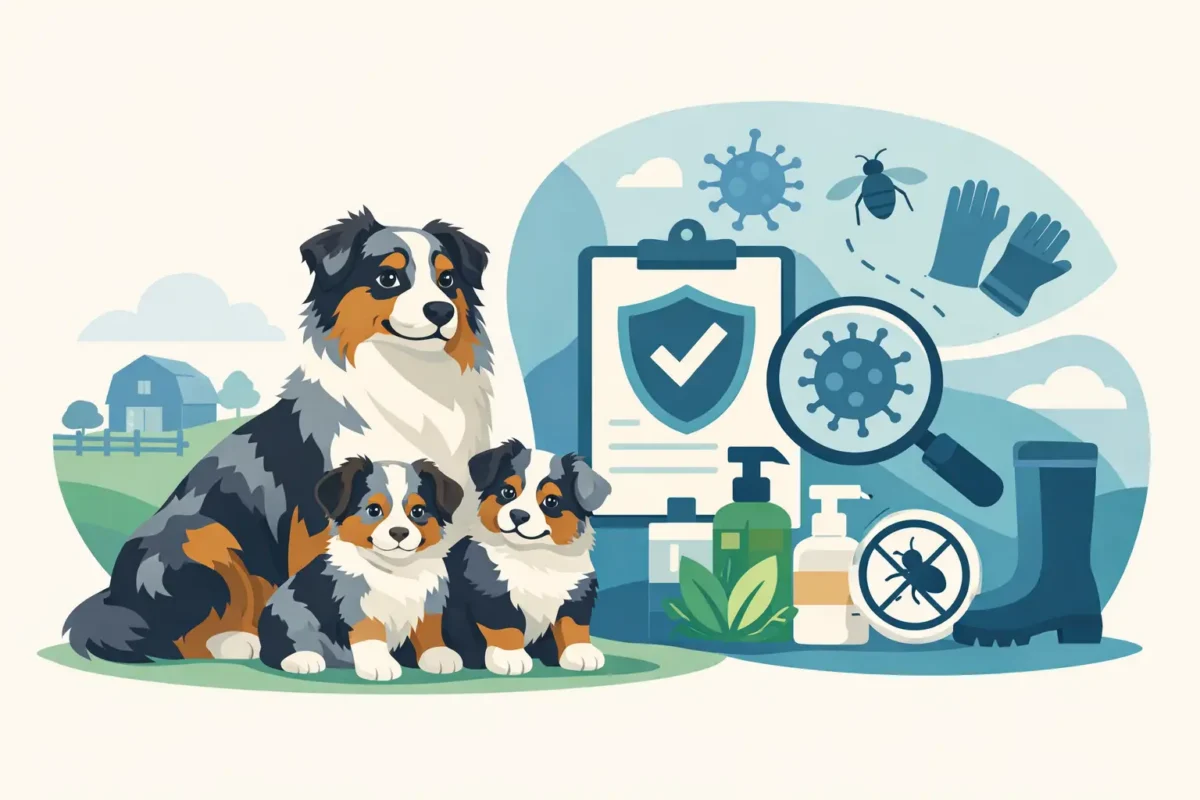
A clean-looking puppy room is not proof of safety. Toy and MINI Australian shepherd biosecurity is the set of daily controls that keeps disease from reaching vulnerable puppies before their immune systems are ready to handle it. It affects whether a litter starts life healthy, how safely puppies can be raised and socialized, and whether buyers bring home a puppy with avoidable exposure risks.
At Hughes Toys, biosecurity is not a marketing word and it is not a bottle of disinfectant sitting by the door. After more than 30 years breeding Toy, Miniature, and small Toy Australian Shepherds, we know that prevention comes from disciplined routines, documented health practices, and the willingness to say no when a visitor, delivery, or convenience creates unnecessary risk.
What Toy and MINI Australian Shepherd Biosecurity Actually Means
Biosecurity means limiting the ways viruses, bacteria, parasites, and fungal organisms can enter or move through a breeding program. Puppies are especially vulnerable because they are young, still building immunity, and often not fully vaccinated when they are at the highest risk of exposure.
The most obvious threats include parvovirus, canine influenza, kennel cough, intestinal parasites, giardia, and contagious skin conditions. Some can be carried in on shoes, hands, clothing, crates, food containers, or a person who recently handled dogs elsewhere. A dog does not need to look sick to carry something into a puppy area.
Good biosecurity also protects adult dogs, pregnant females, and new mothers. Stress during pregnancy and nursing is not harmless. A breeding female needs stable routines, clean space, quality nutrition, veterinary oversight, and protection from unnecessary traffic. Puppies benefit from that work long before a buyer sees their first photo.
Why Open-Door Puppy Visits Are Not Responsible
Many buyers understandably want to visit puppies as early and as often as possible. We understand the desire. But public access to young litters is one of the ways a breeder can introduce preventable disease into a nursery.
A person may have stopped at a dog park, groomer, shelter, veterinary office, pet store, boarding facility, or another breeder’s home that same day. They may have a healthy dog at home that recently encountered an illness. Even a careful dog owner cannot see every exposure on a shoe sole or know every organism carried on a jacket sleeve.
That is why responsible breeders restrict access to newborn and young puppy areas. This is not secrecy. It is protection. There is a difference between a breeder who cannot document their program and a breeder who will not allow a revolving door of visitors around unvaccinated puppies.
The trade-off is real. Buyers may have fewer early in-person visits, and that can feel less personal than walking into a pet store or casual backyard litter. The safer approach is structured communication: current photos, videos, detailed updates, clear records, and scheduled puppy pickup or planned meetings when the risk level is appropriate.
The Core Practices That Reduce Risk
Biosecurity works only when it is routine. One deep cleaning before visitors arrive does not replace daily control of movement, sanitation, and animal health.
Controlled Entry and Separate Puppy Areas
Puppies should not share unrestricted space with every dog on the property, visiting dogs, or outside traffic. A separate whelping and nursery area makes it easier to control cleaning, temperature, bedding, feeding equipment, and who enters.
Anyone who must enter should follow a clear process. That may include clean clothing, sanitized hands, disinfected footwear or dedicated shoes, and no recent contact with high-risk dog environments. The standard should apply to family members, staff, contractors, and breeders alike. Biosecurity breaks down when rules are treated as optional for familiar people.
Cleaning That Is Effective, Not Just Visible
A room can smell pleasant and still carry pathogens. Effective sanitation begins with removing organic material, then using the correct disinfectant at the proper concentration and contact time. Bedding, bowls, floors, crates, toys, and feeding tools need regular attention.
Over-cleaning with harsh products can also create problems if it leaves irritating residue or disrupts a calm nursery environment. The goal is not to make puppies live in a chemical smell. The goal is a clean, dry, properly maintained space with sensible disinfection protocols.
Quarantine and Health Observation
New dogs, returning dogs, and any dog showing signs of illness need separation until it is safe to rejoin the program. Coughing, diarrhea, vomiting, lethargy, appetite changes, and skin concerns deserve prompt attention. A breeder who ignores small symptoms because a dog is still eating or acting mostly normal takes a gamble with the whole group.
Veterinary checks, parasite control, age-appropriate vaccinations, and honest health records are part of this process. Genetic testing matters for breeding decisions, but it does not replace infection prevention. A genetically tested puppy can still be exposed to parvo or giardia if basic biosecurity is poor.
Safe Socialization Without Careless Exposure
Some people assume biosecurity means raising puppies in isolation. It should not. Toy and Mini Australian Shepherd puppies need gentle handling, household sounds, age-appropriate surfaces, positive human interaction, grooming exposure, and thoughtful early learning. The issue is not socialization. The issue is uncontrolled exposure.
A well-managed program introduces safe experiences inside a controlled environment. Puppies can meet healthy, familiar people who follow hygiene protocols. They can experience normal household activity without being passed through crowded public spaces before their vaccine schedule and veterinarian guidance support it.
For Toy and Mini Australian Shepherds, this balanced approach matters even more because these are companion dogs placed into homes. They should be confident enough for family life, grooming, car rides, visitors, and everyday noise, without being pushed into risky environments simply to create content or entertain a stream of guests.
What Buyers Should Ask a Breeder
Biosecurity is easy to claim and harder to demonstrate. Buyers should listen for specific answers, not vague reassurance that a breeder “loves their dogs” or keeps everything clean.
Ask how puppy access is managed, whether visitors are restricted around young litters, and what sanitation steps are used between dog areas. Ask how new or returning dogs are handled, what veterinary checks puppies receive, and when puppies are vaccinated and dewormed. A qualified breeder should explain their process without becoming defensive.
Also ask how the breeder handles pickup day and transportation. Clean crates, limited contact with unknown dogs, responsible pet-nanny coordination when needed, and clear transition instructions all reduce stress and exposure during a puppy’s move to a new home.
Be cautious if a seller offers unrestricted visits to every litter, allows buyers to bring their own dogs to meet puppies, meets in random parking lots without records, or pressures you to take a puppy earlier than appropriate. Convenience is not a health protocol.
Biosecurity Continues After Pickup
The breeder’s work does not remove the new owner’s responsibility. The first weeks at home are a poor time for dog parks, pet-store floors, crowded puppy events, shared water bowls, or introductions to unknown dogs. Your veterinarian can advise you on local disease risk and the right vaccination schedule for your puppy.
Start with controlled experiences. Invite healthy, known people into your home. Carry your puppy in higher-risk public settings if you need to bring them along. Keep your yard clean, supervise outdoor time, and do not assume a private-looking area is safe if unfamiliar dogs have access to it.
A careful start is not being overprotective. It gives a young Toy or Mini Australian Shepherd the time to build immunity while still learning that people, sounds, handling, and home life are normal. That is the kind of protection a good puppy deserves before it ever becomes your best companion.