Are Merle Toy and Mini Australian Shepherds Healthy? Facts

Are merle Australian Shepherds healthy? Learn what merle color does and does not affect, why double merles carry risk, and responsible testing proves.
A striking blue eye and marbled coat can make people ask one fair question before they fall in love with a puppy: are merle Toy and mini Australian Shepherds healthy? A properly bred single-merle Aussie can be every bit as healthy, active, intelligent, and long-lived as a solid-color or tri-color Aussie. The concern is not the merle pattern itself. The concern is whether the breeder understands merle genetics well enough to avoid preventable risk. Color is never a substitute for health records, genetic testing, veterinary care, sound temperament, or a carefully planned pedigree. A beautiful puppy without those things is not a good prospect, no matter how unusual the markings are.

Are Toy and Mini Merle Australian Shepherds Healthy When Bred Correctly?

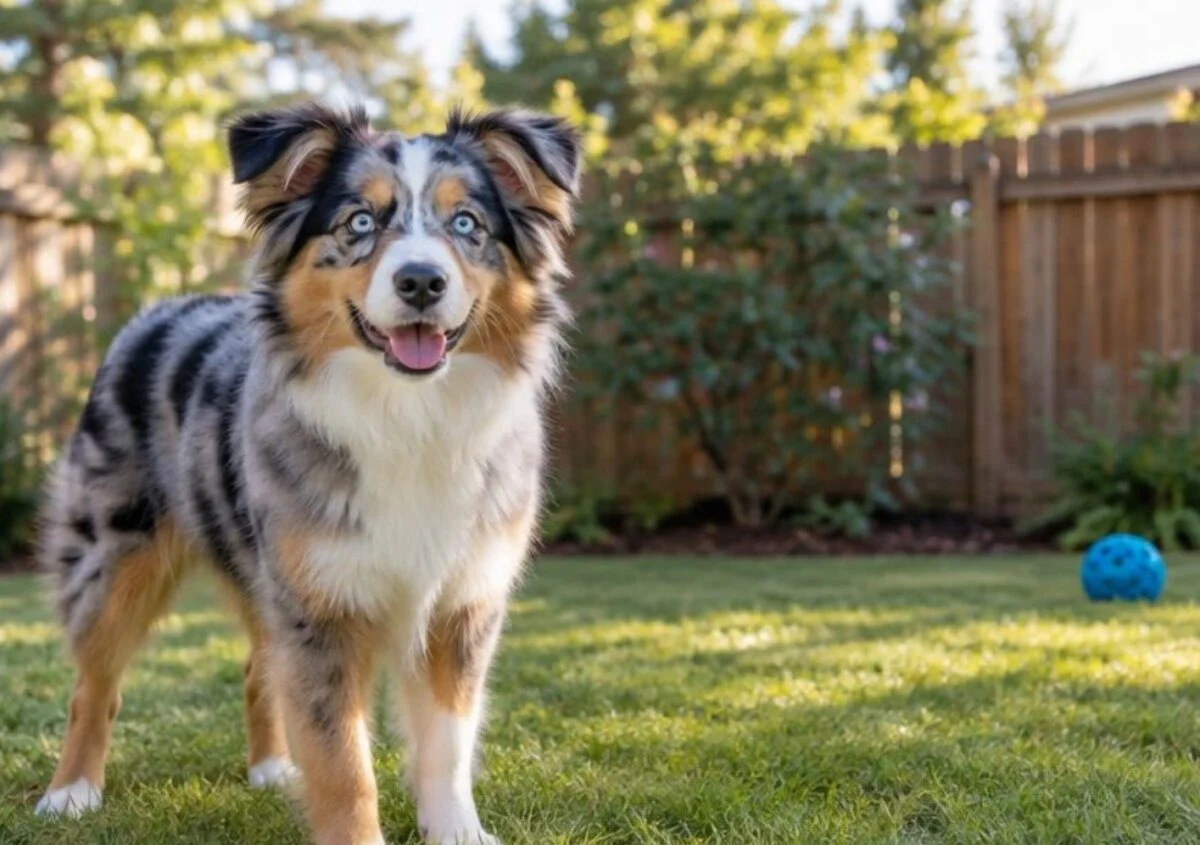
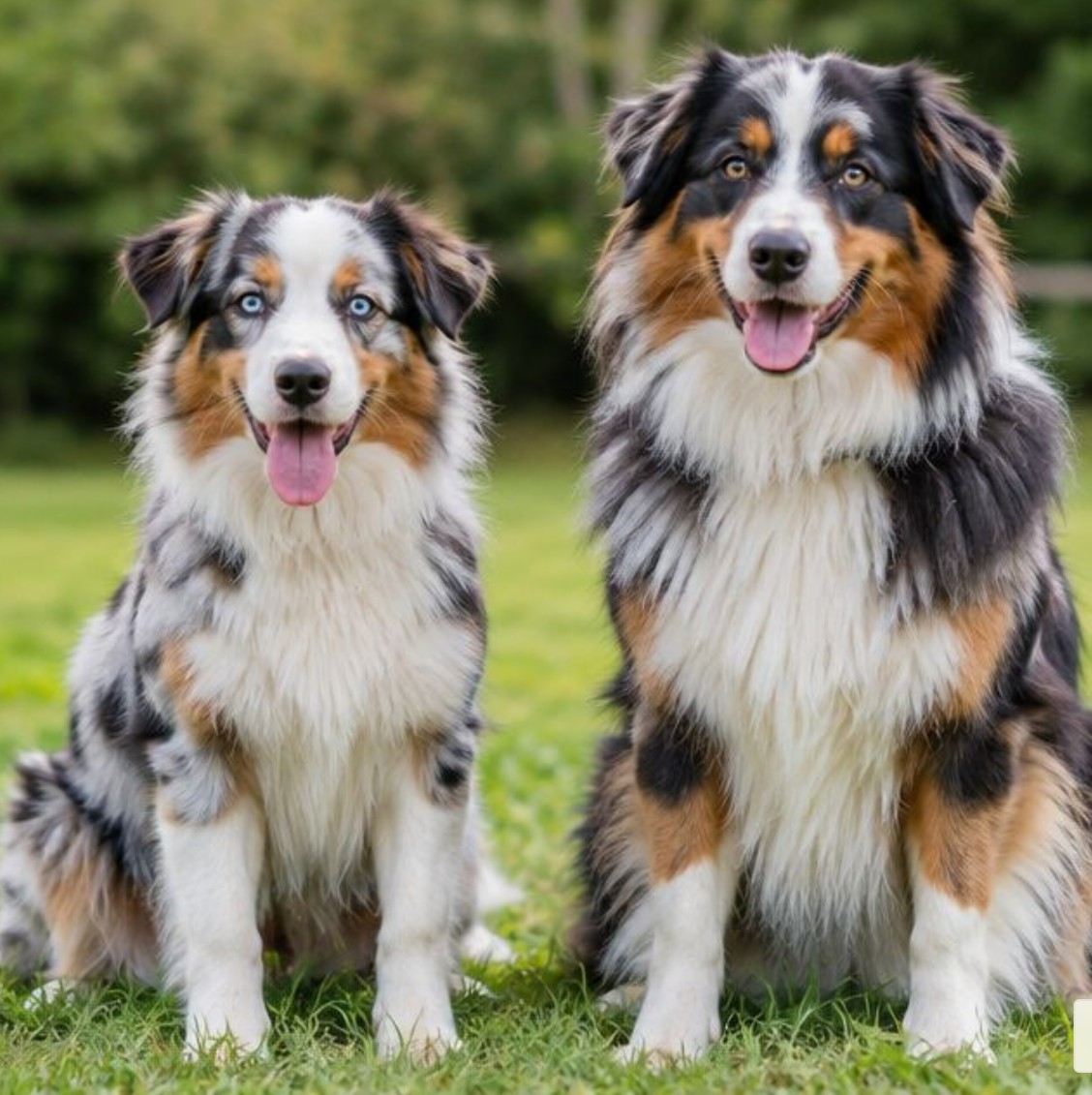
Yes. A dog with one copy of the merle gene, commonly called a single merle, is generally healthy when it comes from responsible breeding. Merle creates the mottled or patchwork pattern seen in blue merles and red merles. It may also be associated with blue, amber, split, or marbled eyes. A single-merle Toy and mini Australian Shepherd does not automatically have hearing, vision, immune, or temperament problems. Many healthy working, performance, and companion Aussies are merles. The coat pattern is simply one genetic trait among many. The real health issue appears when two merle-patterned dogs are bred together. This is called a merle-to-merle breeding. It can produce puppies with two copies of the merle gene, known as double merles. That pairing is avoidable, and experienced breeders do not treat it as an acceptable trade-off for producing more colorful puppies. At Hughes Toys, color is considered only after the basic work is done: selecting healthy parents, documenting lineage, evaluating temperament, testing appropriate genetics, maintaining biosecurity, and completing veterinary checks. Thirty-plus years in Australian Shepherd breeding teaches a simple lesson: breeding decisions have consequences long after a puppy photo gets attention.

Why Double Merles Carry Greater Risk

Each time two merle dogs are bred, the litter has, on average, a 25% chance of producing double-merle puppies. Double merles are often predominantly white, although appearance alone cannot confirm genetic status. They may be born with normal vision and hearing, but they have a substantially higher risk of congenital hearing and eye defects. Potential concerns can include deafness in one or both ears, unusually small or malformed eyes, limited vision, colobomas, and other developmental eye abnormalities. Some double-merle dogs live happy lives with proper support, but the fact that an affected dog can adapt does not justify deliberately creating that risk. This is why a responsible breeder does not breed merle to merle. It is not complicated genetics, and it is not a gray area. One merle parent and one non-merle parent is the responsible approach when producing merle puppies.

A white head is not the whole story

Buyers sometimes hear that too much white on the face or ears always means a puppy will be deaf. That is too simplistic. White markings can be a reason for a breeder to look more closely, but markings are not a diagnosis. The dog’s actual genetic inheritance and appropriate hearing and eye evaluation matter more than guesses based on a photograph. Likewise, blue eyes do not mean an Australian Shepherd has a vision problem. Blue eyes can be a normal and attractive part of the merle pattern. They should never be marketed as proof of special health, either.

Health Depends on More Than Coat Color

A merle puppy should be evaluated by the same standard as every other Toy and Mini Australian Shepherd puppy. The better question is not just, “Is this puppy merle?” It is, “What has been done to protect this puppy’s health before placement?” A responsible breeder should be able to speak plainly about the parents, the planned pairing, the puppy’s veterinary care, and the genetic conditions relevant to Australian Shepherds. If the answer is vague, if testing is described without documentation, or if every question is redirected to color and eye appeal, step back. Toy and mini Australian Shepherd breeding requires attention to inherited issues that have nothing to do with merle. Depending on the bloodline and the testing program, breeders may screen for conditions such as MDR1 drug sensitivity, hereditary eye conditions, degenerative myelopathy, and other breed-relevant genetic concerns. A genetic result needs context. It should guide breeding choices, not become a marketing buzzword used to avoid a real conversation about the parents. A quality program also looks beyond a DNA panel. Veterinary examinations, sound body structure, healthy growth, appetite, coat condition, parent longevity, reproductive health, and a stable disposition all matter. No breeder can honestly promise that a living animal will never face a health issue. What a breeder can do is reduce avoidable risk through disciplined selection and honest records.

What to Ask Before Reserving a Merle Puppy

Start with the direct question: “Was this puppy produced from one merle parent and one non-merle parent?” A knowledgeable breeder should answer immediately and clearly. If the answer is yes, ask how the parents’ color genetics were verified, particularly if either parent has minimal merle patterning or an unusual amount of white. Then ask about the health process. You should know whether the puppy has received a veterinary check, what genetic testing was used in planning the litter, and what health guarantee or written agreement is provided. Registration is useful for documenting breeding history, but registration alone does not prove health. Multi-generation knowledge of parentage is one piece of a larger record, not a replacement for responsible selection. For a puppy with any concern about hearing or vision, ask what assessment has been completed and what the breeder observed during early development. A puppy that is consistently startled by sounds, does not orient toward normal household noise, or seems visually uncertain deserves careful follow-up. In higher-risk situations, formal hearing testing and an evaluation by a veterinary ophthalmologist provide more meaningful answers than reassurance alone. You should also ask about temperament and adult size. Families seeking a Toy, Miniature, or small Toy Australian Shepherd often want a manageable companion, not a high-drive dog that needs a ranch to function. Size should be selected responsibly, not achieved by careless breeding. The puppy’s parents, extended family, structure, energy level, and daily behavior tell you more than a label does.

Do Merle Aussies Need Different Daily Care?

A healthy single-merle Australian Shepherd needs the same practical care as any Aussie: appropriate food, routine veterinary care, training, regular grooming, exercise, and real companionship. Merle does not make a dog delicate. It does not mean the dog needs to be kept out of normal daylight, and it does not create a special diet requirement. What does matter is choosing the right activity level for the household. Australian Shepherds are bright, people-oriented dogs that benefit from structure and engagement. A well-bred companion-oriented Toy or Mini Aussie can be more manageable than a high-drive working-line dog, but no Aussie is a decorative accessory. Plan for training, daily interaction, and age-appropriate exercise. If a dog has confirmed hearing or vision limitations, then management changes. Training may rely more heavily on hand signals, touch cues, consistency, and safe environmental routines. These dogs can be deeply connected companions, but families should understand the commitment before bringing one home.

Red Flags Behind the Merle Sales Pitch

Be cautious when a seller uses phrases such as “rare merle” to justify a price without discussing the parents, testing, or the breeding plan. Merle is desirable to many buyers, but desirable color does not make poor breeding acceptable. Other warning signs include a breeder who cannot explain whether the parents are merle or cryptic merle, offers no veterinary information, refuses reasonable health questions, or has no meaningful process for matching a puppy to a home. A puppy should not be selected solely because it has the bluest eyes in the litter. The same goes for promises that sound too absolute. Healthy breeding is built on risk reduction, documentation, veterinary oversight, and accountability. Anyone claiming that genetics can guarantee a perfect dog is selling confidence, not facts. A merle Toy and Mini Australian Shepherd can be a healthy, devoted, and exceptionally beautiful family companion. Choose the puppy whose breeder can prove the pairing was responsible, explain the health work without evasion, and care as much about the dog’s future home as its coat pattern. That is the standard worth waiting for.

THE TRUTH ABOUT MDR1 & genetic Testing Aussies

Learn why MDR1 testing for Aussies matters, what results mean, and how responsible breeding protects puppies from preventable medication risks at home.
ALL Aussies and herding breeds should be treated as if MDR1 affected . THE MDR1 gene is overhyped by the vets. The drug sensitivity mainly applies to two common drugs – Ivermectrin, (Bravecto and other oral flea treatments) and Acepromazine (pre-seditive)  the other drugs are not common, but there are alternatives – so be knowledgeable and tell the vet to use an alternative for safety/health sake. It does not mean a aussies or herding breeds d dog cannot live a full, active life.  It means the dog may be unusually sensitive to certain medications and can be at risk for dangerous neurologic toxicity when given an inappropriate drug or dose. The two main drugs are Ivermectrin (in Bravecto) and Acepromazine (preseditive) JUST tell the vet not to use either drug.. there are alternatives. For families choosing a Toy, Miniature, or small Toy Australian Shepherd let your vet know it is an Aussie and tell them to treat  it is if  ‘affected for the MDR1 gene” even if not .  It is now proven that even herding breed dogs tested clear of the MDR1  mutation have reactions to the drugs in question .  The vet will say there isn’t enough in a dose to harm them, but they lack or have less of an enzyme in their system that removes the drug from their system, so each dose builds up in the system until symptoms of siezures, behavioral changes and even death.

Why MDR1 Testing no longer Matters for Aussies

MDR1 is the common name used for a genetic variant affecting the multidrug resistance gene, also called ABCB1. This gene helps produce P-glycoprotein, a transporter that moves certain medications out of the brain and other tissues. When a dog carries the MDR1 variant, that protective transport system may not work normally.  IT is proven that this 1 gene that is tested for is likely  NOT the only gene that has this trait Australian Shepherds and related herding breeds are among the breeds known to have this trait.  So treat every Aussie as if they have it.  and it does not mean an affected dog cannot live a full, active life. It means the dog may be unusually sensitive to certain medications and can be at risk for dangerous neurologic toxicity when given an inappropriate drug or dose. The risk is not theoretical. Dogs with MDR1 sensitivity can experience symptoms such as weakness, disorientation, tremors, loss of coordination, seizures, coma, or worse after exposure to certain drugs. This is  why a responsible owner puts the caution the dog’s veterinary record for life.

Medication Sensitivity Is a Veterinary Issue

MDR1 does not mean an owner should panic over every medication. It means the veterinarian must make informed choices. Some drugs, including certain antiparasitic medications, anti-diarrheal drugs, sedatives, and chemotherapy agents, may need to be avoided, adjusted, or monitored closely in genetically sensitive dogs. Ivermectin is the drug most owners hear about first. The Vets say it requires h high doses, not the low, labeled doses found in many standard heartworm preventives. But the toxicity builds  up with EACH DOSE until TOXIC.

What Responsible Testing Looks Like

A breeder should test the dogs used in the breeding program, If all ancestors of a dog are clear/tested then it will not be in the line.. why different breeds have different variants. As an extra precaution at Hughes Toys , all Males are “full panel tested”.. to ensure/document that one parent does not carry the normally recessive gene – meaning offspring cannot be affected. . Parent results matter because they establish what a litter can inherit. , At Hughes Toys, our approach is built around the full picture: multi-generation breeding records, genetic screening, veterinary care, biosecurity, temperament selection, and honest matching. With more than 30 years focused on Australian Shepherds, we know a test panel is not a magic shield or will ensure that the offspring will be a good family pet.  It is one part of doing the work correctly before a puppy is placed in a family home.

Testing Does Not Replace Sound Breeding Judgment

MDR1 is important, but it should not become the only factor buyers use to judge a breeder. A program can advertise one clear genetic result and still overlook unstable temperament, poor structure, unmanaged size, weak puppy care, or incomplete health records. For companion-oriented Aussies, the broader goal is a puppy with responsible genetic planning and the right day-to-day fit. Families need to consider expected adult size, energy level, herding drive, confidence, social development, and the breeder’s willingness to discuss what the puppy is actually like. A small Aussie is still an Aussie. Intelligence and loyalty are wonderful traits, but they come with a need for training, boundaries, and regular engagement.

Questions to Ask Before You Commit

Before placing a deposit, a. You should also ask what other genetic screening has been completed and whether the breeder provides veterinary records and a clear health guarantee. There is no need to treat a carrier or affected dog as damaged. That is not the point of testing. The point is to prevent avoidable breeding outcomes and make sure owners have the information needed to protect their dog. choose a breeder who treats genetic information as a responsibility rather than a sales line.

Australian Shepherd Genetic Health Testing

Australian shepherd genetic health testing helps families ask better questions about DNA panels, eye exams, breeding choices, and what health records mean
A blue-eyed merle puppy can be striking. A tiny Toy Aussie can be easier to carry and fit into a city home. Neither color, eye color, size, nor a polished pedigree tells you whether the breeder made careful health decisions. That is where TOY and MINI australian shepherd genetic health testing matters. For a family buying a companion dog, testing should not be treated as a sales phrase. It should answer practical questions: What conditions can this puppy inherit? Were the parents tested before they were bred? If a parent carries a recessive gene, was that dog paired correctly? Are DNA results supported by veterinary care, eye screening, and honest discussion about the limits of testing? After more than 30 years focused on smaller Australian Shepherds, we can say this plainly: a breeder who cannot explain the health status of their breeding dogs is asking buyers to accept unnecessary uncertainty.

What Toy and MINI Australian Shepherd Genetic Health Testing Actually Does

DNA testing looks for specific genetic variants associated with inherited disease or traits. A result commonly identifies a dog as clear, a carrier, or affected for a particular condition. Those words matter, but they must be interpreted correctly. A clear dog does not have the tested variant. A carrier usually has one copy of a recessive variant and may never show symptoms, but can pass that variant to puppies. An affected dog has the genetic combination associated with that condition or trait. Whether an affected dog should be bred depends on the condition, the inheritance pattern, veterinary guidance, and responsible breeding standards. The useful part is not simply collecting a long list of results. The useful part is using those results before a breeding takes place. A responsible breeder can often breed a carrier to a clear mate without producing affected puppies for a recessive condition. Removing every carrier from a breeding program without thought can shrink genetic diversity and create other problems. Good breeding requires judgment, records, and a plan, not panic. Testing also has limits. A DNA panel cannot certify that a dog will never become ill, never develop an injury, or never pass along a condition that has not yet been identified by a commercial test. It is one part of responsible selection, alongside pedigree review, veterinary evaluations, physical soundness, temperament, nutrition, biosecurity, and continued observation of the bloodline.

Conditions Commonly Considered in Toy and Mini Australian Shepherd Testing

The exact panel should fit the breed and be reviewed as testing science develops. Toy and MINI Australian Shepherd breeders commonly consider conditions including MDR1 drug sensitivity, hereditary cataracts, collie eye anomaly, progressive retinal atrophy, and degenerative myelopathy. Not every condition has the same frequency, severity, or inheritance pattern. That is why buyers should avoid treating a simple checklist as the whole story.

MDR1 Drug Sensitivity

MDR1 is one of the most practical tests for Australian Shepherd families. Dogs with certain MDR1 variants can be sensitive to medications that are ordinarily used safely in many other dogs. The concern is not abstract. Some medications can cause serious neurological reactions in genetically susceptible dogs if used at inappropriate doses. A result gives your veterinarian useful information throughout the dog’s life. Buyers should keep the result with their puppy’s medical records and make sure every veterinary provider knows it. A responsible breeder does not use MDR1 status as a scare tactic. They test, document, explain the result, and make sure the family understands why it belongs in the dog’s health file. Based on current information , ALL herding breed dogs should be treated as MDR1 “affected”.  The drugs in question, primarily Ivermectrin (flea-bravecto) and Acepromazine (preseditive) dogs without the “MDR1” gene still have had reactions. The dogs lack or have reduced enzyme that removes the drug from the dogs system.  SO though the companies/vet say that the dose is too small to hurt the dog, each dose builds up in the system, until it is toxic.  Behavior changes, -the drugs mainly affect the brain, cancer, seizures.  The oral flea treatments are banned in Europe.  For “convenience”  the owner is poisoning their dog.

Eye-Related Conditions

Toy and MINI Australian Shepherds may be screened genetically for inherited eye conditions such as hereditary cataracts, collie eye anomaly, and certain forms of progressive retinal atrophy. These tests can help breeders avoid combinations that may produce affected puppies. DNA results are not a substitute for professional eye examinations. Eyes are complex, and not every eye concern is covered by a genetic test. Breeding dogs should receive appropriate veterinary oversight, and breeders should pay attention to the actual health history of the line rather than relying on one lab report.

Degenerative Myelopathy and Other Panel Results

Degenerative myelopathy is another condition frequently included on canine genetic panels. The presence of a variant does not always predict a simple, guaranteed outcome in every dog. Risk genes, age of onset, and the role of other factors can be more complicated than an online chart makes them appear. That is the reason experienced breeders look beyond a single result. They consider how a condition is inherited, whether the dog is clinically healthy, the status of the mate, and the history behind both sides of the pedigree. A genetic result needs context before it becomes a breeding decision.

Merle Testing Is About More Than Color

Merle is a beautiful Australian Shepherd pattern, but it is not merely a color preference. Merle genetics deserve careful handling because breeding two merle-patterned dogs can produce double merle puppies. Double merles have a significantly increased risk of hearing and vision problems. A knowledgeable breeder understands the visible coat pattern, the dog’s underlying merle genetics, and the risks of the pairing. This is especially relevant in smaller Toy and Miniature Australian Shepherds, where buyers may see unusual colors advertised aggressively without any explanation of the breeding behind them. Do not accept vague assurances such as “our merles are healthy” as proof of responsible practices. Ask how the breeder plans merle pairings and whether they can clearly explain the parents’ genetics. Color should never be allowed to outrank a puppy’s long-term welfare.

What Buyers Should Ask a Breeder

Health testing records should lead to a straightforward conversation, not a defensive one. Ask which conditions the parents were tested for, whether either parent is a carrier, and how the pairing was selected to avoid producing affected puppies. Ask whether the breeder performs veterinary checks and whether the puppy comes with a written health guarantee. You should also ask about the broader breeding program. How long has the breeder worked with Toy and Mini Australian Shepherds?  Does the breeder know the adult size, temperament, and health history behind multiple generations, or are they simply reselling puppies from parents with limited/unknown sources? A breeder should be able to explain results in plain language. They should not claim that testing makes a puppy perfect, and they should not hide behind technical language to avoid a direct answer. Honest answers sometimes include uncertainty. That is far better than a false guarantee. “Clear by Parentage”.  Genetic testing started many years ago, with MDR1 first, breeders tested their dogs, then PRA, breeders tested thier dogs, and then other genetic issues as commercial tests became available.  A dog tested clear of a genetic issue bred to another tested clear dog = all offspring are “clear” of that issue without testing.  This can carry forward many generations. If the breeder has bred many generations of these clear offspring.. proving tested clear going back to the original ancestors can be difficult. At Hughes Toys males are tested for full genetic panel to document “clear’ for one parent which for recessive traits – the puppies cannot be “affected”.

Testing Does Not Replace Temperament and Physical Evaluation

Families often focus hard on genetic reports and then overlook the dog in front of them. Toy a mini Australian Shepherds are intelligent, observant, and active dogs. Even a smaller companion-oriented Toy Aussie needs training, structure, socialization, and a home prepared to meet its needs. A puppy can come from genetically tested parents and still be a poor fit if the breeder does not select for stable temperament and appropriate energy. For many households, especially first-time Aussie owners, a calmer puppy with lower herding drive is a more meaningful match than the flashiest coat or the smallest expected adult size. At Hughes Toys, genetic screening is part of a larger system that includes multi-generation breeding knowledge, veterinary checks, biosecurity, registration, and deliberate selection for companion temperament. Those pieces work together. A DNA result alone is not a breeding program.

How to Read a Health Claim Without Being Misled

Be cautious when a seller says puppies are “health tested” but does not specify whether that means the puppy, the parents, or neither. A puppy may receive a veterinary exam, while genetic health testing is commonly performed on the breeding parents to guide mating decisions. Both are valuable, but they are not the same service. well-bred toy and MIni Australian Shepherd puppy should come from a program that treats health information as a responsibility carried forward

Toy and MINI Australian Shepherd Biosecurity for Healthy Puppies

Australian shepherd biosecurity protects puppies before they go home. See how responsible breeders prevent illness, stress, and costly setbacks early.
A clean-looking puppy room is not proof of safety. Toy and MINI Australian shepherd biosecurity is the set of daily controls that keeps disease from reaching vulnerable puppies before their immune systems are ready to handle it. It affects whether a litter starts life healthy, how safely puppies can be raised and socialized, and whether buyers bring home a puppy with avoidable exposure risks. At Hughes Toys, biosecurity is not a marketing word and it is not a bottle of disinfectant sitting by the door. After more than 30 years breeding Toy, Miniature, and small Toy Australian Shepherds, we know that prevention comes from disciplined routines, documented health practices, and the willingness to say no when a visitor, delivery, or convenience creates unnecessary risk.

What Toy and MINI Australian Shepherd Biosecurity Actually Means

Biosecurity means limiting the ways viruses, bacteria, parasites, and fungal organisms can enter or move through a breeding program. Puppies are especially vulnerable because they are young, still building immunity, and often not fully vaccinated when they are at the highest risk of exposure. The most obvious threats include parvovirus, canine influenza, kennel cough, intestinal parasites, giardia, and contagious skin conditions. Some can be carried in on shoes, hands, clothing, crates, food containers, or a person who recently handled dogs elsewhere. A dog does not need to look sick to carry something into a puppy area. Good biosecurity also protects adult dogs, pregnant females, and new mothers. Stress during pregnancy and nursing is not harmless. A breeding female needs stable routines, clean space, quality nutrition, veterinary oversight, and protection from unnecessary traffic. Puppies benefit from that work long before a buyer sees their first photo.

Why Open-Door Puppy Visits Are Not Responsible

Many buyers understandably want to visit puppies as early and as often as possible. We understand the desire. But public access to young litters is one of the ways a breeder can introduce preventable disease into a nursery. A person may have stopped at a dog park, groomer, shelter, veterinary office, pet store, boarding facility, or another breeder’s home that same day. They may have a healthy dog at home that recently encountered an illness. Even a careful dog owner cannot see every exposure on a shoe sole or know every organism carried on a jacket sleeve. That is why responsible breeders restrict access to newborn and young puppy areas. This is not secrecy. It is protection. There is a difference between a breeder who cannot document their program and a breeder who will not allow a revolving door of visitors around unvaccinated puppies. The trade-off is real. Buyers may have fewer early in-person visits, and that can feel less personal than walking into a pet store or casual backyard litter. The safer approach is structured communication: current photos, videos, detailed updates, clear records, and scheduled puppy pickup or planned meetings when the risk level is appropriate.

The Core Practices That Reduce Risk

Biosecurity works only when it is routine. One deep cleaning before visitors arrive does not replace daily control of movement, sanitation, and animal health.

Controlled Entry and Separate Puppy Areas

Puppies should not share unrestricted space with every dog on the property, visiting dogs, or outside traffic. A separate whelping and nursery area makes it easier to control cleaning, temperature, bedding, feeding equipment, and who enters. Anyone who must enter should follow a clear process. That may include clean clothing, sanitized hands, disinfected footwear or dedicated shoes, and no recent contact with high-risk dog environments. The standard should apply to family members, staff, contractors, and breeders alike. Biosecurity breaks down when rules are treated as optional for familiar people.

Cleaning That Is Effective, Not Just Visible

A room can smell pleasant and still carry pathogens. Effective sanitation begins with removing organic material, then using the correct disinfectant at the proper concentration and contact time. Bedding, bowls, floors, crates, toys, and feeding tools need regular attention. Over-cleaning with harsh products can also create problems if it leaves irritating residue or disrupts a calm nursery environment. The goal is not to make puppies live in a chemical smell. The goal is a clean, dry, properly maintained space with sensible disinfection protocols.

Quarantine and Health Observation

New dogs, returning dogs, and any dog showing signs of illness need separation until it is safe to rejoin the program. Coughing, diarrhea, vomiting, lethargy, appetite changes, and skin concerns deserve prompt attention. A breeder who ignores small symptoms because a dog is still eating or acting mostly normal takes a gamble with the whole group. Veterinary checks, parasite control, age-appropriate vaccinations, and honest health records are part of this process. Genetic testing matters for breeding decisions, but it does not replace infection prevention. A genetically tested puppy can still be exposed to parvo or giardia if basic biosecurity is poor.

Safe Socialization Without Careless Exposure

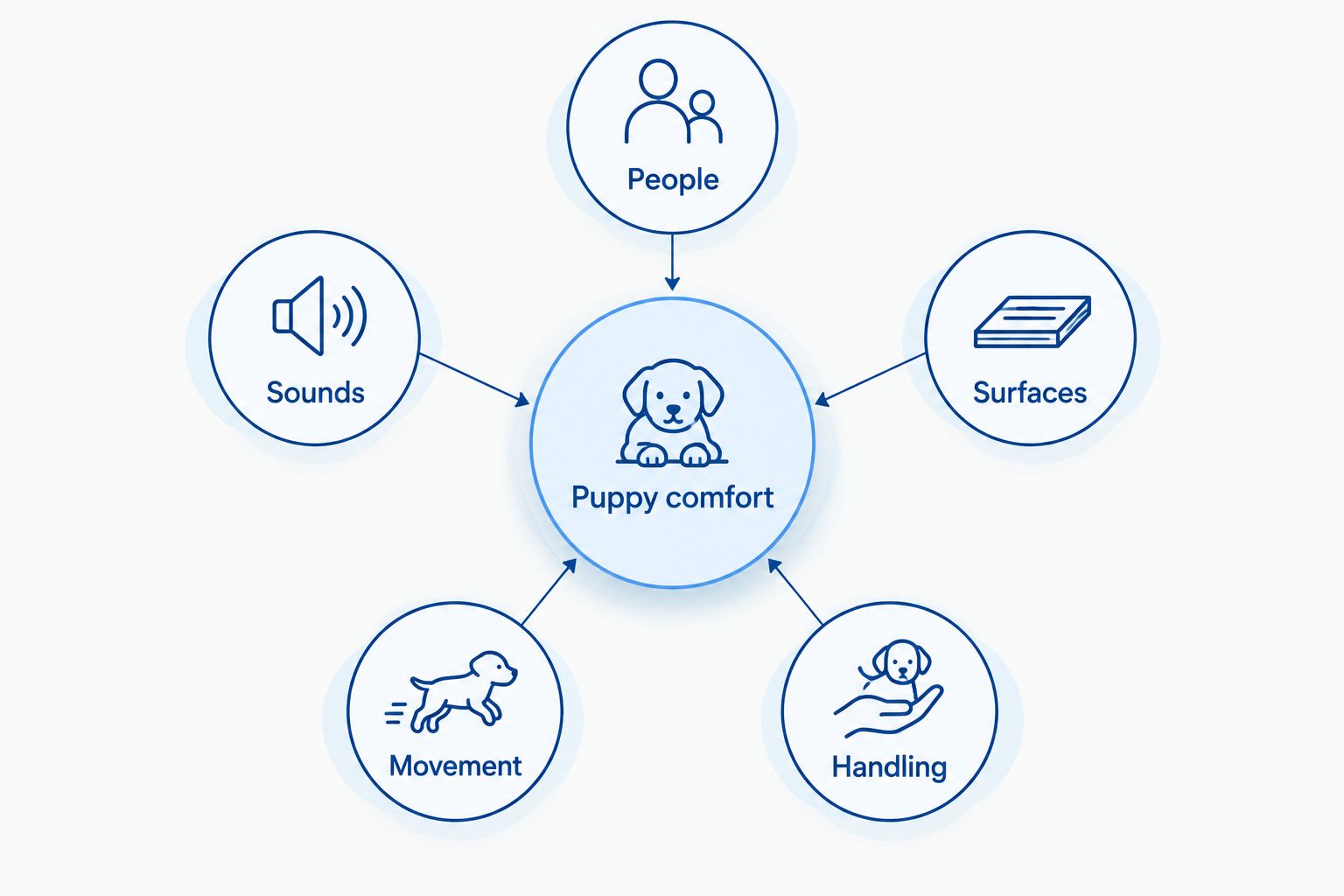
Some people assume biosecurity means raising puppies in isolation. It should not. Toy and Mini Australian Shepherd puppies need gentle handling, household sounds, age-appropriate surfaces, positive human interaction, grooming exposure, and thoughtful early learning. The issue is not socialization. The issue is uncontrolled exposure. A well-managed program introduces safe experiences inside a controlled environment. Puppies can meet healthy, familiar people who follow hygiene protocols. They can experience normal household activity without being passed through crowded public spaces before their vaccine schedule and veterinarian guidance support it. For Toy and Mini Australian Shepherds, this balanced approach matters even more because these are companion dogs placed into homes. They should be confident enough for family life, grooming, car rides, visitors, and everyday noise, without being pushed into risky environments simply to create content or entertain a stream of guests.

What Buyers Should Ask a Breeder

Biosecurity is easy to claim and harder to demonstrate. Buyers should listen for specific answers, not vague reassurance that a breeder “loves their dogs” or keeps everything clean. Ask how puppy access is managed, whether visitors are restricted around young litters, and what sanitation steps are used between dog areas. Ask how new or returning dogs are handled, what veterinary checks puppies receive, and when puppies are vaccinated and dewormed. A qualified breeder should explain their process without becoming defensive. Also ask how the breeder handles pickup day and transportation. Clean crates, limited contact with unknown dogs, responsible pet-nanny coordination when needed, and clear transition instructions all reduce stress and exposure during a puppy’s move to a new home. Be cautious if a seller offers unrestricted visits to every litter, allows buyers to bring their own dogs to meet puppies, meets in random parking lots without records, or pressures you to take a puppy earlier than appropriate. Convenience is not a health protocol.

Biosecurity Continues After Pickup

The breeder’s work does not remove the new owner’s responsibility. The first weeks at home are a poor time for dog parks, pet-store floors, crowded puppy events, shared water bowls, or introductions to unknown dogs. Your veterinarian can advise you on local disease risk and the right vaccination schedule for your puppy. Start with controlled experiences. Invite healthy, known people into your home. Carry your puppy in higher-risk public settings if you need to bring them along. Keep your yard clean, supervise outdoor time, and do not assume a private-looking area is safe if unfamiliar dogs have access to it. A careful start is not being overprotective. It gives a young Toy or Mini  Australian Shepherd the time to build immunity while still learning that people, sounds, handling, and home life are normal. That is the kind of protection a good puppy deserves before it ever becomes your best companion.

Toy Aussie Family Temperament for Real Homes

Toy Aussie family temperament explained: affection, training, herding instincts, children, and the honest home setup these bright dogs need to thrive well.
A small Australian Shepherd can look like the easy version of a big, busy dog. That assumption gets families into trouble. Toy Aussie family temperament is often affectionate, people-focused, intelligent, and highly trainable, but these dogs still need structure, attention, and an owner who means what they say. A Toy Aussie is not a decorative dog that happens to be clever. It is a real Australian Shepherd in a smaller package, and the home needs to be ready for that. For the right family, a carefully bred Toy Aussie can be an outstanding companion. They tend to stay close, learn household routines quickly, and form strong bonds with their people. For a household looking for an alert, responsive dog with manageable size, that combination is hard to beat. The catch is simple: intelligence without direction becomes nuisance behavior fast.

What Toy Aussie Family Temperament Really Means

Temperament is more than whether a puppy is sweet when visitors arrive. It includes how the dog handles frustration, novelty, noise, children, being left alone, correction, other dogs, and daily changes in routine. A puppy can be friendly and still be too intense for a quiet home. Another can be calm in a litter yet need confidence-building experiences as it matures. Well-bred Toy Aussies are commonly affectionate with their own families and naturally interested in what everyone is doing. Many want to follow their person from room to room, rest nearby, and take part in daily activity. This devotion is one reason families are drawn to them. It can also mean they do poorly when they are treated like an occasional pet with little interaction or training. Australian Shepherds were developed to notice movement, respond to direction, and work in partnership with people. Size does not erase those inherited tendencies. A Toy Aussie selected for lower herding drive and companion suitability may be easier to settle in a family home than a high-drive working prospect, but it will still be observant, quick to learn, and more mentally engaged than many small companion breeds.

Are Toy Aussies Good With Children?

They can be excellent with children when adults manage both the dog and the children properly. The best family relationships are built on calm, supervised interaction, not on the idea that a dog should tolerate unlimited grabbing, chasing, shouting, or disrupted sleep. No responsible breeder should promise that every puppy is automatically safe with every child in every setting. Toy Aussies often enjoy being included in family life. They can become especially attached to respectful older children who participate in feeding, simple training, walks, and games. Their trainability gives families a real advantage. A child can help practice a sit, down, recall, or place command, while the adults remain responsible for consistency and safety. The trade-off is that some puppies may try to control fast movement. Heel nipping, circling, barking at running children, or chasing scooters are behaviors families need to address early. This is not a reason to panic or label a young dog aggressive. It is a reason to train. Interrupt the behavior, redirect to a known command or appropriate toy, and prevent repeated practice. Letting a puppy rehearse herding behavior around children for months is how a manageable instinct becomes a household problem. Very small Toy and  Small Toy puppies also need physical protection. A dog under 12 inches at maturity may be a good fit for a smaller home, but it is not a stuffed animal. Homes with toddlers should be particularly honest about foot traffic, dropped toys, rough play, and whether adults can supervise closely. Sometimes a slightly larger Miniature Australian Shepherd is the safer choice for an active young family.

Affectionate Does Not Mean Passive

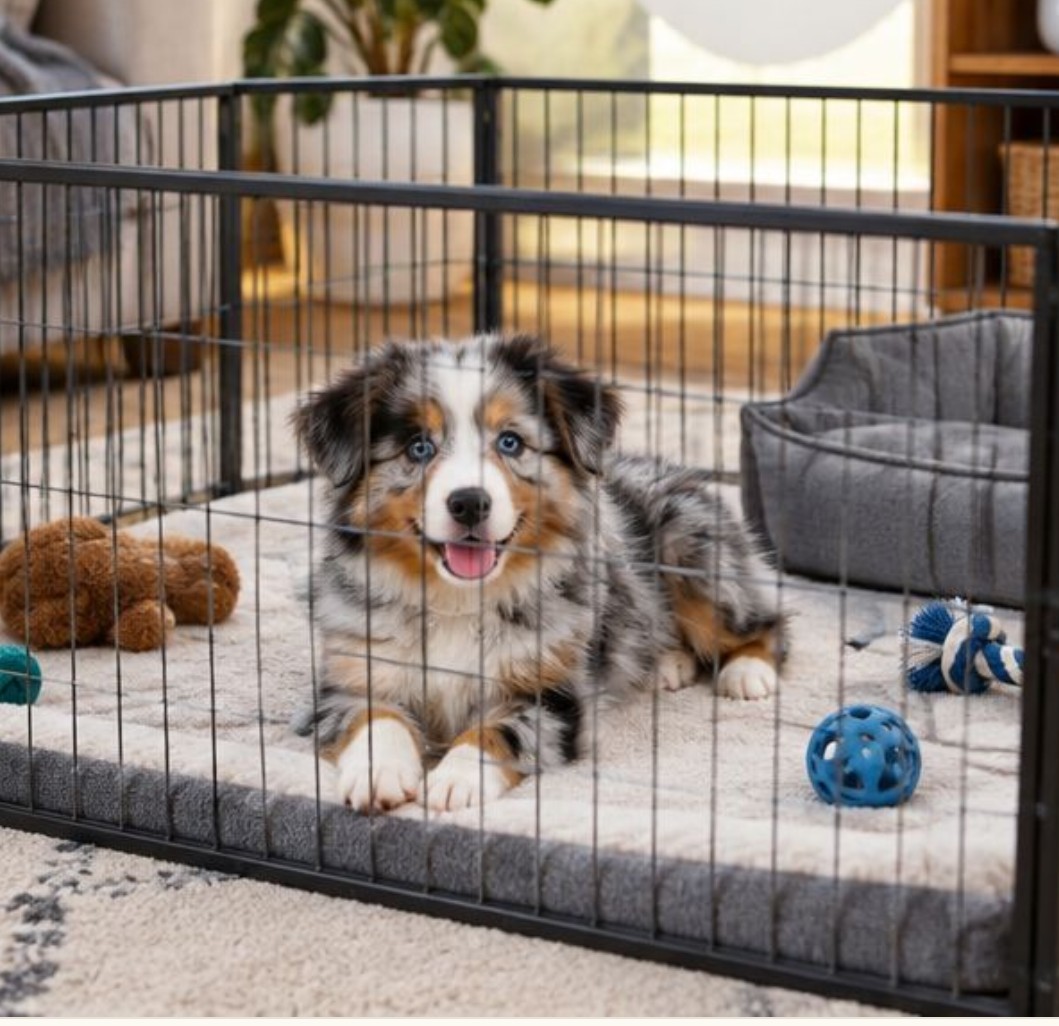
Many buyers want a dog that loves its family but is not frantic with every stranger. That is a sensible goal. Toy Aussies are often reserved for a few minutes in new situations, then warm up once they have assessed the environment. A stable dog does not need to greet every person like a long-lost friend. What matters is that the dog can recover, take direction, and remain manageable. A family should not confuse alertness with a guarding temperament. Toy Aussies may bark when someone comes to the door or when activity changes outside. That is normal breed awareness. It becomes a problem when barking is rewarded, ignored for too long, or allowed to become the dog’s job. Teach a quiet cue, give the dog a place to settle, and control window access if outside movement causes constant excitement. The same principle applies to separation. A close companion can still learn to rest independently. Short, planned periods behind a gate, in an exercise pen, or in a crate help a puppy understand that being alone briefly is normal and safe. Families who carry a puppy everywhere and never build this skill often create unnecessary distress later.

Breeding Matters, but Raising Matters Too

A puppy’s temperament begins with genetics and the quality of its early environment. Parents with sound nerves, good recovery, manageable energy, and a history of living successfully as companions give breeders a stronger starting point. That is why responsible selection cannot be based on color, eye color, or pedigree paperwork alone. At Hughes Toys, more than 30 years of breed-specific work has reinforced a plain fact: breeding for smaller size must not come at the expense of health, stable temperament, or family suitability. Multi-generation known parents,  genetic testing, veterinary checks, careful biosecurity, and a documented health guarantee are part of accountable breeding. They do not create a finished dog, but they help reduce avoidable surprises and support better placement decisions. Then the puppy goes home, and the family takes over. Socialization is not taking a puppy into every crowded store until it is overwhelmed. It is controlled exposure to normal life: different surfaces, calm visitors, car rides, grooming, household sounds, polite dogs, and brief separations. The goal is confidence, not constant stimulation. Puppy classes can be useful when they are clean, well-run, and focused on positive handling and practical skills. A good class should help owners read body language and prevent problems. It should not encourage chaotic free-for-all play as the only definition of socialization.

The Daily Routine That Helps a Toy Aussie Settle

A Toy Aussie does not need hours of forced exercise to be a good family dog. In fact, repeatedly pushing a growing puppy into long runs or hard physical activity is poor judgment. What they need is a balanced routine that includes age-appropriate movement, training, rest, and controlled engagement with the family. For an adult, a couple of purposeful walks, short training sessions, sniffing opportunities, and play usually provide a better foundation than trying to wear the dog out physically. Mental work matters. Practice recall in a fenced area, teach place while dinner is prepared, use food puzzles, or build manners into ordinary routines. Ask for a sit before the leash goes on, wait at doors, and reward calm behavior rather than only reacting when the dog is loud. Consistency matters more than complicated methods. If one person allows jumping on guests, another yells about it, and a third gives attention for barking, the dog receives three different lessons. Toy Aussies notice those gaps quickly. Clear rules make them easier to live with.

Matching the Puppy to the Household

The right question is not simply, “Is a Toy Aussie good with families?” The better question is, “Which puppy and which household are likely to work well together?” A retired couple wanting a devoted walking companion may need a different energy level than a Portland family with school-age children, a cat, and weekend travel plans. A first-time Aussie owner may benefit from a naturally easier-going puppy, while an experienced training-focused home may enjoy more intensity. Be candid with the breeder about work schedules, children’s ages, other animals, apartment living, yard access, travel, and the amount of daily involvement the dog will receive. A good match is not an insult to a buyer’s preferences. It is protection for the puppy and the family. The flashiest merle coat or blue eyes do not make a puppy the right fit if its energy and confidence level do not match the home. well-matched Toy Aussie should add participation to family life, not pressure. Choose the puppy you can train, supervise, include, and enjoy for the next decade or more. That is where the best family temperament has room to show itself.

Toy and MIni Australian Shepherd Low Herding Drive Explained

Learn what an Australian Shepherd low herding drive means, how temperament is bred and raised, and how to choose a calm, capable family companion pet dog.
Families searching for an “Toy or Mini australian shepherd low herding drive” are usually not asking for a lazy dog. They want the intelligence, loyalty, trainability, and striking mini Aussie look without spending every evening stopping a dog from circling children, chasing bikes, or attempting to manage the household. That is a reasonable goal, but buyers need a clear definition of what low herding drive actually means and what it does not promise. A well-bred Toy or Miniature Australian Shepherd can be an attentive, responsive companion with a more manageable instinct to control motion. That still leaves you with an Aussie. Expect a bright dog that notices patterns, learns quickly, and needs regular involvement with its people. The goal is not to remove the breed’s character. The goal is to select and raise a dog whose natural intensity fits ordinary family life.

What Toy – Mini  Australian Shepherd Low Herding Drive Means

Herding drive is the instinct to notice, pursue, gather, control, or direct moving animals and objects. In a working setting, those instincts have purpose. In a suburban living room, the same behavior can show up as stalking the cat, circling running children, barking at scooters, heel-nipping, or becoming overly focused on movement outside the window. A lower-drive mini Australian Shepherd is less likely to make motion control its personal job. Many are content to watch activity, check in with their owner, and move on. They may still enjoy chasing a ball or playing with another dog. They may alert at unfamiliar activity. Those are not automatic signs of serious herding drive. The difference is recovery and intensity. A suitable companion dog can become excited, then settle when the activity ends or when directed to do something else. A dog with stronger working instincts may stay locked onto the trigger, repeatedly rehearse the behavior, and require much more management. That distinction matters far more to most households than whether a puppy is simply energetic at eight weeks old. Low herding drive should also never be confused with fearfulness, dullness, or poor trainability. A good companion Aussie should be socially sound, curious, affectionate, and willing to engage. A puppy that shuts down around normal sights and sounds is not a calmer version of the breed. It may be an insecure puppy, and insecurity can create its own behavior problems.

Temperament Is Bred Before It Is Trained

Training matters, but it cannot fully rewrite inherited behavior. A breeder who claims every puppy will be calm, low-drive, non-barking, and perfect with every child is selling a story, not setting honest expectations. The responsible approach starts with selection over generations. Breeding dogs should be evaluated for their ability to settle, their response to unfamiliar situations, their social stability, their reactivity, and the intensity of their herding-related behavior. Their family history matters too. One pleasant parent does not erase a line of highly intense dogs. At Hughes Toys, more than 30 years of breed-specific experience has made one point very clear: pedigree alone is not proof of a good family dog. Multi-generation breeding- personally known the parents multi-generatiion,  genetic testing, veterinary checks, and documented breeding history are meaningful standards. They must be paired with practical knowledge of the individual dogs being bred. Temperament selection is a long-term program, not a label added to a puppy listing. Even with careful breeding, no ethical breeder can promise that every puppy in a litter will have identical energy or instincts. Littermates can differ. One may be more reserved and observant; another may be more playful and outgoing. This is why direct breeder evaluation and honest puppy matching are more useful than choosing strictly by coat color, eye color, or photos.

A Smaller Aussie Is Not Automatically a Lower-Drive Aussie

Toy, Small Toy, and Miniature Australian Shepherds are appealing to families who want a more manageable adult size. A smaller dog can be easier to carry, travel with, and accommodate in a city-sized home. Size, however, does not automatically determine temperament. A small Aussie from high-intensity working stock can still have a great deal of herding drive. Conversely, a larger dog from a companion-focused program may be notably calmer. Buyers should treat size and drive as separate questions. Ask about expected adult height and weight, then ask how the puppy’s parents behave around children, visitors, livestock, other dogs, and ordinary household activity. The same goes for color. Merles, blue-eye tris, and other eye-catching colors can be beautiful, but appearance does not predict whether a puppy will settle beside you after a walk. Health documentation, temperament history, and an accurate description of the individual puppy deserve equal or greater weight in the decision.

The Home Environment Still Shapes the Dog

A lower-drive puppy needs thoughtful raising. Without it, even a naturally easygoing Aussie can learn bad habits. Repeatedly allowing a puppy to chase children, bark at passing dogs through a window, or grab pants legs during play teaches the puppy that those behaviors work and are enjoyable. Start with structure. Give the puppy a predictable routine for meals, potty trips, rest, play, and short training sessions. Teach a recall, a place or settle cue, polite leash behavior, and an appropriate way to ask for attention. When children are involved, adults should supervise active games and stop chasing or rough play before the puppy becomes over-aroused. Physical exercise is necessary, but endless high-speed activity is not the answer for every Aussie. Some owners accidentally create an athlete that needs more and more stimulation without ever learning to relax. A better plan combines moderate daily movement with training, sniffing walks, age-appropriate play, and calm downtime. Puppies need substantial sleep. An overtired puppy often looks hyper, mouthy, or difficult when it actually needs a quiet break. Mental work is useful, but keep it practical. Food puzzles, short obedience practice, simple scent games, and learning household manners can satisfy an intelligent dog without turning every day into a competitive training program. The right balance depends on the dog, its age, and the household’s schedule.

Questions Buyers Should Ask a Breeder

puppies are observed and matched. A breeder who spends daily time with a litter can often describe which puppy is more independent, more people-focused, more active, or quicker to recover from new experiences. That does not make temperament placement an exact science, especially with very young puppies, but it is far better than letting buyers choose only from a picture. Also ask about health practices. Genetic testing cannot guarantee a lifetime without veterinary needs, but it is part of responsible risk reduction. Veterinary checks, a clear health guarantee, clean biosecurity practices, and transparent records show whether a breeder operates with accountability. A calm temperament is valuable, but health and sound structure are not optional trade-offs.

Is a Low-Drive Aussie Right for Your Family?

For many families, a lower-drive Australian Shepherd is an excellent middle ground. You can have a dog that wants to train, travel, hike, play, and stay close to its people without needing livestock work or nonstop organized activity. This can be particularly appealing for households with school-age children, retirees who still want an engaged companion, and apartment or suburban owners committed to daily exercise and training. It depends on what you mean by calm. If you want a dog that needs almost no activity, does not notice visitors, and is content with a brief potty walk, an mini Australian Shepherd may not be the best breed choice. If you want a smaller, devoted dog with a sensible off-switch, good trainability, and enough energy for an involved family, a carefully selected companion-bred Aussie can fit very well. The best next step is to describe your real life plainly: the ages of your children, other pets, work schedule, travel plans, exercise habits, and tolerance for barking or grooming. A good breeder should use that information to guide the match, not pressure you toward the first available puppy. The right puppy is the one whose temperament gives your household room to enjoy the dog you brought home.

Are Mini Aussies Good Apartment Dogs? The Real Test

Are mini aussies good apartment dogs? Yes, when temperament, exercise, training, and daily structure fit the dog and the household living there well.
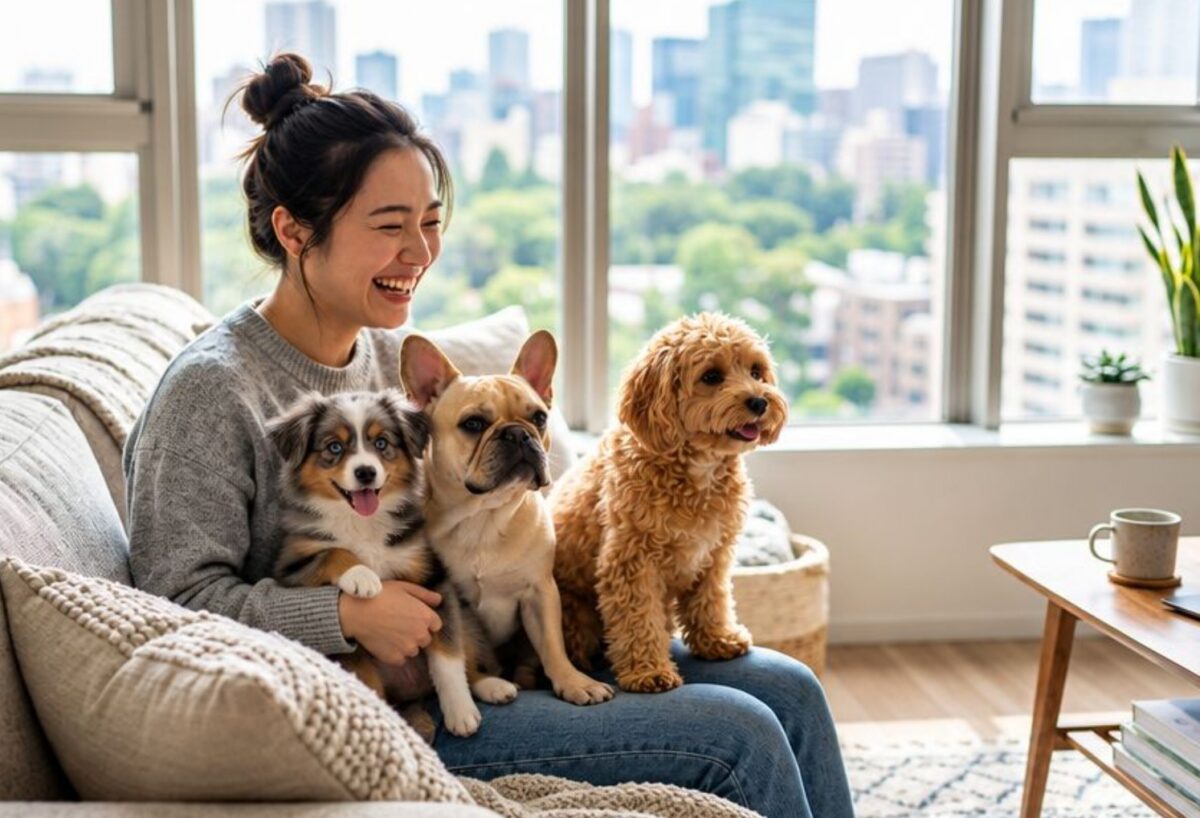
A Mini Aussie can be perfectly comfortable in an apartment while a poorly matched one can make a large house feel too small. So, are mini aussies good apartment dogs? The honest answer is yes, but only when buyers understand that square footage is not the main issue. Temperament, breeding, daily outlet, training, and the owner’s consistency matter far more than whether the dog lives behind a front door or a backyard fence. Miniature Australian Shepherds are smart, attached to their people, and observant. Those are excellent companion traits. They also mean they notice hallway traffic, delivery sounds, changing routines, and a bored owner who expects them to entertain themselves all day. An apartment can work very well. It is not a substitute for responsible ownership.

Are Mini Aussies Good Apartment Dogs for Most Owners?

They can be, particularly for owners who want an involved companion rather than a decorative small dog. A well-bred Mini Aussie with a manageable temperament can settle near your desk, ride along on errands, learn household rules quickly, and be deeply connected to family life. Many do not need acres of land. They do need a job of some kind, even if that job is training, walking, traveling with you, practicing obedience, or learning to relax appropriately indoors. The phrase “Mini Aussie” can create false expectations. Smaller does not automatically mean low-energy, quiet, or easy. This is still an Australian Shepherd in type. The breed is intelligent and responsive, with a natural tendency to watch movement and stay engaged with its people. If a puppy comes from high-drive working lines, has an intense herding instinct, or is placed with an inactive owner, apartment living may become frustrating for both dog and household. That is why responsible placement starts before a puppy goes home. Buyers should ask direct questions about the parents’ size, temperament, energy level, behavior in the home, and the breeder’s goals. Registration alone does not answer those questions. A pedigree may document ancestry, but it does not guarantee that a puppy is suited for an apartment, a young family, a quiet retiree, or a first-time owner.

What Makes an Apartment Mini Aussie Work

The best apartment dog is not necessarily the smallest puppy in the litter. It is the puppy whose temperament fits the actual home. A confident but not frantic puppy, with an ability to recover from new sounds and settle after activity, is often a better choice than the boldest, busiest puppy available. At Hughes Toys, selection has been built around companion-oriented Toy and Miniature Australian Shepherds for more than 30 years. That means paying attention to more than color, eye color, or a photo at six weeks. Calmer disposition, manageable size, lower herding drive, health background, and family compatibility are practical breeding priorities because they affect daily life for years. For apartment owners, three habits carry the most weight: regular movement, mental work, and an indoor off-switch. A dog that receives a purposeful walk and a few minutes of training is usually easier to live with than a dog given random bursts of activity but no direction. A puppy also needs to learn that not every sound in the hallway requires a response and that resting while the owner works is normal. A realistic weekday might include a morning walk with a few obedience repetitions, a midday potty break and short play session, then an evening walk, training game, or outing. That is not an extreme program. It is consistent structure. On weekends, a Mini Aussie may enjoy a longer trail walk, a visit to a dog-friendly location, or time practicing new skills in a quiet park.

Exercise Is Necessary, but Over-Exercising Is Not the Goal

Some owners make the mistake of trying to wear out an intelligent herding breed physically every day. That can create an athlete with no ability to settle. Puppies, especially, need age-appropriate exercise that protects growing joints and leaves room for sleep, socialization, and calm handling. Mental engagement counts. Short sessions teaching leash manners, recall, place, wait, touch, and polite greetings can tire a young dog more effectively than endlessly throwing a ball. Food puzzles, supervised chewing, scent games, and simple obedience routines also give the dog something useful to do inside the apartment. The goal is not exhaustion. The goal is a dog that knows when it is time to engage and when it is time to rest.

The Apartment Challenges Buyers Should Not Ignore

Apartment life does place certain demands on both puppy and owner. Potty training requires more planning when there is no fenced yard ten steps away. Young puppies need frequent trips outside, including overnight at first. If you work long shifts away from home, live several flights up, or cannot arrange help during the puppy stage, that needs to be considered honestly before bringing one home. Noise is another issue. Mini Aussies can be alert dogs. A puppy that is allowed to bark at every elevator, neighbor, dog, or package delivery may develop an annoying routine quickly. This is not fixed by yelling at the dog after the fact. It is handled through early training, controlled exposure, enough daily activity, and rewarding quiet behavior. Herding behavior can also show up in apartment settings. Some dogs may want to chase joggers, bicycles, children running through a courtyard, or other dogs passing at close range. Good leash handling and early redirection matter. Do not laugh off repeated ankle nipping or frantic chasing as harmless puppy behavior. Address it while the puppy is small and teach an alternate behavior. Finally, apartment dwellers need to think about access to outdoor space. You do not need a private yard, but you do need a practical plan. A nearby walking route, green space, safe potty area, and time in your schedule are more valuable than a large apartment with nowhere convenient to go.

Size Helps, but Temperament Decides More

A properly bred Miniature Australian Shepherd is easier to manage physically than a standard-sized dog, particularly in elevators, cars, shared hallways, and compact living areas. Smaller size can make travel, grooming, crate placement, and day-to-day handling more convenient. It does not erase the breed’s need for training and connection. Toy and very small Australian Shepherds may suit some city households even better, but buyers should not choose solely by inches or pounds. The smallest adult dog is not automatically the calmest or the best fit. A breeder should be able to explain expected adult size based on the parents and previous generations, while being candid that living animals are not manufactured products. Health documentation matters here as well. Genetic testing, veterinary checks knowing the parentage for multi-generation  and a clear health guarantee are part of responsible breeding practice. They do not make a puppy maintenance-free, but they show that the breeder has done the work to reduce avoidable risk and provide buyers with meaningful information.

Who Should Think Twice?

A Mini Aussie may not be the right apartment dog for someone who wants a puppy that can be left alone for long workdays with little interaction, dislikes training, or expects a naturally silent dog around constant hallway activity. It may also be a poor match for an owner unwilling to manage the early months of potty trips, chewing, socialization, and leash practice. On the other hand, a city-based owner who enjoys daily walks, wants a highly trainable companion, works from home or has a reliable routine, and is prepared to teach calm behavior can do very well with the right puppy. Families should also involve children in the rules: no chasing, no rough handling, and no treating the puppy like a toy because it is small. An apartment is simply the setting. The real question is whether your daily life has room for a smart, loyal dog that expects to be included. Choose a puppy for temperament and fit, build a routine from the first week home, and give that dog a reason to settle beside you when the day is done.