
Toy Aussies for seniors and retirees: complete 2026 guide
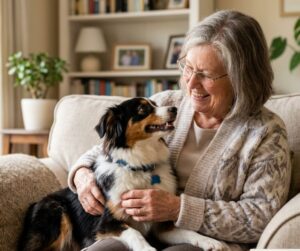
Toy Aussies for seniors and retirees are Toy or Miniature Australian Shepherds selected and raised specifically to match the pace, strength, and daily routine of an older adult, with the goal of giving a retiree a companion dog they can actually handle for the next 12 to 15 years. Seniors need lower lifting weight, calmer default energy, and a breeder willing to talk honestly about which puppy in a litter fits a slower household, not just which one is available first.
{
  "points": [
    "A toy aussie for seniors should land in the 12-25 lb range as an adult so lifting, grooming, and vet handling stay manageable.",
    "Hughes Toys matches temperament to household pace before a puppy goes home, not after problems show up in 2026.",
    "Retirees should budget for daily walks, weekly brushing, and at least one vet visit in the first month.",
    "Standard Australian Shepherds are typically too much dog for most seniors; Toy and Miniature lines are the better match.",
    "Ask any breeder for genetic testing results and a written health guarantee before you commit."
  ]
}
Why this matters for seniors and retirees
A retiree picking a dog in 2026 is usually solving for three things at once: physical capability, daily structure, and long-term companionship without the risk of outliving the dog’s usefulness to the household. A Toy Australian Shepherd from Hughes Toys is bred down in size specifically so an 8 to 25 lb adult dog doesn’t drag an 70-year-old owner across a parking lot on a leash. The standard Australian Shepherd was built as a working ranch dog — 40 to 65 lbs, high drive, needs a job every day. That temperament doesn’t fail seniors because it’s a bad dog; it fails because the physical and time demands don’t match a slower household. Toy and Miniature lines keep the breed’s intelligence and loyalty while dropping the size and drive to something a retired household can sustain.Match energy level to your lifestyle
Energy is genetic and shows up in the first 8 weeks, well before a puppy leaves the litter. A responsible breeder is already watching for it.- Ask which puppies in the litter settle fastest after play — that’s your calmer prospect
- Avoid the puppy that’s first to the food bowl and last to nap; that’s usually the highest-drive pup
- Request a temperament note from the breeder, not just a photo
- Plan for two 15-20 minute walks a day even with a calmer Toy Aussie
- Skip working-line breeders entirely if daily structured exercise isn’t realistic for you
Check your home and yard setup
A Toy or Miniature Aussie doesn’t need acreage, but it does need a few basics before it arrives.- A fenced yard or a reliable leash routine — these dogs will chase movement
- Non-slip flooring near stairs if balance is a concern for you or the dog
- A crate or pen sized for an 8-25 lb adult, not a large-breed setup
- Baby gates if you have steep stairs and want to limit access early on
- A designated potty spot close to the door to cut down on trips outside in bad weather
Plan for physical handling and vet visits
A 12-25 lb dog is liftable for most seniors; a 45 lb dog often isn’t. That single number changes what’s realistic for nail trims, vet exams, and bath time.- Confirm the adult weight range with the breeder before you commit to a specific puppy
- Ask whether the puppy has had its first vet check and what was found
- Line up a local vet who does house calls or has ground-floor exam rooms if mobility is limited
- Budget for at least one vet visit in the first 30 days home
- Ask about genetic testing on the parents — hip and eye issues show up more in some Aussie lines than others
Budget for daily care routines
Daily care for a Toy Aussie is lighter than a standard-size dog but still real work.- Brushing two to three times a week to manage the double coat
- Nail trims every 3-4 weeks, more often if the dog isn’t on pavement daily
- Feeding twice a day on a fixed schedule — these dogs do better with routine
- A simple training routine of 10 minutes a day in the first six months
Prepare for training and socialization
Aussies of any size are smart and get bored fast. Boredom is what turns a calm puppy into a barker or a chewer, not the breed itself.- Start basic commands the first week home — sit, stay, come
- Use short sessions, 5-10 minutes, two or three times a day
- Socialize with a few new people and dogs in the first two months, not a crowd all at once
- Puzzle feeders or slow-feed bowls if the puppy shows food-driven energy
- A local puppy class if you want structured socialization without doing it solo
Line up backup care and support
This is the step most seniors skip, and it’s the one that matters most long term.- A neighbor, family member, or pet sitter who can step in for a few days
- A boarding option researched in advance, not found in an emergency
- A written note of the dog’s routine, food, and vet contact somewhere a helper can find it
- A plan for the dog if travel or a hospital stay comes up unexpectedly in 2026 or later
Ask breeders the right questions
Not every breeder selling “toy” or “mini” Aussies is doing genetic testing or honest temperament matching. Ask direct questions before you send a deposit.- What genetic testing has been done on the parents?
- What’s the expected adult weight range for this specific litter?
- Can you match a puppy to a lower-energy household, or is it first-come first-served?
- What does the health guarantee cover, and for how long?
- Is there support available after the puppy goes home if questions come up?
Bring the puppy home safely
The first 72 hours set the tone for the next 12 years.- Keep the first days low-key — no big family gatherings the day the puppy arrives
- Confirm feeding schedule and food brand with the breeder before pickup
- Have the crate, food, and vet appointment already set up before the puppy walks in the door
- Watch for the calmer temperament traits the breeder described — they should show up within the first week
{"heading":"See which puppies fit a quieter home","description":"Ask Hughes Toys about temperament matching for a slower-paced household.","buttons":[{"label":"View Hughes Toys","url":"https://toyminiaussies.com/"}]}Comparison: size options for senior households
| Option | Best for | Key limitation | Verdict |
|---|---|---|---|
| Toy Australian Shepherd | Seniors wanting minimal lifting weight, apartment or small-yard living | Still needs daily structure and short walks | Buy |
| Miniature Australian Shepherd | Seniors with a fenced yard who want slightly more dog | Higher energy than Toy lines in some litters | Buy |
| Standard Australian Shepherd | Active retirees with acreage and daily hiking routines | Too much size and drive for most seniors | Skip |
| Other small companion breeds (Cavalier, Shih Tzu) | Seniors who don’t want herding-breed intelligence or drive | Different temperament profile, less trainable focus | Hold |
Common mistakes seniors make
- Picking the puppy that runs to you first. That’s often the highest-energy pup in the litter, not the easiest one to live with.
- Skipping the genetic testing question. Hip and eye issues cost more in vet bills and mobility than the extra five minutes it takes to ask.
- Underestimating grooming time. The double coat needs brushing two to three times a week even on a small dog.
- No backup care plan. A hospital stay or a family emergency shouldn’t be the first time you think about who watches the dog.
- Assuming “toy” size means zero exercise needs. Even a 10 lb Toy Aussie needs two short walks a day to stay settled.
FAQ
{
  "items": [
    {
      "q": "What's the best dog breed for seniors in 2026?",
      "a": "A Toy or Miniature Australian Shepherd is a strong option for seniors in 2026 because it keeps the breed's intelligence and loyalty while cutting the size and exercise demands of a standard Aussie. The right match still depends on matching the specific puppy's temperament to your daily routine."
    },
    {
      "q": "How much does a Toy Australian Shepherd weigh as an adult?",
      "a": "Toy Australian Shepherds typically land between 8 and 25 lbs as adults, depending on the specific line and parents. Confirm expected adult weight with the breeder before committing to a puppy."
    },
    {
      "q": "Is a Toy Aussie better than a Miniature Aussie for an older adult?",
      "a": "A Toy Aussie is generally the better fit for lifting and handling ease, while a Miniature Aussie suits a senior with a fenced yard who wants slightly more dog. Both need daily structure; the difference is mostly size and marginal energy level."
    },
    {
      "q": "Do Toy Aussies need a lot of exercise?",
      "a": "Toy Aussies need two 15-20 minute walks a day at minimum, even at a small adult size. Skipping exercise leads to boredom behaviors like barking or chewing regardless of the dog's size."
    },
    {
      "q": "How much grooming does a Toy Australian Shepherd need?",
      "a": "Plan on brushing two to three times a week to manage the double coat and prevent matting. Nail trims every 3-4 weeks round out the basic grooming routine."
    },
    {
      "q": "Are Toy Australian Shepherds good with grandchildren visiting?",
      "a": "Toy Australian Shepherds can do well with visiting grandchildren when socialized early and matched for a calmer temperament from the start. Ask the breeder specifically about the puppy's response to children before committing."
    },
    {
      "q": "What should a senior ask a breeder before buying a puppy?",
      "a": "Ask about genetic testing on the parents, expected adult weight, temperament matching for a slower household, and what the health guarantee covers. A breeder who can't answer these directly is a red flag."
    },
    {
      "q": "How long do Toy Australian Shepherds typically live?",
      "a": "Toy Australian Shepherds commonly live 12 to 15 years with routine vet care. That lifespan is a key reason to plan backup care options before bringing a puppy home."
    }
  ]
}