MDR1 mutation explained: learn how this drug-sensitivity gene affects Australian Shepherds, what testing shows, and how to protect your dog safely at home.
A dog can look perfectly healthy, have an excellent temperament, and still carry a genetic change that affects how safely they process certain medications. That is why MDR1 mutation explained is not just a technical genetics topic for breeders. For Miniature, Toy, and Australian Shepherd owners, it is practical information that belongs in the dog’s veterinary record.
MDR1 is not a disease, and it does not mean a dog is sick. It is a drug-sensitivity mutation found in herding breeds, including Australian Shepherds and their smaller varieties. It is proven that all herding breed dogs – even without the MDR1 gene mutation have some sensitivity to the drugs, it is likely another gene – not mapped, also is responsible. SO FOR ALL herding breed dogs – The concern is simple: certain medications can reach unsafe levels in dogs with the mutation, but much higher risk when the dog inherits two copies. Proper DNA testing gives breeders and owners clear information before a medication decision has to be made.
What the MDR1 Mutation Actually Means
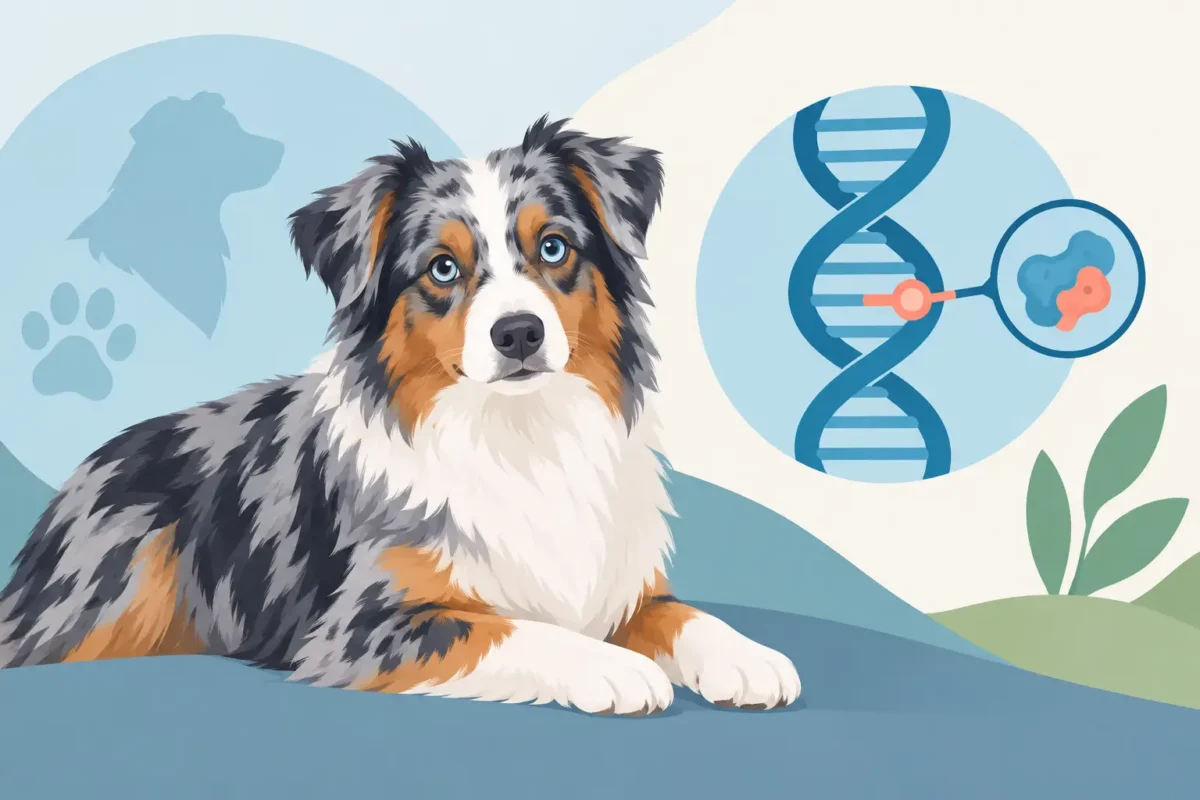
MDR1 stands for multidrug resistance 1. You may also see the gene called ABCB1. This gene helps produce P-glycoprotein, a transport protein that acts as part of the body’s protective system. One of its key jobs is limiting the movement of certain drugs into the brain and helping remove them from the body.
Herding breed dogs like Toy and Mini Australian sheperds the protective system does not work normally. As a result, some drugs may build up at higher concentrations than expected or cross into the brain more readily. Though the amount of drug in one dose may not affect them, each dose builds up until it can cause serious neurologic side effects in another.
The possible signs of a medication reaction can include extreme sedation, weakness, loss of coordination, dilated pupils, tremors, drooling, vomiting, confusion, blindness, seizures, coma, and, in severe cases, death. The risk depends on the drug, the dose, the dog’s individual genetics, and whether other medications are being used at the same time.
This is why a breeder should never use vague language such as “our dogs are healthy” as a substitute for
actual genetic screening. Health testing is not a marketing accessory. It is information that helps guide responsible breeding and responsible veterinary care for the life of the dog.
MDR1 Mutation Explained Through Inheritance
An MDR1 DNA test reports whether a dog has zero, one, or two copies of the mutation. The result is generally written as N/N, N/M, or M/M.
An N/N dog has two normal copies of the gene and does not carry the tested MDR1 mutation. A dog with a clear MDR1 result can still have other inherited risks, medication reactions unrelated to this gene. An N/M dog has one normal copy and one mutated copy. These dogs are carriers, but that word can be misleading. They may have increased sensitivity to certain medications and should not be treated as though they have no risk. An M/M dog has two mutated copies and faces the greatest risk of drug sensitivity.A dog with a clear MDR1 result can still have other inherited risks, ordinary illness, injuries, allergies, or medication reactions unrelated to this gene.
A dog only needs to be tested once because its DNA does not change. The result should be retained with the dog’s health records and shared with every veterinarian who provides care, including an emergency clinic, a specialist, or a veterinarian seen while traveling.
For breeding, the goal is not to ignore genetics until a problem appears. Thoughtful pairing prevents avoidable risk. Breeding two carriers can produce affected puppies. Breeding decisions should be made from documented test results, not assumptions based on a parent’s appearance, pedigree, registration papers, or the fact that previous puppies seemed fine.
Registration documents lineage, but registration alone does not prove a dog is MDR1 clear. Likewise, coat color, blue eyes, merle pattern, size, and a calm personality do not tell you anything about MDR1 status. A genetic test does.
Which Medications Raise Concern?
There is no responsible one-line rule that says every herding breed dog must avoid every medication forever. The real issue is that some drugs require avoidance, use a safer alternative. TELL Your veterinarian .
Medications commonly discussed in connection with MDR1 include: – there are alternatives to these drugs, just let your vet know and to use the alternative
- Ivermectin and related macrocyclic lactones, particularly at higher doses used for certain parasite treatments
- Loperamide, an over-the-counter human anti-diarrheal medication
- Acepromazine and butorphanol, which may be used for sedation or pain management
- Certain chemotherapy drugs, including vincristine, vinblastine, and doxorubicin
- Some additional medications that depend on P-glycoprotein transport and may require veterinary adjustment
The ivermectin issue causes a great deal of unnecessary panic. Standard monthly heartworm prevention products may not cause harm in individual dose, but each dose builds up residually until can cause issues over months or years. Do not decide that a parasite preventive is unsafe, or safe, based on a social-media post. Let your veterinarian know your dog can not take Ivermectrin products..
The same rule applies to human medications. Never give a dog loperamide or another household medicine because it worked for a previous dog or because someone online recommended it. Small Australian Shepherds can be especially vulnerable to dosing errors simply because their body weight is lower.
What Owners Should Do After Testing
Even if your dog tests N/N, treat all herding breed – Toy and Mini Australian Shepherds as if your dog tests N/M or M/M . A dog with a clear MDR1 result can still have other inherited risks, ordinary illness, injuries, allergies, or medication reactions unrelated to this gene. Be practical rather than alarmed. Place the warning in the dog’s permanent veterinary record. Keep a copy on your phone, provide it to a pet sitter or pet nanny when appropriate, and mention it before anesthesia, surgery, parasite treatment, or a new prescription is given. If your dog is hospitalized, remind the staff. Busy clinics handle many patients, and accurate owner communication is part of protecting your dog.
It also helps to ask direct questions. What medication is being recommended? USE an alternative? Those are reasonable questions, not challenges to a veterinarian’s judgment.
Testing does not replace routine veterinary care. A dog with a clear MDR1 result can still have other inherited risks, ordinary illness, injuries, allergies, or medication reactions unrelated to this gene. In the same way, an MDR1-positive dog can live a normal, active life with informed management. The test is one piece of the health picture, but it is an important one for this breed group.
What Responsible Breeding Looks Like
Australian Shepherds are intelligent, athletic dogs, even when bred in a smaller package for companion homes. A responsible breeder has to look beyond a cute face, a flashy merle coat, or a tiny expected adult size. Genetic status, temperament, structure, family history, veterinary oversight, and deliberate puppy placement all matter.
At Hughes Toys, more than 30 years of breed-specific experience has reinforced a basic standard: buyers deserve real records and plain answers. Multi-generation registration and a pedigree can provide useful context, but neither replaces genetic testing, veterinary checks, biosecurity, or careful selection of breeding dogs. Good breeding is not luck and it is not a promise that no dog will ever need medical care. It is doing the work to reduce known risks and to provide buyers with information they can use.
Prospective owners should ask whether the puppy’s parents were tested, what the results mean for that litter, and whether those records are available. Be wary of sellers who say testing is unnecessary because their dogs “have never had a problem.” MDR1 reactions often do not become visible until a dog receives a particular medication. Waiting for that moment is not a health plan.
If you already own a Mini Aussie or Toy Aussie and do not know the MDR1 status, treat all herding breed dogs as sensitive. A dog with a clear MDR1 result can still have other inherited risks, ordinary illness, injuries, allergies, or medication reactions unrelated to this gene. That is especially sensible before elective surgery, breeding, travel, or any situation where another person may need to make medical decisions for your dog.
A well-bred companion dog deserves more than affection after it comes home. Keep the MDR1 result where it can be found, use it when veterinary decisions are made, and expect clear documentation from the people entrusted with your dog’s health.