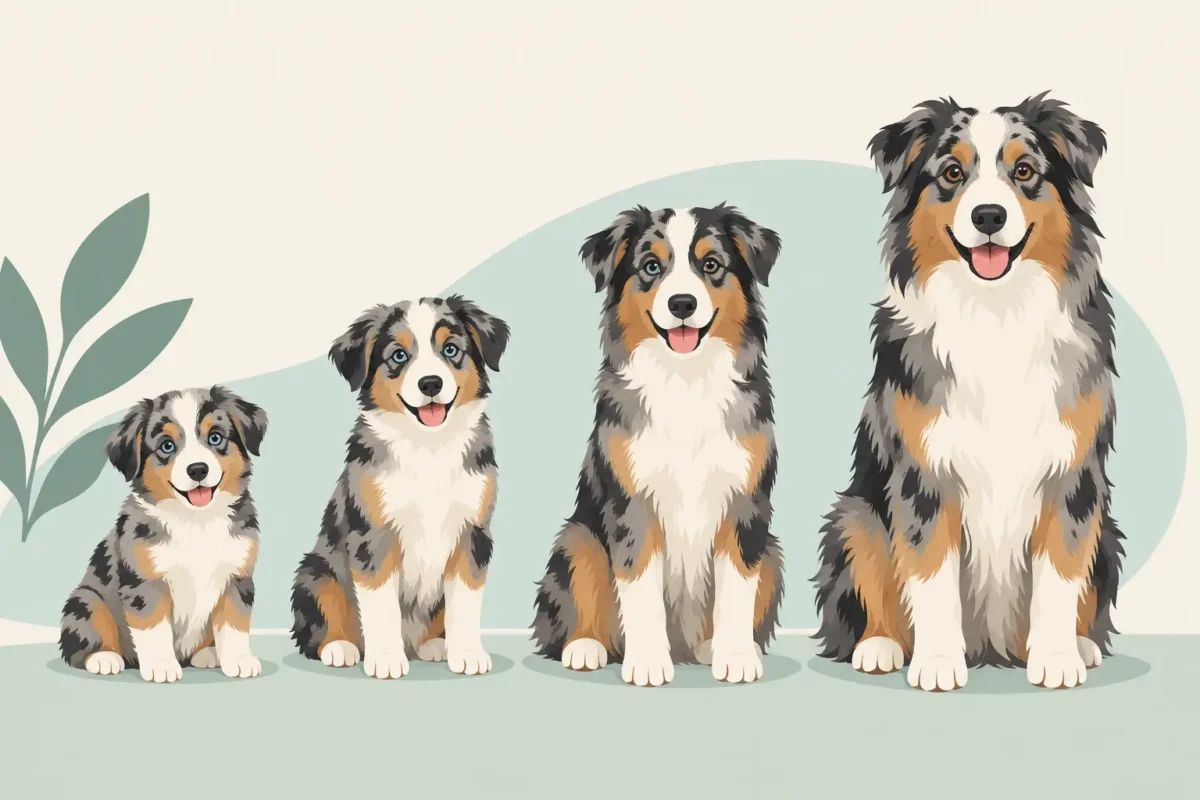
Typical Toy Aussie adult size: 10 to 14 inches at the shoulder and 10 to 25 pounds, with how a breeder estimates adult size from the bloodline.
A small Australian Shepherd should be small because it was deliberately bred that way, not because someone guessed at a puppy’s future size. Families asking
how big Toy Aussies get usually want a companion that fits apartment life, travel, children, and daily routines without giving up the intelligence and unmistakable Aussie look. That is a reasonable goal, but adult size needs to be discussed honestly.
A Toy Aussie is not a one-size-fits-all dog. Height, weight, bone, coat, sex, and the size history behind both parents all matter. A breeder who promises that every puppy will mature to one exact weight is selling certainty that biology does not provide.
How Big Do Toy Aussies Get at Full Size?
Most well-bred Toy Australian Shepherds mature at about
10 to 14 inches tall at the shoulder. Their adult weight commonly falls between
10 and 25 pounds, although a dog’s correct weight depends on its frame and muscle, not a number on a chart.
The shoulder measurement matters more than a casual measurement taken at the top of the head. Dogs are measured from the ground to the withers, the raised point where the neck meets the shoulder blades. A fluffy coat, a lifted head, or a puppy that will not stand squarely can make a dog appear larger or smaller than it really is.
Within the Toy category, there is still meaningful variation. A finer-boned female from small, consistent lines may mature around 10 to 12 inches and weigh near the lower end of the range. A sturdier male may stand closer to 14 inches and carry more muscle while still being a proper Toy Aussie. Neither is automatically better. The right size is the size that matches the family’s expectations and the dog’s sound structure.
At Hughes Toys, we also distinguish “Teacup” TINY Small Toy puppies, expected to remain under 12 inches under 15lbs as adults, from larger Toys and Miniatures. That distinction is useful for buyers who need a truly compact companion, but it should never be used as a reason to chase the tiniest puppy in a litter without considering health, structure, and temperament.
Height Is More Predictable Than Weight
Buyers often ask for an adult weight estimate first. We understand why. Weight helps people picture a dog in their home, on a lap, or in a travel carrier. But it is less reliable than height because mature weight changes with build, exercise, diet, spay or neuter timing, and body condition.
Two 13-inch Toy Aussies can differ by several pounds and both be healthy. One may be compact and lightly built; the other may have a broader chest, heavier bone, and more natural muscle. What should concern an owner is not whether an adult weighs 13 or 16 pounds. It is whether the dog has a defined waist, a healthy body condition, good movement, and appropriate nutrition.
This is why responsible breeders look beyond a single parent’s weight. We evaluate the size pattern across generations. Grandparents, siblings, aunts, uncles, and previous offspring provide a much more useful picture of what a bloodline tends to produce. Personal knowledge of Multi-generations matter because size is inherited through more than the two dogs standing in front of you.
When Is a Toy Aussie Fully Grown?
Toy Aussies do most of their height growth during the first year. Many are close to their adult height at 9 months, though they may continue filling out in chest, coat, and muscle until 12 to 14 months.
Puppies do not grow in a perfectly straight line. A youngster may look long-legged and narrow at five months, then become more balanced as the chest develops. Another may have an early growth spurt and seem large for its age, only to slow down later. Puppy photos and current weight are useful reference points, but they are not a final adult-size prediction.
The most reliable estimate comes from several pieces of information considered together: the measured height and weight of both parents, the grandparents, and great grandparents. The established size of the bloodline, the puppy’s sex and build, and how similarly bred puppies matured in prior litters. A good breeder will explain the estimate and its limits instead of pretending there is no variation.
Small Does Not Mean Fragile
A properly bred Toy Aussie should be compact, athletic, and sturdy enough for normal family life. It should not be bred to look delicate or treated as an ornament. These are intelligent working-breed dogs in a smaller package. They enjoy walks, training, play, and being involved with their people.
That said, smaller dogs require common sense around young children and larger pets. Toddlers need supervision and instruction on respectful handling. Big dogs, even friendly ones, can accidentally injure a small puppy during rough play. The goal is not to make a Toy Aussie nervous or overprotected. It is to provide safe, structured interactions while the puppy develops confidence.
Why Adult Size Varies More Than Buyers Expect
THE original dog that created the “Australian Shepherd” was a LITTLE blue dog, coming from the basque shepherd dogs in France, thru Australia. Came to America with shepherders from Australia, so became known as the Australian Sheperd. Cattle ranchers in America bred the little blue dog to larger breeds to get the intelligence, herding in a larger cattle sized dog. They got to AKC first with a breed “standard” that the breed is over 18″. – called the Standard Australian Shepherd. Some breeders liked the small original size of the LITTLE blue dog and bred to maintain and reduce that size. size has been selectively increased or reduced over generations to create Standard, Toy and Miniature varieties. It also means buyers need to verify what is actually behind a puppy. A puppy marketed as “tiny” without documented parent sizes,
registration history, or mature relatives is not a predictable prospect.
Color does not predict size.
Blue merles, red merles, black tris, and red tris can all mature across the normal range for their variety. Blue eyes do not predict adult height either. Attractive color may be part of what draws a family to a puppy, but it should not replace questions about
health testing, structure, temperament, and bloodline consistency.
Sex can influence size, but it is only one factor. Males are often somewhat heavier or taller than females, yet a small male can mature below a large female from another line. A breeder should not use sex alone as a size guarantee.
Nutrition matters after the puppy goes home. Overfeeding does not make a puppy healthier or improve its adult structure. Rapid, unnecessary weight gain can put extra stress on developing joints and hides a puppy’s natural outline. Feed a quality diet in appropriate portions, monitor body condition, and follow your veterinarian’s guidance rather than trying to force a puppy to grow bigger or stay smaller.
Choosing the Right Size for Your Household
Before choosing a Toy Aussie, decide what “small” needs to mean for your household. Some families want a dog that is easy to lift, fits comfortably in a small home, and can travel with less difficulty. Others want a compact dog but prefer a bit more substance for hiking, older children, or a more active lifestyle.
A “Teacup” Tiny Small Toy can be an excellent match for a household seeking a very compact companion. A larger Toy may be better for families who want a small dog with a little more physical presence. Neither option eliminates the need for training, routine exercise, mental stimulation, and close companionship.
Be candid about your schedule as well. A smaller Aussie is not automatically a low-energy dog. Deliberate breeding for calmer temperament and lower herding drive can make a major difference for family life, but every puppy still needs guidance. Size changes how much space a dog takes up. It does not remove the Aussie’s need to think, learn, and belong with its people.
Questions Worth Asking a Breeder
Size claims should be supported by records and direct answers. Ask to know the measured adult height and typical adult weight of the sire and dam, grandparents, great grandparents . Ask whether the breeder has information on mature puppies from the same or closely related pairings, and whether those adults stayed within the expected range.
It is also reasonable to ask how the breeder defines Toy, Small Toy, and Miniature in their own program. Clear terminology prevents disappointment. So does discussing whether the puppy has a finer or sturdier build, rather than relying on a label alone.
A responsible placement process also considers more than inches and pounds. The quietest puppy in a litter may suit one household better than the most outgoing puppy, even if both are projected to mature at the same size. Temperament, confidence, activity level, and family fit are just as important as a compact adult frame.
The right Toy Aussie is not simply the smallest one available. It is a healthy, well-raised puppy from personally known multi-generation documented lines, matched honestly to the life you can provide. Start with realistic size expectations, then choose the puppy whose temperament and needs belong in your home for the next decade or more.