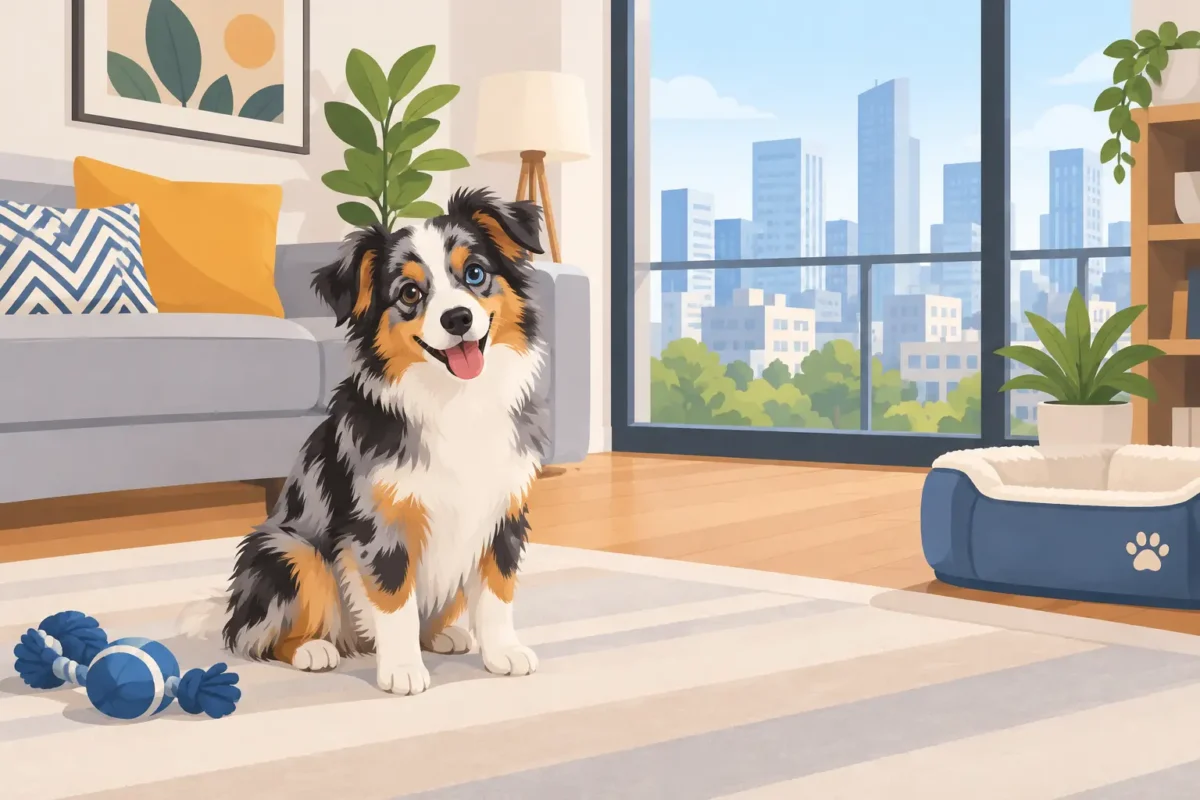
Toy Australian Shepherd apartment living can work with the right dog, daily training, and an honest plan for exercise, noise, and neighbor manners too.
A Toy Australian Shepherd apartment living arrangement can work very well, but square footage is not the deciding factor. The real question is whether the household can provide structure, training, companionship, and a reliable daily outlet for a bright little working-breed dog. A Toy Aussie may be small enough for an apartment, but he is still an Aussie in his mind.
We do not tell families that a smaller dog automatically makes an easy apartment dog. That is sales talk, not responsible guidance. A well-bred Toy Australian Shepherd with a lower-herding, companion-minded temperament can be a wonderful city or condo companion. An under-stimulated, poorly trained puppy in a busy building can become noisy, anxious, and difficult regardless of whether he stands 11 inches or 18.
Toy Australian Shepherd Apartment Living: What Actually Matters
A Toy Aussie does not need a large yard to be content. A yard is convenient, but it is not a substitute for engagement. Dogs do not exercise themselves properly just because a fence is present. They often run out, bark at the fence line, and come back inside with the same unused mental energy they had before.
Apartment families need a dependable routine instead. Most Toy Aussies do best with a real morning walk, brief training during the day, potty breaks on schedule, and an evening outing or play session. The amount depends on the individual dog. A calm adult may be satisfied with several purposeful walks and short games. A young puppy or more energetic adolescent will need more direction.
The best apartment owners are not necessarily runners or people with access to acres. They are consistent people. They teach the puppy how to settle on a bed, wait at doors, walk politely through hallways, and be quiet when normal building sounds happen. Those skills matter more than an expensive dog park membership.
Size Helps, but Temperament Decides the Fit
Toy Australian Shepherds are generally under 14 inches at maturity. Some smaller
Teacup Toy Aussies mature under 12 inches. That size is easier to carry through an apartment lobby, manage in an elevator, fit into a travel crate, and house-train in a smaller space. It also means less dog underfoot in a compact kitchen or one-bedroom home.
Still, buyers should not choose strictly by inches. A very small puppy can have a busy, vocal, highly reactive temperament. A somewhat larger Mini Aussie may be steadier and easier for a particular home. This is why responsible matching matters. The right puppy is not always the prettiest color, the smallest puppy in the litter, or the one available first.
A family living near a city park, working partly from home, and willing to train may do beautifully with a confident Toy Aussie. A buyer in a quiet building who is gone 10 hours every day and expects the dog to entertain itself may not. There is no shame in deciding that another breed, an adult dog, or waiting for a better-timed puppy is the wiser choice.
Lower-herding lines make a real difference
Australian Shepherds were developed to notice movement, respond quickly, and stay engaged with their people. In an apartment, those instincts can show up as chasing children down a hallway, alert barking at passing dogs, or becoming overly concerned with every sound outside the door.
Careful breeding can make a meaningful difference. At Hughes Toys, temperament selection includes a deliberate focus on lower-herding,
lower-energy family companions rather than breeding solely for intensity or color. That does not remove the need for training. It gives the right family a better starting point.
Ask direct questions about the parents. Are they calm in the home? Do they settle after activity? Are they friendly, stable, and manageable around visitors? Have puppies from the line adjusted well to family homes, apartments, therapy work, or service-oriented training? A breeder should be able to discuss more than eye color and registration papers.
The First Six Months Set the Tone
Apartment living is easiest when training begins before a puppy develops unwanted habits. A puppy who learns that every hallway noise deserves a full barking response will not simply outgrow it. A puppy who learns that a crate or pen is a safe resting place, and that quiet behavior gets attention, is far easier to live with.
Start with calm exposure, not chaos. Let the puppy hear elevators, delivery carts, doors closing, traffic, children, and ordinary household sounds in controlled doses. Pair new experiences with reassurance and reward. Do not drag a nervous puppy into crowded situations because someone said socialization means meeting everybody. Good socialization builds confidence. Overwhelming a puppy can do the opposite.
House-training requires extra planning in an upper-floor apartment. Young puppies cannot hold themselves for a long workday, and repeated elevator trips take time. Expect to carry a small puppy outside promptly and frequently, especially after meals, naps, and play. Indoor grass systems can be useful during the early weeks or bad weather, but they should support outside training, not replace it permanently.
Crate training is equally practical. A properly introduced crate helps with house-training, safe rest, travel, and management when maintenance staff or guests enter the home. It is not a place to store a puppy all day. Toy Aussies are people-oriented dogs and need normal family contact.
Exercise Without Creating an Over-Athlete
A common mistake is trying to exhaust a young Aussie with nonstop physical activity. That can build a dog who needs more and more mileage to settle. Puppies also need care around developing joints and growth plates. Repetitive forced running, long-distance jogging, and hard impact exercise are not smart puppy programs.
Use the brain as well as the legs. Five to ten minutes of obedience practice, name games, food puzzles, scent work, or learning to settle on a mat can tire a Toy Aussie in a productive way. Teach useful household skills: come when called, leave it, place, wait, and leash manners. These are not tricks for show. They make apartment life safer and more peaceful.
For adult dogs, a mix of walking, controlled play, training, and occasional outings usually works better than one frantic session. Some Toys enjoy hiking, camping, or accompanying their people around town. Others are happiest with a neighborhood walk and time close to the family. The dog in front of you matters more than a generic exercise chart.
Barking, Neighbors, and Shared Walls
Aussies can be alert dogs. That is not automatically a problem, but apartment owners must take it seriously. Do not reward a puppy for charging the door and sounding an alarm at every footstep. Acknowledge the sound calmly, redirect the dog to a bed or chew, and reward quiet recovery.
Leaving a radio or white noise on can soften hallway sounds. Window film or thoughtful furniture placement may reduce visual triggers. Most of all, avoid repeatedly leaving a young puppy alone beyond what he can handle. Separation distress is not stubbornness, and it is unfair to both the dog and your neighbors.
Before bringing a puppy home, read the lease. Check weight limits, breed restrictions, pet deposits, elevator rules, designated relief areas, and requirements for vaccination records. If you rent, get clear written approval. Do not assume a landlord will overlook a dog because the puppy is tiny now.
Choosing the Right Puppy for an Apartment Home
Health and temperament should come before convenience. A puppy should come from parents with
appropriate genetic testing, documented veterinary care, and a breeder who knows the pedigree and behavior behind the litter. Registration alone does not prove quality. WELL BRED, not just purebred, is the standard that protects families over the long term.
Be honest during the breeder conversation. Explain your work hours, floor level, children, other pets, travel plans, and past dog experience. Mention if you need emotional-support, therapy, neurological-support, or potential service-dog qualities. No ethical breeder can promise that a young puppy will become a finished service dog, but established lines and thoughtful temperament matching can improve the odds of placing the right puppy in the right home.
A good apartment dog is not the dog that never needs anything. It is the dog whose needs fit the life you are prepared to provide. Give a Toy Aussie clear expectations, daily involvement, and a calm place to rest, and your apartment can become exactly what he wants most: home, beside his people.