Toy aussie versus mini aussie comes down to adult size, energy, structure, and fit. See what ethical breeders can predict for your home.
Puppy Matching: The Right Fit Starts at Home
A toy aussie versus mini aussie decision should not start with coat color, eye color, or whichever puppy looks smallest in a photo. It should start with the adult dog you can realistically live with for the next 12 to 15 years. Size matters, but so do activity level, structure, confidence, herding instinct, health testing, and the breeder’s ability to explain what is actually behind a puppy.
Families often use Toy Aussie and Mini Aussie as if they mean the same thing. They do not. Both can be excellent companion dogs when bred with care, but they are different size varieties with different practical considerations. The right choice is the dog whose expected adult size and temperament fit your home, not the label that sounds most convenient.
Toy Aussie Versus Mini Aussie: The Size Difference
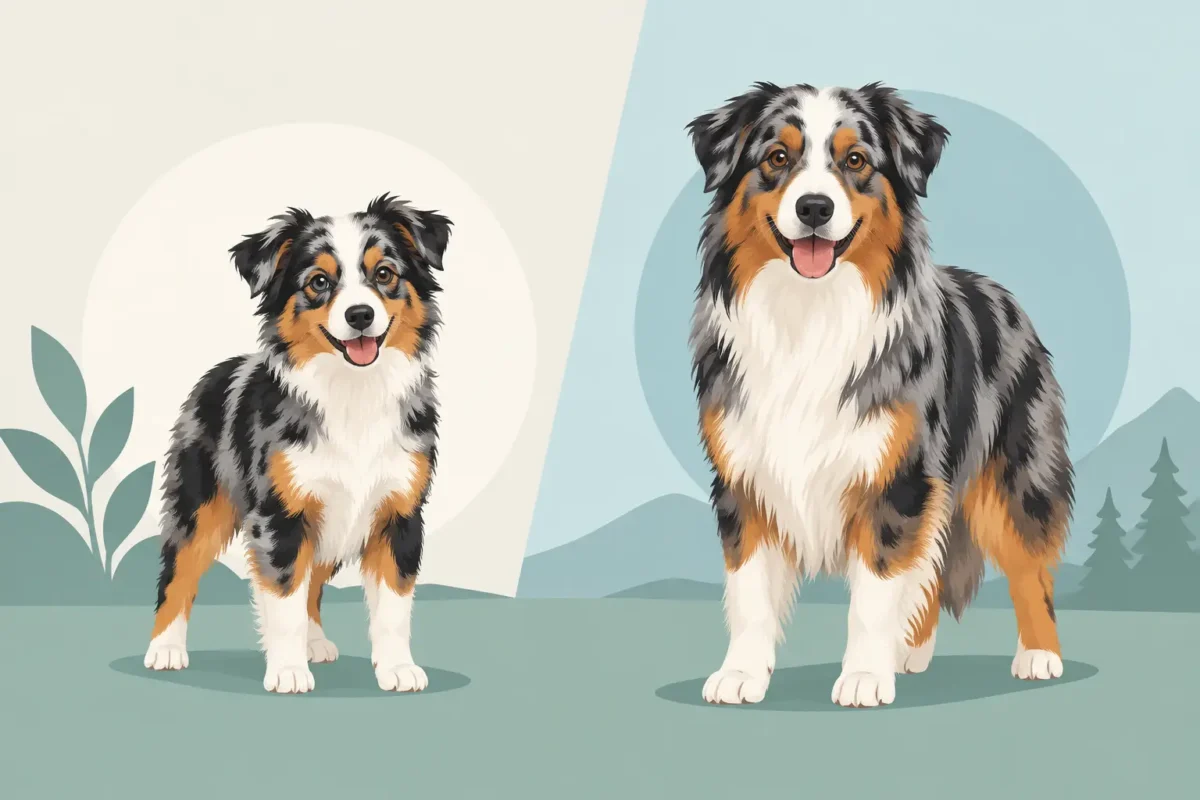
The clearest difference between a Toy Australian Shepherd and a Miniature Australian Shepherd is expected adult height. A well-bred Toy Aussie is generally around 10 to 14 inches at the shoulder. A Mini Aussie is commonly around 14 to 18 inches. Individual dogs can fall toward either end of those ranges, and a breeder who promises an exact adult measurement is selling certainty that biology does not provide.
Weight varies with build, sex, muscle, and conditioning. A sturdy Toy Aussie can weigh more than a lightly built Mini, so pounds alone do not tell the whole story. Height, bone, body proportion, and the adult dogs behind the litter are more useful indicators.
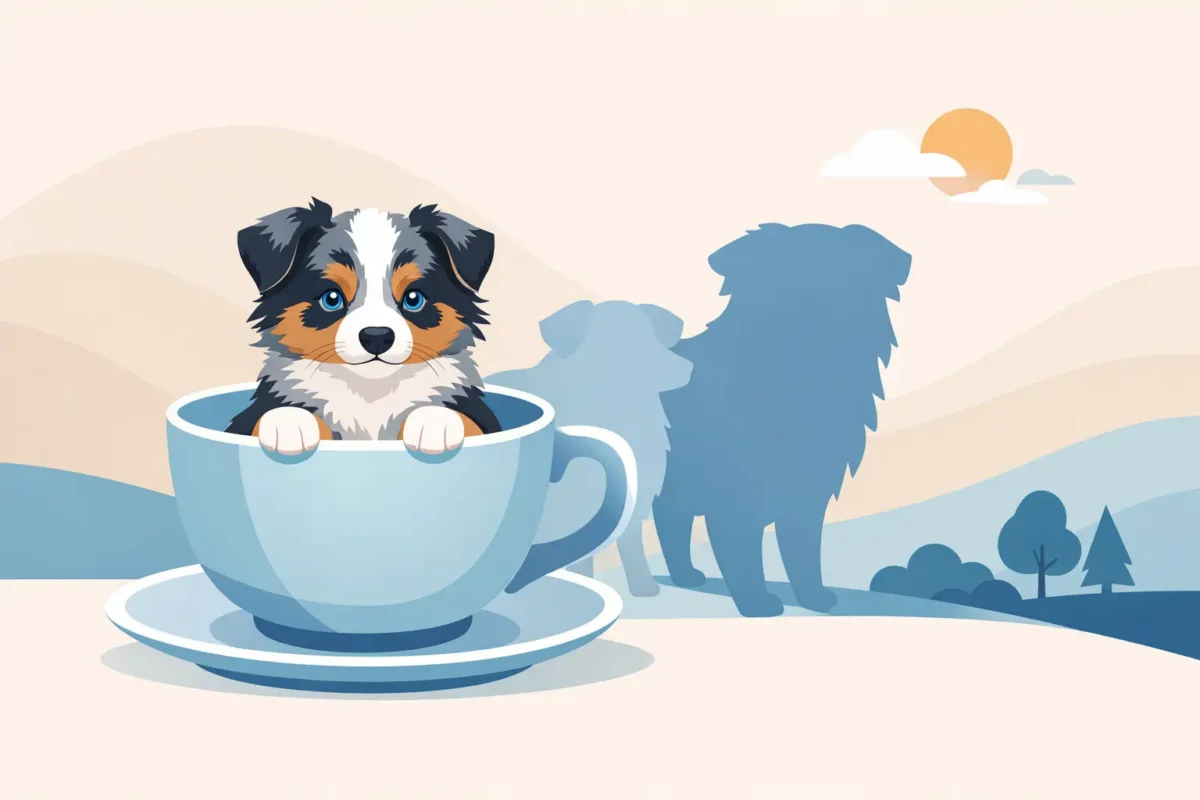
A Teacup Small Toy, often described as under 10 inches at maturity, is smaller still. That size requires especially thoughtful breeding selection. Small should never mean frail, poorly structured, or bred without regard for health. The goal is a sound, capable small dog, not an extreme novelty size.
For apartment dwellers, frequent travelers, and households that want a dog easier to lift, carry, and manage in close quarters, a Toy can be a practical choice. A Mini is still compact compared with a standard Australian Shepherd, but it usually has a little more physical presence and may be better suited to families who prefer a more substantial dog.
Smaller Does Not Automatically Mean Calmer
This is where buyers can make an expensive mistake. A Toy Aussie is not a Mini Aussie with less energy simply because it is shorter. Australian Shepherds are intelligent, observant dogs. They notice routines, react to changes, and want involvement with their people. A small dog can still be busy, vocal, athletic, and mentally demanding.
Temperament is shaped by genetics, early handling, socialization, training, nutrition, medications and the home itself. Responsible breeding improves the odds by selecting parents with stable, companion-appropriate temperaments and manageable herding drive. It does not remove the buyer’s responsibility to train, socialize, and provide good nutrition and medication and daily structure.
At Hughes Toys, the breeding goal has always been more specific than producing a certain color or a tiny adult size. More than 30 years of breed-focused experience has shown us that families need dogs that can settle in the house, enjoy their people, learn willingly, and live successfully in ordinary homes. That requires intentional selection over generations, not just pairing two small Australian Shepherds.
A Toy may be a better fit for someone who wants the Aussie look and intelligence in a truly city-sized package. A Mini may suit an active household that wants a slightly larger dog for longer walks, outdoor weekends, and more physically demanding play. Neither variety is a decorative accessory. Both need training, companionship, and an owner who understands that smart dogs need clear expectations.
What Adult Size Can and Cannot Be Predicted
A good breeder should be willing to discuss expected size plainly. That conversation should include the mother, father, prior offspring from the line when available, and the overall pattern in the pedigree. Multi-generation breeding records are far more useful than guessing from a puppy’s paws or calling the smallest puppy in a litter a “teacup.”
Even with careful records, adult size is an estimate. Genetics are not a simple on-off switch. Puppies can mature differently from littermates, and growth can be affected by nutrition, health, and development. Buyers should expect a reasonable range, not a guarantee to the quarter-inch.
Ask direct questions: What are the parents’ heights? What size have similar pairings produced? Is the puppy expected to stay in Toy range or mature into Mini range? Does the breeder personally know multiple generations of ancestry?
Registration matters because it documents lineage, but it is not proof by itself of quality, health, or ethical breeding. The real value is in documented breeding history, genetic screening, veterinary care, sound structure, and honest records. A pedigree does not excuse poor decisions.
Health and Structure Matter More Than a Small Label
The smallest puppy should not automatically be the first choice. Sometimes a puppy is simply petite and perfectly healthy. Other times, unusually small size can reflect a developmental concern, inadequate growth, or poor breeding priorities. No careful breeder should market a puppy’s smallness before confirming that the puppy is thriving.
Toy and Mini Aussies should be bred with the same seriousness applied to any Australian Shepherd variety. That means appropriate genetic testing, veterinary checks, clean and controlled puppy-raising practices, and attention to the inherited conditions relevant to the lines being used. A health guarantee is meaningful only when it is backed by testing, documentation, and a breeder who remains accountable after placement.
Structure matters as well. A compact dog still needs sound movement, balanced proportions, healthy joints, and the ability to be an active companion. Buyers should be cautious of exaggerated claims, weak explanations, or sellers who cannot discuss the health history of the parents. A cute photo does not show whether a breeder has done the work.
The Best Fit for Common Household Situations
A Toy Aussie can work very well in a condo, apartment, or smaller home, provided the owner has time for training and daily engagement. The smaller body is easier to accommodate, but the dog still needs purposeful exercise, social exposure, and mental work. A fenced yard is helpful, not a substitute for involvement.
A Mini Aussie can be an excellent middle ground for a family that wants a smaller Australian Shepherd without going as small as Toy size. Minis are still manageable for many homes and can be sturdy, affectionate companions for respectful children. The deciding factor is not whether children are in the home, but whether adults will supervise interactions and teach children how to handle a dog properly.
For first-time Aussie owners, the calmer individual puppy is often more important than whether the puppy is Toy or Mini. A breeder who knows the litter should be able to identify which puppies are more outgoing, more laid-back, more observant, or more driven. Choosing only by sex or color is a weak matching strategy when temperament will shape daily life.
Remote buyers should expect the same level of detail as local buyers. Clear puppy photos and videos, parent information, health records, registration details, and candid temperament conversations are necessary when you cannot meet a puppy in person. Organized pet-nanny delivery can make distance workable, but it does not replace careful communication before a deposit is placed.
Do Not Buy Based on a Name Alone
The terms Toy Aussie, Mini Aussie, Miniature Australian Shepherd, and Teacup are used inconsistently across the puppy market. Some sellers use them carefully to describe established size varieties. Others use them as marketing language without records, testing, or a realistic understanding of adult size.
That is why buyers need to look past the name. Ask about adult measurements, health testing, registration, veterinary care, socialization, and the breeder’s experience with the actual bloodline. A responsible breeder will not be offended by those questions. They should expect them.
The best puppy is not necessarily the tiniest, flashiest, or first available. It is the puppy produced from well-documented parents, raised with appropriate care, and matched honestly to the life you can offer. Choose the size that fits your household, then give equal weight to temperament, health, and the quality of the breeding behind that small Aussie face.
Teacup Aussies can be smart, devoted family dogs, but size alone is not quality. Learn what responsible breeding, testing, and matching look like in practice.
A tiny Australian Shepherd with bright eyes and a striking merle coat can get attention anywhere. That does not mean every small puppy marketed as a “Teacup” small toy Aussie has been bred with the care, documentation, or temperament needed for family life. The classsification of “teacup” is frowned on by breed standards, but is searched for by pet buyers looking for small. Size is only one part of the decision. Health history, parent temperament, genetic screening, structure, and honest adult-size expectations matter just as much.
For families who want Aussie intelligence in a smaller companion package, “Teacup” Aussies can be a very good fit. They can also be a poor fit when buyers expect a low-maintenance lap dog simply because the dog is small. A well-bred small Aussie is still an Australian Shepherd. That means a dog that wants to be included, trained, handled properly, and treated as a real member of the household.
What Is a Teacup Aussie?
“Teacup” is commonly used to describe the smallest end of the Toy Australian Shepherd size range. At Hughes Toys, a Teacup Small Toy is generally expected to mature under 10 inches at the shoulder. That is a height category, not a promise that every puppy will remain the same weight, build, or energy level.
A responsible breeder should never pretend adult size is exact. Genetics can produce variation, even in carefully selected lines. The best prediction comes from several generations of documented relatives, not a photo of one tiny puppy or a vague claim that both parents are “teacup.” Ask about the size of the parents, grandparents, full siblings from prior litters, and the breeder’s history with that particular family line.
Small size should be produced through deliberate selection of healthy, correctly built small dogs. It should not come from breeding undersized, frail, poorly structured, or medically compromised animals. There is a difference between a compact dog and an unhealthy dog. Buyers need to know that difference before placing a deposit.
Small Does Not Mean Easy
The appeal is understandable. A smaller Aussie is easier to lift, easier to travel with, more practical in an apartment or city home, and less physically imposing for children or older owners. For many households in Portland, throughout the Pacific Northwest, and in other urban areas, those are real advantages.
But a “Teacup” tiny Aussie still needs daily interaction and purposeful training. These dogs are observant. They notice routines, read people well, and quickly learn what gets a response. If nobody gives them direction, they may create their own work by barking at windows, policing other pets, or becoming overly attached to one person.
The goal is not to wear a puppy out for hours every day. In fact, constant high-intensity exercise can create an athlete who needs more and more activity to settle. A better plan combines age-appropriate walks, basic obedience, short training sessions, safe social exposure, play, and calm time in the home. The right puppy for a quieter household is one bred and selected for a companion-oriented temperament, not simply the smallest puppy in the litter.
Temperament Is a Breeding Decision
Toy Mini Australian Shepherds are known for intelligence, loyalty, responsiveness, and natural awareness of their people. Those traits are valuable, but they need balance. Excessive herding drive, uncontrolled intensity, sharpness, or constant reactivity are not good trade-offs for a family seeking a manageable companion dog.
Breeders influence temperament long before a buyer meets a puppy. They choose which adults are bred, evaluate how those adults respond to people and change, and watch how puppies develop during the weeks before placement. A puppy’s final personality is also shaped by its home, training, and socialization, but genetics matter. Good breeders do not deny that.
Matching matters as much as picking by color. A blue-eye tri or flashy merle may be the puppy that catches your eye, yet the best choice may be the steadier puppy that recovers quickly from new sounds, enjoys handling, and has an energy level that fits your routine. A knowledgeable breeder should be willing to tell you when the puppy you first chose is not the best fit. That kind of honesty protects the puppy and the family.
Health Work Should Be Documented
Cute photos are easy to produce. Verifiable health practices require actual work. Before choosing a breeder, ask direct questions about genetic testing, veterinary care, knowledge of multigeneration parents, and the health guarantee. Clear answers should be available without pressure or evasive language.
For “Teacup” tiny Aussies, genetic screening is especially relevant because responsible breeding is about reducing preventable risk, not just producing a desired size or color. Depending on the breeding program and bloodlines, testing may address inherited concerns found in Australian Shepherds and related small-Aussie populations. The breeder should understand the results, use them appropriately in pairing decisions, and explain what they do and do not guarantee.
Merle coloring also requires informed breeding. Merle is beautiful, but it is not a reason to ignore genetics. Breeding two merle dogs together can create double-merle puppies, which have an increased risk of serious hearing and vision problems. A responsible program plans matings with color genetics in mind rather than treating coat color as a sales tool.
At Hughes Toys, Veterinary checks before placement are another basic. Puppies should receive age-appropriate care, be evaluated before leaving, and go home with clear records and instructions. A health guarantee should be written in plain language. Read it before committing, including any requirements for a post-purchase veterinary exam, diet, care, and notification if a concern arises.
Registration Is Useful, but It Is Not the Whole Story
Multi-generation knowledge give breeders useful information about a puppy’s background They help establish lineage and provide a framework for documenting the dogs behind a litter. That matters, particularly for buyers seeking a true Toy or Miniature Australian Shepherd type rather than an unknown cross sold under a fashionable label.
Still, paperwork alone does not make a well-bred dog. Registration cannot prove sound temperament, clean facilities, honest size estimates, careful socialization, or appropriate health decisions. It is one piece of the evidence. Buyers should look at the whole program: the health testing, the consistency of the line, the care standards, the breeder’s knowledge, and whether the breeder remains available after placement.
At Hughes TOys, More than 30 years of breed-specific experience gives a breeder time to see how lines mature, how traits repeat, and which pairings consistently produce the kind of companions families can live with. That long view is worth more than a trendy label or a seller who has only recently started offering small puppies.
Ask Questions Before You Fall in Love With a Photo
A careful breeder expects questions. You should know the puppy’s expected mature height range, the parents’ sizes and temperaments, what genetic testing has been completed, and how the breeder handles veterinary care and biosecurity. You should also ask how puppies are matched, whether the breeder offers a written agreement, and what support is available after your puppy comes home.
Biosecurity is another point buyers sometimes misunderstand. Limiting visitors around young puppies is not secrecy when it is done to reduce disease exposure before vaccinations are complete. A breeder can provide information, photos, videos, and direct communication while still protecting a vulnerable litter. Anyone insisting on unrestricted puppy access should understand that prevention is part of responsible care.
For distant buyers, the same standards apply. A professional process for out-of-state placement should include clear communication, current puppy information, health documentation, and organized transport planning. A coordinated pet-nanny option can be preferable to sending a small puppy through an impersonal cargo process, but buyers should still understand the timing, cost, handoff details, and travel preparation.
Preparing for Life With a Very Small Aussie
A “Teacup” tiny Aussie needs practical protection because of its size. Young children must be taught to sit and hold, not carry a puppy around. Larger dogs need supervised introductions. Doors, gates, stairs, furniture, and outdoor spaces all deserve attention. Small dogs can be seriously injured by ordinary household accidents that would not affect a larger dog.
Training should begin immediately, with realistic expectations for a young puppy. Focus on potty routines, crate comfort, gentle handling, recall foundations, social exposure, and settling quietly. Consistency matters more than harsh correction. These dogs are smart enough to learn quickly and sensitive enough to become confused when house rules change from one day to the next.
The right Teacup tiny Aussie is not merely the smallest or prettiest puppy available. It is the puppy whose health background, expected size, temperament, and needs honestly fit the life you can provide. Choose the breeder and the puppy with the same care you expect them to have used in producing the litter.
A blue eyed tri Australian Shepherd can be striking and devoted, but color is only one factor. Learn what to ask about health, temperament, and care first.
A blue eyed tri Toy and Mini Australian Shepherd gets attention quickly. The contrast of bright blue eyes against a rich black or red tri coat is memorable, and families naturally ask for that look. There is nothing wrong with having a color preference. The mistake is making eye color the deciding factor before asking how the puppy was bred, what health testing supports the litter, and whether that individual puppy fits your home.
A well-bred Toy or Mini Australian Shepherd should be chosen as a companion first. Color is the finishing detail. That is especially true for smaller Aussies, where adult size, energy level, confidence, and early socialization will shape daily life far more than the shade of a puppy’s eyes.
What “Blue Eyed Tri” Actually Means
In Toy and Mini Australian Shepherd terms, tri usually refers to a dog with a base color of black or red, along with white and copper trim. A black tri commonly has a black coat, white markings, and copper points. A red tri has a liver-colored base coat with the same white and copper pattern. Blue eyes can occur with either base color.
Color language is often used loosely in online puppy listings, so buyers should ask for clear photos, the parents’ colors, and a straightforward explanation of what the breeder means. A puppy described as a blue-eyed tri should not be confused with a blue merle. A blue merle has a marbled or mottled coat pattern. A tri has a more solid base coat with defined trim, although markings vary from puppy to puppy.
Blue eyes are frequently associated with the merle pattern, but blue eyes can also appear in non-merle Toy and mini Australian Shepherds. That is why a photo alone is not a genetic explanation. An experienced breeder can tell you the color genetics behind a litter and document the parents rather than guessing based on appearance.
A puppy’s eye color can also change during the first weeks of life. Many young puppies begin with blue-gray eyes, then develop brown, amber, hazel, or split coloring as they mature. Buyers should never assume that a very young puppy will keep a particular eye color unless the breeder has enough experience with that line and gives an honest, qualified expectation.
Blue Eyes Are Not a Health Guarantee or a Health Problem
A blue eye by itself does not make an Toy or Mini Australian Shepherd unhealthy. It also does not prove health. Eye color is a cosmetic trait, while sound breeding requires attention to inherited disease risks, structure, temperament, and the quality of care surrounding the litter.
The merle gene deserves special care because careless breeding can create preventable problems. Breeding merle to merle can produce double-merle puppies, which have an increased risk of serious hearing and vision issues. Responsible breeders do not make color-driven pairings that put puppies at unnecessary risk. They use genetic information, know the genetics behind each parent, and plan every breeding with the welfare of the puppies ahead of a fashionable look.
That does not mean every blue-eyed puppy is a merle or a double merle. It means buyers should ask direct questions and expect direct answers. Ask whether both parents have been genetically tested, whether the breeder understands the merle status of the parents, and whether veterinary checks are completed before placement. A breeder who becomes vague when the conversation moves from pretty photos to genetics is giving you useful information about their standards.
At Hughes Toys, our breeding decisions are built around multi-generation known parentage, are ASDR registration, documented lines, genetic testing, veterinary care, and long-term selection. More than 30 years in this breed has taught us that a puppy’s color can attract a family, but it cannot replace careful breeding or accountable placement.
The Temperament Question Matters More Than Color
Toy and Mini Australian Shepherds are intelligent, loyal, observant dogs. Those traits make them deeply rewarding companions, but they also mean the breed is not a decorative accessory. Even a smaller Toy or Mini Aussie needs training, daily engagement, and a home that understands how strongly these dogs attach to their people.
Families often assume a smaller Toy and Mini Australian Shepherd will automatically be easygoing. Size helps with practical matters such as travel, apartment space, and lifting a dog into the car. It does not erase breed instincts. Some Toy or Mini Aussies are more intense, more vocal, more motion-sensitive, or more inclined to herd children and other animals than others.
That is why deliberate temperament selection matters. A breeder should be able to discuss a puppy’s confidence, activity level, social interest, response to handling, and likely fit for a household. The right blue-eyed tri for a retired couple may not be the right one for a busy family with young children, a cat, and a full calendar of sports practices.
For many companion homes, a calmer puppy with a steady recovery from new sights and sounds is a better choice than the boldest, busiest puppy in the litter. There is no prize for choosing the most intense dog if your lifestyle cannot support that dog fairly. Good matching protects both the family and the puppy.
Questions to Ask Before Reserving a Puppy
A responsible breeder should welcome practical questions. You are not being difficult by asking how the litter was raised, what testing was done, or what the breeder expects from buyers. You are doing the work that protects your family’s investment and the dog’s future.
Start with the parents. Ask about their adult size, temperament, and health testing. Ask whether the breeder has produced multiple generations from the line and whether they can explain the strengths and limitations honestly. Pedigree matters, but a long list of names is not a substitute for a breeder who knows how those dogs actually mature, behave, and live.
Then ask about the puppy’s environment. Puppies need clean, controlled conditions, routine handling, age-appropriate exposure, and veterinary oversight. Biosecurity is not an inconvenience or a sales tactic. Limiting casual traffic around young puppies helps reduce disease exposure during a vulnerable period. A breeder can still provide photos, videos, updates, and clear communication without turning a nursery into a public visitation space.
Finally, ask what happens after pickup or delivery. A health guarantee should be written clearly, not offered as a verbal promise. Buyers should receive records, feeding information, and realistic guidance for the first days at home. If you are purchasing from another state, confirm the delivery process, who handles the puppy during travel, and how the breeder prepares the puppy for the transition.
Living With a Blue-Eyed Tri Aussie
Blue eyes require no special grooming routine. Normal eye checks, a quality diet, regular veterinary care, and common-sense protection from rough play are the practical basics. Some light-eyed dogs can be more sensitive to bright light, but that varies by individual. If you notice squinting, redness, discharge, or repeated rubbing, call your veterinarian rather than trying to diagnose an eye issue from appearance alone.
The coat needs more attention than the eyes. Toy and Mini Australian Shepherds have a weather-resistant double coat that sheds, particularly during seasonal coat changes. Weekly brushing is usually manageable for a smaller companion Aussie, while more frequent brushing helps during heavy shedding. Do not shave a double-coated dog simply to reduce shedding or summer heat. Proper brushing, sensible bathing, shade, water, and climate-aware exercise are better management tools.
Training should begin immediately, but it does not need to be harsh or complicated. Establish a potty routine, reward calm behavior, introduce a crate properly, and practice short sessions of recall, leash manners, and handling. A smart puppy learns fast, including the habits you did not intend to teach. Consistency matters more than marathon training sessions.
A blue-eyed tri Toy and Mini Australian Shepherd can be an exceptional family companion when the dog behind the color has been bred and matched with care. Choose the puppy whose health documentation, temperament, expected size, and breeder support make sense for your real life. The eyes will still be beautiful when you are doing laundry, practicing recall in the rain, and building the steady relationship that matters most.