
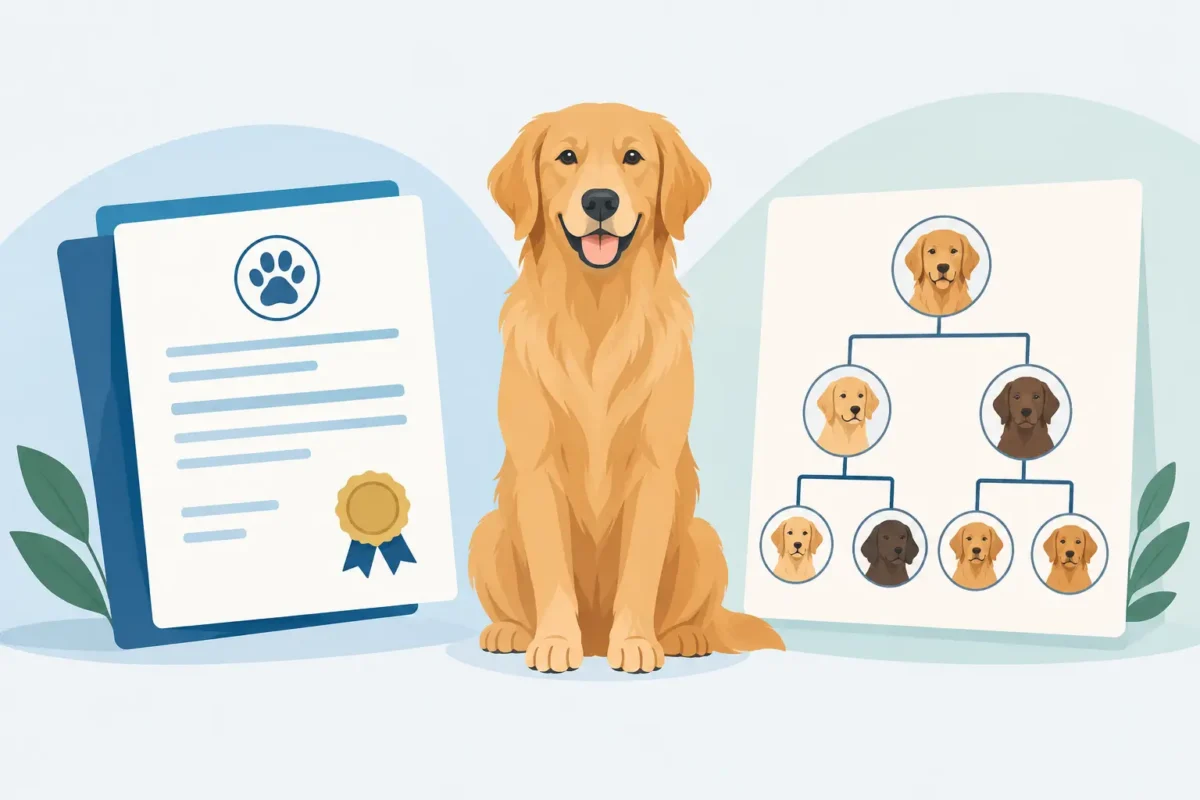
A puppy can come with ASDR papers, a multi-generation pedigree, or both. Those documents matter, but ASDR papers versus pedigree records is not a simple contest over which one is better. They answer different questions. One helps establish registry status and ownership documentation. The other shows the family line behind the dog. Neither, by itself, proves that a puppy was bred with sound judgment, health testing, honest size expectations, or the temperament your household needs.
For families buying a Toy, Miniature, or small Australian Shepherd, paperwork should be part of the decision, not the entire decision. A breeder who waves papers around but cannot clearly discuss genetic testing, veterinary care, adult sizes, energy level, and the actual dogs behind the litter is giving buyers an incomplete picture.
What ASDR Papers Are Intended to Document
ASDR registration papers are registry documents tied to the American Stock Dog Registry. Depending on the specific document and the dog’s status, they may identify the dog, its registered name, registration number, sex, color, date of birth, breeder information, and ownership information. Proper registration gives a dog a documented place within that registry system.
For a buyer, registration papers can be useful proof that the breeder has followed through on registering the litter or is providing a clear path for the new owner to complete the transfer. They also make it easier to keep the dog’s registered identity consistent if the owner later participates in registry-supported activities or needs to reference official records.
That said, buyers need to ask a plain question: Are these completed registration papers, an application, or a promise that papers will be sent later? Those are not the same thing. A responsible breeder should explain exactly what the buyer receives, when ownership transfer happens, and whether there are any requirements or restrictions attached to the registration.
Registration also does not function as a health clearance. A registry certificate is not proof of clear genetic testing, normal eyes, sound structure, or a calm companion temperament. It tells you that the dog is recorded in a registry. It does not replace the breeder’s responsibility to make careful breeding decisions.
What Pedigree Records Tell You
A pedigree is a family tree. It identifies the dog’s ancestors, commonly across three, four, or more generations, and may include registered names and registration numbers for parents, grandparents, and earlier dogs. A pedigree gives buyers a way to see whether a breeder has established and tracked a consistent line over time.
This matters because thoughtful breeding is cumulative. When a breeder knows the dogs behind a puppy – not just the immediate parents – they have more information to work from when selecting for size, structure, coat traits, health history, drive, and disposition. A multi-generation pedigree can show continuity and help a buyer understand whether the breeder is developing a line rather than simply producing occasional litters from unrelated dogs.
But a pedigree is a record, not a report card. A long pedigree may look impressive while telling you very little about the quality of the decisions made in that line. It does not automatically show whether dogs were genetically screened, how they behaved in family homes, whether they matured at the predicted size, or whether known problems were handled responsibly.
A buyer should also understand that a pedigree is only as useful as the breeder’s knowledge of it. Names on a page are not meaningful if the breeder cannot explain why particular dogs were paired, what traits they consistently produce, and what trade-offs may come with a certain cross.
ASDR Papers Versus Pedigree Records: What Each Proves
The cleanest way to look at the difference is this: ASDR papers help document the dog’s registry identity and ownership status. Pedigree records document the dog’s lineage.
In many cases, registry paperwork and pedigrees overlap. A registry may produce or support pedigree documentation from its recorded ancestry. Still, buyers should not use the terms as if they mean exactly the same thing. A breeder may provide a pedigree before a transfer is completed. A buyer may receive registration paperwork that contains limited ancestry detail. The specific documents matter.
Ask to see what is actually being offered. If someone says a puppy is registered, ask which registry, whether the puppy is already registered, and what transfer process applies. If someone says the puppy has an excellent pedigree, ask to review the generations and to hear what the breeder knows about those dogs beyond their names and colors.
A candid breeder will not get defensive over those questions. Serious buyers should ask them.
The Documents That Matter Just as Much
Registration and pedigree information become far more meaningful when they sit beside real breeding records. For a companion-oriented Australian Shepherd, the practical evidence should include genetic testing appropriate to the parents, routine veterinary checks, a clear health guarantee, and honest discussion of the puppy’s likely adult size and energy level.
Temperament deserves equal attention. Australian Shepherds are intelligent, loyal dogs, but they are not interchangeable. Some are intense, highly driven, and suited to demanding work or sport homes. Others are selected to be more manageable companion dogs while retaining the alert, trainable nature people love about the breed. Paperwork cannot tell you which puppy is most likely to fit a downtown apartment, a busy family, a quieter household, or a home with young children.
This is where a breeder’s experience matters. After more than 30 years working specifically with smaller Australian Shepherds, Hughes Toys evaluates more than registration status when planning litters. Multi-generation ASDR records are part of the program, but selection also centers on health, manageable size, stable temperament, lower herding drive, and the ability to live successfully as a family companion.
Color is another area where buyers need clear thinking. A pedigree may show a history of merles, tris, or blue eyes, but attractive color is not a substitute for responsible genetic planning. A breeder should be able to discuss color genetics directly and put the welfare of the dogs ahead of producing a look that sells quickly.
How to Review a Breeder’s Records Without Getting Misled
Start by looking for consistency. The puppy’s date of birth, parent names, color, and identifying information should line up across the registration paperwork, pedigree, health documentation, and sales agreement. Small administrative mistakes can happen, but vague answers, conflicting information, or constant excuses are warning signs.
Then look beyond the parents. Ask whether the breeder knows the adult size, temperament, and health history of grandparents and earlier dogs. In smaller Australian Shepherds, size can vary more than buyers expect. If a breeder promises a very specific adult height or weight without discussing the actual family line, that is sales talk, not careful expectation-setting.
You should also ask what the breeder does not breed for. This question separates deliberate programs from breeders who simply list desirable traits. A responsible breeder should have clear standards regarding health concerns, unstable temperament, excessive drive for companion homes, and combinations that do not support the welfare of the puppies.
Finally, pay attention to whether the breeder matches puppies to people. The right puppy is not always the flashiest merle or the smallest one in the litter. It is the puppy whose expected activity level, confidence, trainability, and size make sense for your household. Good records help support that decision, but experienced observation is what turns records into responsible placement.
Papers Are Proof of Identity, Not Proof of Quality
Buyers should expect legitimate ASDR documentation and accurate pedigree records when those are represented as part of the purchase. Those are reasonable standards. But do not let a stack of papers distract you from the questions that affect daily life with your dog: Has the breeder tested thoughtfully? Are the puppies raised with biosecurity and veterinary oversight? Is the breeder honest about size, coat, drive, and training needs? Will they stand behind the puppy after placement?
The best breeder records do not ask you to trust a label. They give you enough clear, consistent information to make a sound decision about the dog that will live in your home for years.