
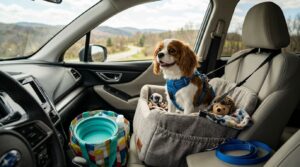
- A crash-tested car harness is the best car travel gear for small dogs in 2026 — it restrains without crushing a 10-15 lb frame.
- Center for Pet Safety certification is the only independent benchmark; ‘crash-tested’ claims without it mean nothing.
- Hard-sided crates beat soft carriers for road trips longer than two hours because they hold shape in a stop.
- Skip loose-tether booster seats as a sole restraint on the highway; they are not crash-rated.
- Pack a home-scent item on the drive home from the breeder; it cuts whining more than any toy.
Why this matters
A Toy Australian Shepherd weighs roughly 10 to 18 pounds full grown, and a Miniature Australian Shepherd tops out around 35. Puppies weigh between 3 to 10lbs at go home. Most car safety gear on shelves is sized for a 50-pound-plus dog and fits a small breed loosely, which defeats the entire point of the equipment. Families who drive up from California or over from Seattle to pick up a puppy from Hughes Toys are usually making that puppy’s very first car ride a two-to-six hour trip. Get the gear wrong on day one and you’re dealing with carsickness, panic, or a puppy that dreads the car for years. Get it right and the ride home becomes the first successful training session of the dog’s life. This list ranks gear by category, not by brand, because the category matters more than the logo — and because a harness or crate without independent crash testing carries the same risk regardless of who made it.What makes the best car travel gear for small dogs
- Independent crash-test certification. Center for Pet Safety (CPS) is the closest thing the U.S. has to a standard for pet travel restraints. Look for its rating before trusting any harness claim.
- True small-breed sizing. Chest straps and crate doors built for dogs under 25 lbs, not a large-breed design scaled down.
- Hard anchor point. Attaches to a seat belt buckle or LATCH connector, not a loose loop over the headrest.
- Easy-clean materials. Carsickness on a first long drive is common.
- Ventilation without a wide-open view. Enough airflow to stay cool, not so much visual stimulation that the puppy fixates on passing cars.
- Fast in-and-out design. You’ll stop every 2-3 hours on a long haul. Gear that takes five minutes to unbuckle gets skipped by hour three.
At a glance
| Item | Best for | Standout feature | Key limitation |
|---|---|---|---|
| Crash-tested car harness | Collision restraint | Independent CPS rating | Some puppies chew the strap at first |
| Hard-sided travel crate | Crate-training continuity | Holds shape in a sudden stop | Bulkier than a soft carrier |
| Console booster seat with tether | Dogs that want to see out | Keeps puppy elevated and visible | Not a crash restraint |
| Travel water bowl and cooling mat | Hot-weather driving | No-spill design, passive cooling | Mat needs pre-chilling |
| Travel document and first-aid kit | Interstate OR/WA/CA trips | Covers vet records and minor injuries | Takes 20 minutes to assemble once |
| Home-scent comfort item | First ride away from littermates | Cuts whining without medication | Not a safety device |
1. Crash-tested car harness: best car travel gear for small dogs in a collision
A properly fitted harness clips into the seat belt buckle or a LATCH anchor and keeps the puppy in place if the car stops hard. For a dog under 25 lbs, fit matters more than padding. A harness an inch too loose lets a small dog slip a leg or twist free. Harness pros:- Restrains during hard braking, not just casual driving
- Doubles as a walking harness at rest stops
- Adjustable chest and neck straps fit a growing puppy through its first year
- Puppies under 12 weeks often chew or resist the strap for the first few rides
- Only as safe as its crash-test certification; untested harnesses give false confidence
2. Hard-sided travel crate: best for crate-training continuity on the road
A hard-sided crate secured with a seat belt strap or cargo tie-down holds its shape in a sudden stop in a way a soft-sided carrier cannot. It also keeps a puppy in the same enclosed space it already associates with sleep, which matters across several hours of driving. Crate pros:- Structural sides protect better than mesh or fabric
- Familiar to a puppy already crate-trained at home
- Doubles as the crate used at the destination for the first few nights
- Heavier and bulkier to load than a soft carrier
- Needs a properly rated strap to actually anchor it; sliding freely defeats the purpose
3. Console booster seat with tether: best for a small dog that wants to see out
A booster seat elevates a small dog to window height and clips a short tether to its harness. Dogs often seem calmer when they can see the road, but the tether alone is not a crash restraint. Booster seat pros:- Lets the dog see the horizon, which settles some motion-sensitive dogs
- Keeps a curious puppy out of the driver’s footwell
- Comfortable for short trips and errands
- The tether does not meet crash-test standards on its own
- Not appropriate as the sole restraint for a long highway drive
4. Travel water bowl and cooling mat: best for hot-weather stretches on I-5
A no-spill travel bowl and a pre-chilled cooling mat address the biggest risk on a summer drive down I-5: heat building in a parked car during a rest stop. Double-coated small breeds like the Miniature Australian Shepherd run warm faster than owners expect. Cooling mat pros:- Passive cooling with no batteries or power
- Paired with a no-spill bowl, cuts down on rest-stop mess
- Reusable on every future trip
- Needs 20-30 minutes in a fridge or cooler before it works well
- Not a substitute for air conditioning on a genuinely hot day
5. Travel document and first-aid kit: best for interstate trips across Oregon, Washington and California
Crossing state lines with a puppy means having vaccination and vet records on hand, plus basics for a scrape or an upset stomach. This is the one item here with nothing to do with restraint and everything to do with being prepared. Document kit pros:- Covers vet records requested at boarding stops or by a vet on the road
- First-aid basics handle small cuts or paw irritation from a rest-stop lot
- One-time assembly, reused on every future trip
- Easy to forget until the morning of the drive
- No replacement for an actual vet visit
6. Home-scent comfort item: best for a puppy’s first ride away from littermates
A blanket or small towel that smells like the litter, tucked into the crate, quiets a first-time traveler better than any toy. It is the cheapest item on this list and often the most effective for the first 48 hours. Comfort item pros:- Reduces whining and pacing on the drive home
- Costs nothing if you already have a spare towel or blanket
- Useful again at bedtime for the first week in a new home
- No physical safety benefit; it is comfort, not restraint
- Loses effect after a few days as the scent fades
How we ranked these
Each item was weighed against the six criteria above: crash-test data where it exists, true small-breed fit, anchor security, cleanability, ventilation, and how fast you can get the dog in and out at a rest stop. Items that satisfy only comfort or convenience, like the booster seat and the scent item, rank as supplements to a harness or crate, never replacements.“If a harness has no independent crash-test data behind it, treat it like a leash, not a restraint system.”
Which car travel gear should you choose?
For a Toy or Miniature Australian Shepherd puppy’s first long drive in 2026, default to a crash-tested harness paired with a hard-sided crate. The harness handles short stops and walks; the crate handles the miles in between. Add the cooling mat if you’re driving a hot corridor in summer, and always tuck in something that smells like home for the first 48 hours.Planning the drive home?
See available Toy and Miniature Australian Shepherd puppies from Hughes Toys.
FAQ
What is the best car travel gear for small dogs in 2026?
A crash-tested harness paired with a hard-sided crate is the best car travel gear for small dogs in 2026. The harness restrains the dog for short stops and walks; the crate holds up better than a soft carrier during a sudden stop on longer drives.
Is a booster seat safe for a puppy on a long car trip?
A booster seat with a tether is fine for short local drives but is not a crash-tested restraint. For anything longer than an hour on the highway, use a certified harness instead.
How do I know if a dog harness is actually crash-tested?
Check for a Center for Pet Safety rating, the only independent crash-test program for pet travel gear in the United States. A label that says crash-tested with no CPS rating behind it is a marketing claim, not a certification.
What age can a puppy start riding in a car harness?
Most small-breed puppies can wear a properly fitted car harness as soon as they accept a regular walking harness, usually around 8 to 10 weeks. Expect chewing or resistance on the first few rides.
How often should you stop on a road trip with a small dog?
Plan a stop every 2 to 3 hours with a puppy. Use each stop to offer water, allow a bathroom break, and re-check the crate strap or harness fit.
Do small dogs need a cooling mat for car trips?
A cooling mat matters most on hot routes, such as I-5 between Portland and California in summer. Double-coated small breeds heat up faster than short-coated dogs, so passive cooling during rest stops helps.
Is a soft-sided carrier as safe as a hard-sided crate in a car?
No. A hard-sided crate holds its shape during a sudden stop in a way a soft-sided carrier cannot, which is why it ranks above soft carriers for any drive over two hours.
What should go in a puppy travel kit for an interstate trip?
Pack vaccination and vet records, a basic first-aid kit, a no-spill water bowl, and something that smells like home. For a 2026 drive across Oregon, Washington and California, having records on hand is worth the ten minutes it takes to gather them.