Australian Shepherd vet checks should document more than a puppy’s first exam. Learn what responsible breeders test, record, and explain fully to buyers.
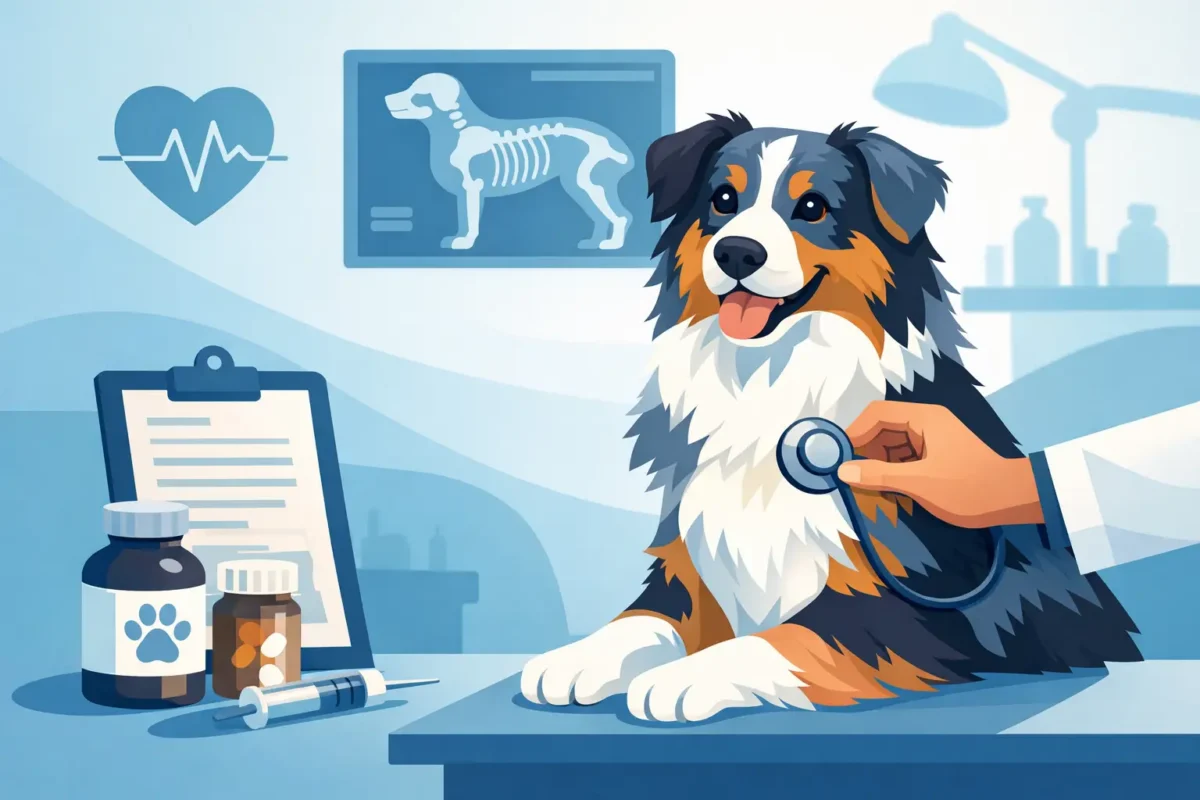
A bright-eyed puppy can look perfectly healthy in a photo and still leave a buyer with unanswered questions. That is why Toy Mini Australian Shepherd vet checks need to be done before they go to new homes. This prevents surprises, and gives the breeder knowledge of what breeding lines genetically produce. Not all genes are mapped, known for thier traits.
For Toy, Miniature, and small Toy Australian Shepherds, careful health planning matters from the breeding decision through puppy placement. Smaller size does not make a dog maintenance-free, and a good temperament does not replace sound genetic selection or proper veterinary care. Buyers deserve both.
What Toy mini Australian Shepherd Vet Checks Should Include
A pre-placement veterinary exam is a meaningful checkpoint, not a lifetime health prediction. The veterinarian should assess the puppy’s overall condition, including eyes, ears, mouth and bite, heart and lungs, abdomen, skin and coat, movement, joints, reproductive anatomy, and any obvious congenital concerns. The puppy should also be weighed, checked for hydration and body condition, and evaluated for signs of parasites or illness.
Vaccination and deworming records are part of the picture, but they are not the entire picture. Puppies receive age-appropriate care on a schedule, and the exact timing depends on their age, location, veterinarian, and risk factors. A breeder should be able to explain what has been given, on what date, and what your own veterinarian will need to continue.
A clean veterinary exam also does not mean a puppy has been tested for every condition that could ever occur. Honest breeders do not make that claim. They explain the difference between a puppy wellness exam, genetic screening in the parents, and the routine follow-up care every owner must provide.
A Vet Exam Is Not a Substitute for Genetic Testing
This is where many puppy listings become thin on facts. A veterinarian can examine a puppy and find no immediate concern, but a standard physical exam cannot reveal every inherited risk. Responsible Toy Mini Australian Shepherd breeding requires attention to the health history and genetic status of the breeding dogs before a litter is planned.
Toy mini Australian Shepherds may be screened for inherited conditions relevant to the breed and the individual breeding program. The appropriate panel can include genetic concerns that can affect breeding choices.
A reputable breeder should understand what each test means and what it does not mean. A clear result does not guarantee a puppy will never become ill. A carrier result does not automatically make a dog unsuitable for breeding when paired responsibly. The value is in making informed matches, maintaining records, and avoiding preventable risk.
At Hughes Toys, breeding decisions are built around multi-generation records, genetic testing, veterinary care, and deliberate selection for companion temperament. That work starts long before a puppy is placed in a family home. It is not a marketing add-on after the litter arrives.
Why Parent Health Information Matters
Buyers sometimes focus only on the puppy’s exam because the puppy is what they are taking home. That is understandable, but the parents provide the larger health context. Ask whether the breeder has documented parentage, , genetic screening results, and a working knowledge of the dogs behind the litter for multiple generations.
Registration alone is not proof of quality. A pedigree can document lineage, but it cannot replace health testing, sound selection, stable temperament, or accountable recordkeeping. The strongest programs use registration as one tool among many, not as a shortcut around actual breeder responsibility.
What You Should Receive at Pickup or Delivery
Good records protect the puppy, the buyer, and the breeder. Whether you are picking up locally in Oregon or coordinating a pet-nanny delivery across the country, you should know exactly what paperwork is included before the puppy travels.
Your packet should clearly identify the puppy and provide the veterinary and care information needed for your own clinic. It should include the dates of vaccines and deworming, the type of care provided,and instructions for the next scheduled care. .
Biosecurity Is Part of Health Care
Buyers often want to visit puppies early and repeatedly. The desire is understandable, but unrestricted traffic around young puppies can bring disease into a vulnerable environment. Responsible breeders may limit visits, require sanitation procedures, or use photos, videos, and structured communication until puppies are old enough for safe placement.
That is not secrecy when the breeder is otherwise transparent about records, parents, care practices, and placement procedures. It is biosecurity. The standard should be practical: protect the litter while giving serious buyers enough factual information to make a sound decision.
A breeder should also match puppies to households honestly. A calm, companion-oriented Toy or Mini Aussie can be a wonderful fit for a family, apartment household, or remote buyer who wants an intelligent dog in a manageable size. But every puppy still needs training, routine, socialization, and an owner willing to meet the dog’s needs. Veterinary care works best when it is part of that larger commitment.
The right puppy is not simply the one with the prettiest coat or the closest pickup date. Choose the breeder who can show you what has been done, explain what comes next, and expects you to carry that same standard of care into your puppy’s new life.