Teacup Aussies can be smart, devoted family dogs, but size alone is not quality. Learn what responsible breeding, testing, and matching look like in practice.
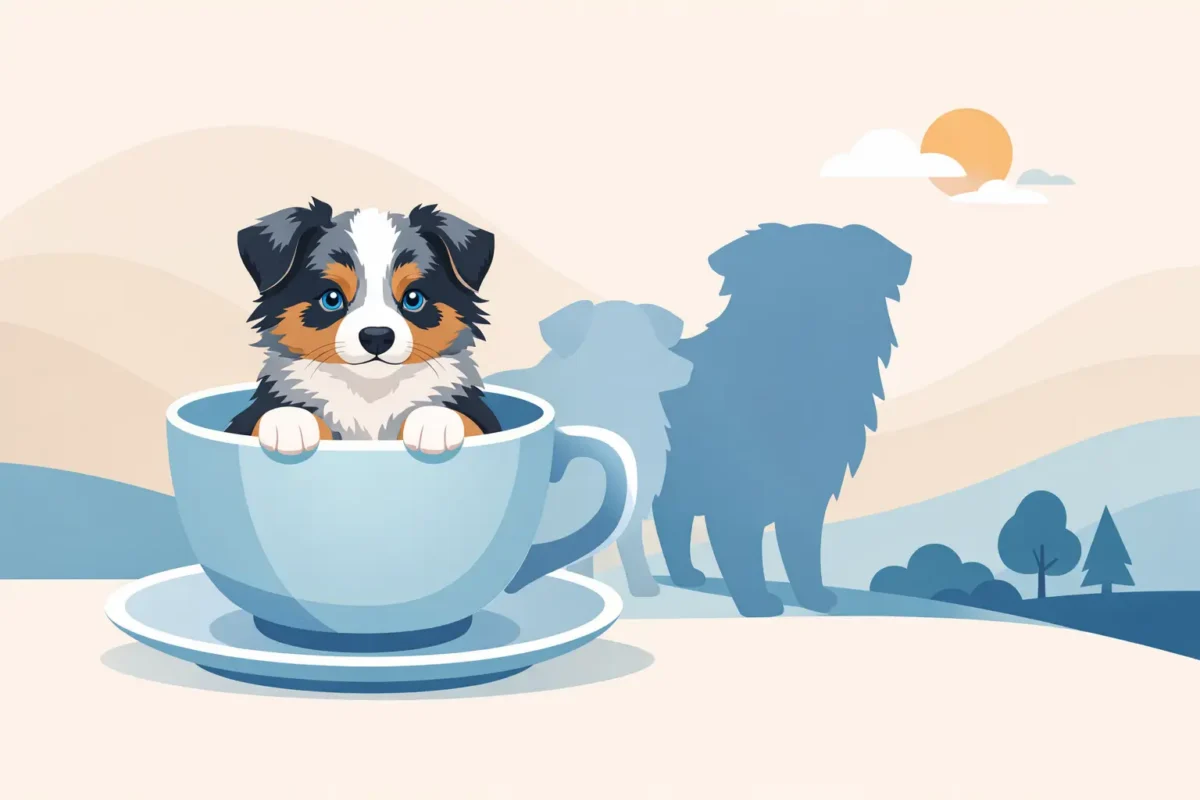
A tiny Australian Shepherd with bright eyes and a striking merle coat can get attention anywhere. That does not mean every small puppy marketed as a “Teacup” small toy Aussie has been bred with the care, documentation, or temperament needed for family life. The classsification of “teacup” is frowned on by breed standards, but is searched for by pet buyers looking for small. Size is only one part of the decision. Health history, parent temperament, genetic screening, structure, and honest adult-size expectations matter just as much.
For families who want Aussie intelligence in a smaller companion package, “Teacup” Aussies can be a very good fit. They can also be a poor fit when buyers expect a low-maintenance lap dog simply because the dog is small. A well-bred small Aussie is still an Australian Shepherd. That means a dog that wants to be included, trained, handled properly, and treated as a real member of the household.
What Is a Teacup Aussie?
“Teacup” is commonly used to describe the smallest end of the Toy Australian Shepherd size range. At Hughes Toys, a Teacup Small Toy is generally expected to mature under 10 inches at the shoulder. That is a height category, not a promise that every puppy will remain the same weight, build, or energy level.
A responsible breeder should never pretend adult size is exact. Genetics can produce variation, even in carefully selected lines. The best prediction comes from several generations of documented relatives, not a photo of one tiny puppy or a vague claim that both parents are “teacup.” Ask about the size of the parents, grandparents, full siblings from prior litters, and the breeder’s history with that particular family line.
Small size should be produced through deliberate selection of healthy, correctly built small dogs. It should not come from breeding undersized, frail, poorly structured, or medically compromised animals. There is a difference between a compact dog and an unhealthy dog. Buyers need to know that difference before placing a deposit.
Small Does Not Mean Easy
The appeal is understandable. A smaller Aussie is easier to lift, easier to travel with, more practical in an apartment or city home, and less physically imposing for children or older owners. For many households in Portland, throughout the Pacific Northwest, and in other urban areas, those are real advantages.
But a “Teacup” tiny Aussie still needs daily interaction and purposeful training. These dogs are observant. They notice routines, read people well, and quickly learn what gets a response. If nobody gives them direction, they may create their own work by barking at windows, policing other pets, or becoming overly attached to one person.
The goal is not to wear a puppy out for hours every day. In fact, constant high-intensity exercise can create an athlete who needs more and more activity to settle. A better plan combines age-appropriate walks, basic obedience, short training sessions, safe social exposure, play, and calm time in the home. The right puppy for a quieter household is one bred and selected for a companion-oriented temperament, not simply the smallest puppy in the litter.
Temperament Is a Breeding Decision
Toy Mini Australian Shepherds are known for intelligence, loyalty, responsiveness, and natural awareness of their people. Those traits are valuable, but they need balance. Excessive herding drive, uncontrolled intensity, sharpness, or constant reactivity are not good trade-offs for a family seeking a manageable companion dog.
Breeders influence temperament long before a buyer meets a puppy. They choose which adults are bred, evaluate how those adults respond to people and change, and watch how puppies develop during the weeks before placement. A puppy’s final personality is also shaped by its home, training, and socialization, but genetics matter. Good breeders do not deny that.
Matching matters as much as picking by color. A blue-eye tri or flashy merle may be the puppy that catches your eye, yet the best choice may be the steadier puppy that recovers quickly from new sounds, enjoys handling, and has an energy level that fits your routine. A knowledgeable breeder should be willing to tell you when the puppy you first chose is not the best fit. That kind of honesty protects the puppy and the family.
Health Work Should Be Documented
Cute photos are easy to produce. Verifiable health practices require actual work. Before choosing a breeder, ask direct questions about genetic testing, veterinary care, knowledge of multigeneration parents, and the health guarantee. Clear answers should be available without pressure or evasive language.
For “Teacup” tiny Aussies, genetic screening is especially relevant because responsible breeding is about reducing preventable risk, not just producing a desired size or color. Depending on the breeding program and bloodlines, testing may address inherited concerns found in Australian Shepherds and related small-Aussie populations. The breeder should understand the results, use them appropriately in pairing decisions, and explain what they do and do not guarantee.
Merle coloring also requires informed breeding. Merle is beautiful, but it is not a reason to ignore genetics. Breeding two merle dogs together can create double-merle puppies, which have an increased risk of serious hearing and vision problems. A responsible program plans matings with color genetics in mind rather than treating coat color as a sales tool.
At Hughes Toys, Veterinary checks before placement are another basic. Puppies should receive age-appropriate care, be evaluated before leaving, and go home with clear records and instructions. A health guarantee should be written in plain language. Read it before committing, including any requirements for a post-purchase veterinary exam, diet, care, and notification if a concern arises.
Registration Is Useful, but It Is Not the Whole Story
Multi-generation knowledge give breeders useful information about a puppy’s background They help establish lineage and provide a framework for documenting the dogs behind a litter. That matters, particularly for buyers seeking a true Toy or Miniature Australian Shepherd type rather than an unknown cross sold under a fashionable label.
Still, paperwork alone does not make a well-bred dog. Registration cannot prove sound temperament, clean facilities, honest size estimates, careful socialization, or appropriate health decisions. It is one piece of the evidence. Buyers should look at the whole program: the health testing, the consistency of the line, the care standards, the breeder’s knowledge, and whether the breeder remains available after placement.
At Hughes TOys, More than 30 years of breed-specific experience gives a breeder time to see how lines mature, how traits repeat, and which pairings consistently produce the kind of companions families can live with. That long view is worth more than a trendy label or a seller who has only recently started offering small puppies.
Ask Questions Before You Fall in Love With a Photo
A careful breeder expects questions. You should know the puppy’s expected mature height range, the parents’ sizes and temperaments, what genetic testing has been completed, and how the breeder handles veterinary care and biosecurity. You should also ask how puppies are matched, whether the breeder offers a written agreement, and what support is available after your puppy comes home.
Biosecurity is another point buyers sometimes misunderstand. Limiting visitors around young puppies is not secrecy when it is done to reduce disease exposure before vaccinations are complete. A breeder can provide information, photos, videos, and direct communication while still protecting a vulnerable litter. Anyone insisting on unrestricted puppy access should understand that prevention is part of responsible care.
For distant buyers, the same standards apply. A professional process for out-of-state placement should include clear communication, current puppy information, health documentation, and organized transport planning. A coordinated pet-nanny option can be preferable to sending a small puppy through an impersonal cargo process, but buyers should still understand the timing, cost, handoff details, and travel preparation.
Preparing for Life With a Very Small Aussie
A “Teacup” tiny Aussie needs practical protection because of its size. Young children must be taught to sit and hold, not carry a puppy around. Larger dogs need supervised introductions. Doors, gates, stairs, furniture, and outdoor spaces all deserve attention. Small dogs can be seriously injured by ordinary household accidents that would not affect a larger dog.
Training should begin immediately, with realistic expectations for a young puppy. Focus on potty routines, crate comfort, gentle handling, recall foundations, social exposure, and settling quietly. Consistency matters more than harsh correction. These dogs are smart enough to learn quickly and sensitive enough to become confused when house rules change from one day to the next.
The right Teacup tiny Aussie is not merely the smallest or prettiest puppy available. It is the puppy whose health background, expected size, temperament, and needs honestly fit the life you can provide. Choose the breeder and the puppy with the same care you expect them to have used in producing the litter.