
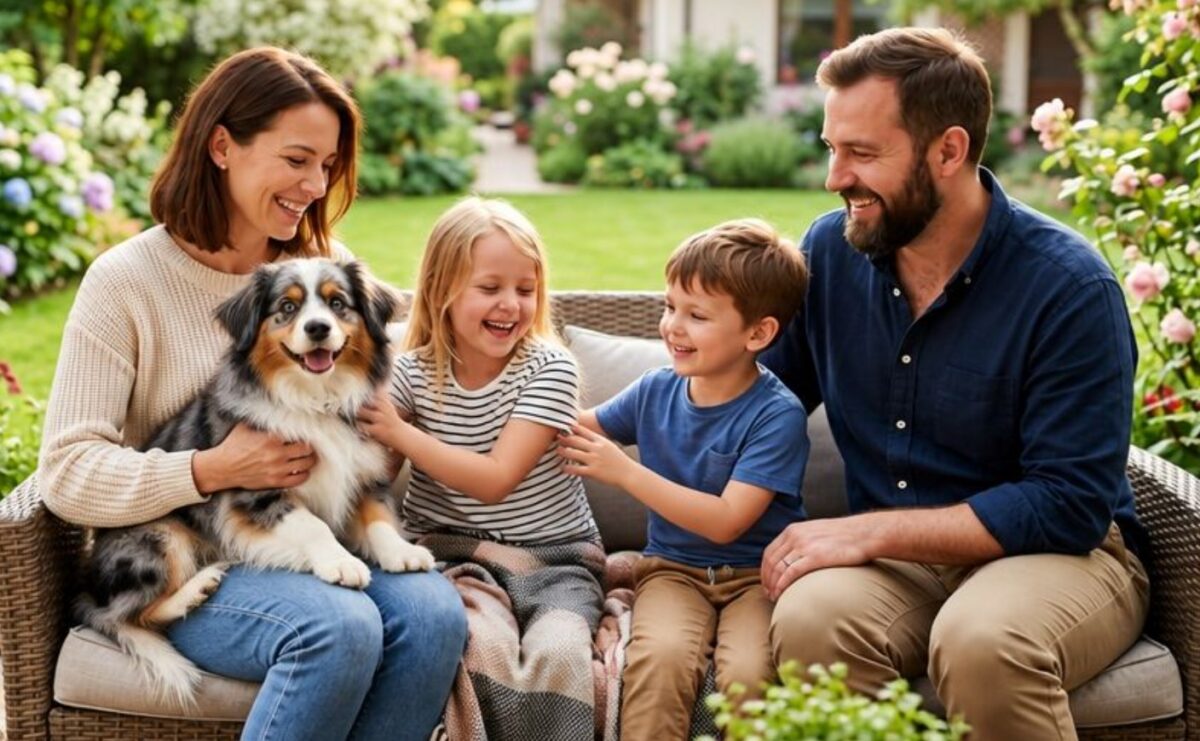
- The Toy and Miniature Australian Shepherd wins overall for active families who want a trainable, kid-focused dog.
- Cavalier King Charles Spaniel is the pick for households with toddlers who need a gentle lap companion.
- Beagle suits families wanting a sturdy outdoor dog that tolerates rough play.
- Bichon Frise is the best small dog breed for families managing allergies.
- Pembroke Welsh Corgi and Shih Tzu round out the list for herding personalities and low-energy homes.
Why this matters
Picking the best small dog breeds for families with kids isn’t about cuteness rankings — it’s about matching temperament, energy, and health risk to what your household can actually manage in 2026 and for the next decade after that. A dog bred for scent work in an open field behaves differently in a two-bedroom apartment than a dog bred to watch a toddler in a backyard. Get the match wrong and you end up rehoming a dog a family loved but couldn’t handle. Hughes Toys has spent over 30 years placing Toy and Miniature Australian Shepherds with families in Oregon, Washington, and California, and the same matching logic that goes into a single litter applies across breeds: energy level, trainability, and health testing matter more than coat color or size on paper.What makes the best small dog breed for a family
- Temperament with kids — tolerance for noise, sudden movement, and unpredictable handling from young children.
- Trainability and bite inhibition — how quickly the breed learns boundaries and how soft its mouth is during play.
- Exercise needs matched to lifestyle — a scent hound and a lap dog need very different daily routines.
- Shedding and grooming demands — real factor for allergy-sensitive households and busy weeknights.
- Size stability — small breeds should stay predictably small; some “small” breeds still reach 30+ pounds.
- Health testing and breeder practices — genetic screening reduces the odds of costly, heartbreaking surprises.
Small dog breeds for families with kids at a glance
| Breed | Best For | Standout Trait | Key Limitation |
|---|---|---|---|
| Toy/Miniature Australian Shepherd | Active families wanting a trainable, in-tune dog | High biddability, reads owner cues closely | Needs daily mental work or turns destructive |
| Cavalier King Charles Spaniel | Families with toddlers wanting a lap companion | Easygoing with strangers and kids alike | Prone to heart and spinal issues over its lifetime |
| Beagle | Families wanting a sturdy outdoor playmate | Scent drive holds focus for hours outside | Baying and a wandering nose test any fence |
| Bichon Frise | Families managing allergies | Low-shedding curly coat | Coat mats without brushing several times a week |
| Pembroke Welsh Corgi | Families wanting a herding personality in a compact frame | Alert, food-motivated, quick to train | Herds ankles and kids without redirection |
| Shih Tzu | Households with younger kids wanting a calm lap dog | Low exercise needs, tolerant nature | Flat face limits heat tolerance |
1. Toy/Miniature Australian Shepherd: best small dog breed for active, hands-on families
The Toy Australian Shepherd stands roughly 10 to 14 inches tall, and the Miniature Australian Shepherd runs 14 to 18 inches — both carry the same herding intelligence as their standard-sized cousins in a body that fits a smaller home. These dogs track faces and body language closely, which is why breeders spend real time matching a specific puppy’s drive to a specific family’s pace before it ever goes home. Toy/Miniature Australian Shepherd pros:- Learns commands and household routines fast, often within days
- Bonds tightly with kids it’s raised alongside
- Compact size fits apartments and smaller yards
- Health-tested lines reduce the odds of inherited eye and hip issues
- Bores quickly without a job — puzzle toys or training sessions, not just a walk
- Herding instinct means nipping at heels needs early redirection
- Not the right fit for a family gone 10+ hours a day with no plan for enrichment
2. Cavalier King Charles Spaniel: best small dog breed for families with toddlers
The Cavalier weighs 13 to 18 pounds under AKC breed standards and was bred specifically as a companion, not a working dog — that shows in how little it demands from an owner beyond affection. It tolerates being picked up, dressed in a costume, and hugged too tight by a four-year-old better than most breeds on this list. Cavalier King Charles Spaniel pros:- Naturally gentle with young children and strangers
- Adapts easily to apartment or house living
- Minimal exercise requirement compared to working breeds
- Genetic predisposition to mitral valve disease and syringomyelia shortens median lifespan for some lines
- Silky coat needs regular brushing to avoid mats behind the ears
- Separation anxiety is common if left alone for long stretches
3. Beagle: best small dog breed for outdoor family play
Beagles run 13 to 15 inches tall and 20 to 30 pounds, built for hours of scent tracking in the field — energy that translates well to a family with a fenced yard and a tolerance for noise. This is a dog that plays hard and sleeps hard, with little of the anxious clinginess you see in lap breeds. Beagle pros:- Sturdy build handles rough play from older kids
- Even-tempered around other dogs and visitors
- Independent enough to self-entertain for stretches of the day
- Baying and howling are bred-in, not trainable away entirely
- Nose-driven wandering means a secure fence is non-negotiable
- Prone to weight gain if food-motivated behavior isn’t managed
4. Bichon Frise: best small dog breed for allergy-sensitive families
The Bichon Frise weighs 12 to 18 pounds and carries a curly, low-shedding coat that makes it one of the more allergy-friendly options on this list, though no breed is truly hypoallergenic. Its cheerful, people-focused temperament was bred for companionship across centuries, and it shows in how readily it approaches new people, including kids. Bichon Frise pros:- Low shedding reduces allergen spread around the house
- Friendly with children and unfamiliar adults
- Compact size suits smaller living spaces
- Coat requires brushing multiple times a week to prevent matting
- Professional grooming every 4 to 6 weeks adds ongoing upkeep
- Can develop small-dog barking habits without early training
5. Pembroke Welsh Corgi: best small dog breed for a herding personality in a compact frame
Corgis stand 10 to 12 inches tall and reach up to 30 pounds for males under AKC standards — short legs, but a full working-dog brain built to move livestock. That drive makes them quick learners, and it also means they’ll try to herd running kids the same way they’d herd cattle. Pembroke Welsh Corgi pros:- Highly trainable and food-motivated
- Alert temperament makes a reliable household watchdog
- Sturdy enough for active play despite the small stature
- Nipping at heels during play needs consistent early correction
- Long back is prone to spinal strain from jumping off furniture
- Sheds heavily twice a year regardless of coat brushing routine
6. Shih Tzu: best small dog breed for calm households with younger children
The Shih Tzu weighs 9 to 16 pounds and was bred centuries ago as a palace companion, not a working dog, which is exactly why it asks so little of an owner in terms of exercise. It’s a good fit for families whose kids are younger and gentler rather than rough-and-tumble. Shih Tzu pros:- Minimal exercise needs suit less active households
- Tolerant, easygoing temperament around calm handling
- Small size makes it manageable for a first-time dog family
- Flat face limits heat tolerance and increases breathing effort in warm weather
- Long coat mats fast without daily brushing
- Not built for rough play from older, boisterous kids
How we ranked
Each breed above was scored against the six criteria listed earlier — kid temperament, trainability, exercise fit, grooming load, size stability, and health testing norms — rather than popularity or looks. The Toy and Miniature Australian Shepherd tops the list because it scores highest on trainability and size stability while carrying manageable, well-documented health considerations when bred responsibly.“A dog bred for scent work in an open field behaves differently in a two-bedroom apartment than a dog bred to watch a toddler in a backyard.”
Which small dog breed should you choose?
If your family is active and wants a dog that learns fast and stays engaged, the Toy or Miniature Australian Shepherd is the default pick for 2026. If your household centers on toddlers and low-key affection, the Cavalier King Charles Spaniel fits better. Everything else on this list solves for a specific gap — allergies, outdoor play, herding energy, or a genuinely low-key lap dog — so match the limitation column in the table to what your family can’t live with, not just what looks good in a photo.Ask about a Toy or Mini Aussie litter
Health-tested puppies matched to your family’s pace, from a Portland-area breeder.
FAQ
What is the best small dog breed for families with kids in 2026?
The Toy or Miniature Australian Shepherd is the best overall pick for 2026 for families who want a trainable, in-tune dog; the Cavalier King Charles Spaniel is the better pick specifically for toddlers who need a gentle lap companion.
Is a Toy Australian Shepherd good with kids?
Yes, Toy and Miniature Australian Shepherds bond closely with kids they’re raised alongside and learn household rules quickly, though the herding instinct means nipping at heels needs early redirection.
Are Cavalier King Charles Spaniels good with toddlers?
Cavaliers tolerate handling from toddlers better than most small breeds because they were bred specifically as companions rather than working dogs. They do carry a genetic risk for heart and spinal issues, so ask breeders for health screening records.
What is the healthiest small dog breed for a family?
No small breed is risk-free, but breeds bred by health-testing breeders — including genetic and hip/eye screening for Toy and Miniature Australian Shepherds — reduce the odds of inherited conditions compared to unscreened lines.
Do Beagles do well with young children?
Beagles handle rough play well thanks to their sturdy build, making them a good fit for families with older, active kids and a securely fenced yard.
Which small dog breed sheds the least?
The Bichon Frise sheds the least among the breeds on this list thanks to its curly coat, though it still needs brushing several times a week to prevent matting.
How much exercise does a small family dog need?
It depends heavily on breed: a Beagle or Toy Australian Shepherd needs daily active exercise and mental work, while a Shih Tzu or Cavalier does fine with shorter, lower-intensity walks.
Is a Corgi a good first dog for a family with kids?
A Pembroke Welsh Corgi can work for a first family dog, but its herding instinct means it may nip at running kids, so early training to redirect that behavior is necessary.