Use this toy Aussie exercise guide to build safe daily activity, mental work, and calm routines for a small Australian Shepherd companion at home each day.
A Toy Australian Shepherd can live very well in a Portland neighborhood, an apartment, or a home with a modest yard. But a small dog with Aussie intelligence does not become a low-maintenance dog simply because it is under 14 inches tall. This toy Aussie exercise guide is built around a practical goal: meet the dog’s need for movement and mental work without creating an exhausted, overstimulated companion that cannot settle in the house.
The right amount of exercise is not a competition. It depends on age, health, temperament, size, weather, training, and the dog in front of you. A thoughtfully bred Toy Aussie with a
calmer companion temperament may need less intensity than a high-drive working-bred Toy mini Australian Shepherd. That is a feature for family life, not a reason to skip daily structure.
What Toy Aussies Actually Need
Toy Aussies need regular activity, but they do not need to run until they collapse. A common mistake is treating every burst of puppy energy as proof that the dog needs more miles, more fetch, or more chaos. Many young dogs become more wound up, mouthy, and unable to rest when their daily routine is all physical excitement and no calm practice.
Most healthy adult Toy Aussies do well with roughly 45 to 75 minutes of purposeful activity spread across the day. That total can include walks, training, sniffing, play, and short sessions of structured games. Some active adults will want more. Others, particularly
very small Toy or Teacup Small Toy dogs, may be perfectly satisfied near the lower end when their minds are engaged.
The goal is a dog that is content, responsive, and able to relax after activity. A dog that paces, demands constant attention, ignores cues, or cannot settle may need a better routine. More exercise is only one possible answer. The dog may also need better sleep, less stimulation, clearer boundaries, or a veterinary evaluation.
A Toy Aussie Exercise Guide by Life Stage
Young puppies: protect growing bodies
Puppies are not miniature adult athletes. They have short attention spans, immature joints, and a strong need for sleep. Formal forced exercise, long pavement walks, repetitive fetch, jumping from furniture, and running alongside a bicycle are poor choices for a growing puppy. Such activity can cause joint and hip problems.
Instead, use several short periods of activity throughout the day. A puppy may enjoy a brief leash walk to explore the block, a few minutes of recall practice in a secure area, gentle tug, a food puzzle, and supervised play with a stable dog. Let the puppy set a reasonable pace and rest before it becomes overtired.
A useful rule is to stop while the puppy is still doing well. The goal is not to drain every bit of energy. Puppies often look wild when they are actually overdue for a nap. After a short outing or training session, guide the puppy toward a quiet crate or resting space instead of immediately starting another game.
Adolescents: build manners before mileage
Adolescence can make owners think their Toy Aussie has unlimited energy. In reality, this stage is often a mix of physical stamina, poor impulse control, and selective hearing. More unstructured exercise can turn that combination into a dog that expects entertainment every waking hour.
Give adolescent dogs consistent walks and play, then make training part of the work. Practice loose-leash walking, wait at doors, recall on a long line, place commands, and calm greetings. A 10-minute training session with real expectations can tire an adolescent more effectively than another 20 minutes of frantic ball throwing.
This is also the age to prevent unsafe habits. Do not encourage repeated vertical jumping for toys. Limit hard impact on slippery floors. Use caution around larger, rougher dogs at parks or daycare. A Toy Aussie may act tough, but size matters when another dog barrels into them.
Adults: keep the routine varied and realistic
A healthy adult often benefits from a morning outing, a midday mental task, and an evening walk or play session. For a family dog, that may look like a 25-minute sniff-and-walk in the morning, a five-minute cue practice session before lunch, and a 20-minute neighborhood walk after dinner.
Variation keeps exercise useful. One day can include a nature walk with plenty of sniffing. Another can focus on leash skills and obedience. On a rainy Pacific Northwest day, several short indoor sessions may be the smarter choice. The dog does not need a dramatic outing every day to be fulfilled.
Seniors: preserve movement, reduce impact
Older Toy Aussies still need activity, but the plan changes. Shorter walks, gentle sniffing, easy food puzzles, and low-impact training help preserve mobility and confidence. Watch for stiffness after rest, reluctance to jump, lagging behind, or changes in gait. Those are reasons to speak with your veterinarian, not to push harder.
Mental Work Is Not Optional
Australian Shepherds were developed to pay attention, notice movement, and work with people. Even a companion-bred Toy Aussie benefits from having a job, provided the job fits the dog and the household. Mental work helps direct that intelligence toward useful behavior instead of barking at windows, chasing children, or inventing trouble.
Simple training is often the best place to start. Ask for a sit before the food bowl comes down. Practice a short stay while you fold laundry. Teach the dog to go to a bed or mat while guests enter. Reward calm behavior, not only high-energy tricks.
Food can also create constructive work. Scatter a portion of kibble in the grass, hide treats around one room, use a snuffle mat, or feed part of a meal through an appropriate puzzle toy. Keep difficulty reasonable. If the dog becomes frustrated, simplify the task rather than assuming frustration is productive.
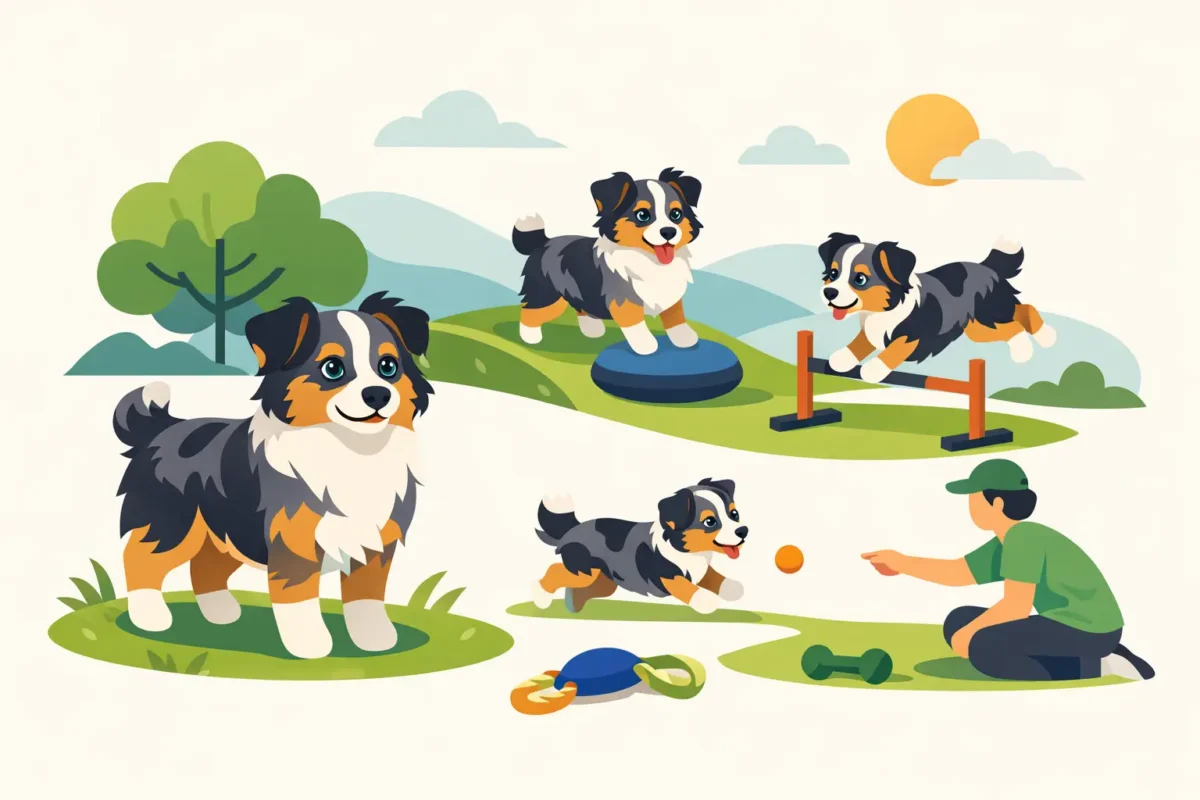
For dogs that enjoy more structured activities, trick training, rally-style obedience, scent games, and carefully introduced agility foundations can be excellent outlets. Full-height jumps and repetitive high-impact drills are not necessary for a small companion dog. Precision, teamwork, and body awareness matter more than speed.
Avoid Creating an Adrenaline Habit
Fetch has a place, but it is not a complete exercise program. Repetitive ball chasing can raise arousal, encourage obsessive behavior, and add unnecessary stress to shoulders, knees, and backs. This is especially true for very small dogs that launch, twist, and stop hard to retrieve a toy.
Use short fetch sessions with clear breaks. Ask for a sit or down between throws. End while the dog is still eager. Better yet, mix retrieving with scent games, walking, training, and calm chewing so the dog learns that activity can rise and then come back down.
The same caution applies to dog parks. Some Toy Aussies enjoy carefully selected playmates; others find busy parks overwhelming or unsafe. A smaller dog does not need to socialize with every dog it sees. Good socialization means learning to remain neutral, confident, and responsive around the world.
Build a Weekly Routine You Can Maintain
Consistency matters more than an occasional marathon outing. Families should choose a plan that still works during busy school weeks, rainy weather, travel, and shorter winter days. If a dog only behaves well after a two-hour hike, the routine is not practical for most homes.
A workable weekly plan includes daily walks or outdoor exploration, brief training every day, several mental feeding opportunities, and a few more active outings each week. Hiking, a secure-yard play session, a visit to a quiet new location, or a training class can provide variety without turning every day into a major production.
At Hughes Toys, puppy matching should include an honest conversation about activity level. Families seeking a smaller Aussie need to be prepared for an intelligent, engaged companion, but they should not be told that every Toy Aussie requires the lifestyle of a full-time ranch dog. Careful breeding selection, early handling, and the
individual puppy’s temperament all matter.
When Exercise Is Not the Real Problem
Owners sometimes increase activity because their dog is chewing, barking, pacing, or acting difficult. Before adding more exercise, look at the full picture. Is the dog getting enough uninterrupted sleep? Is the home too busy? Is the dog being rewarded for demand barking? Has training been inconsistent? Could pain, digestive upset, anxiety, or another health issue be involved?
A balanced Toy Aussie should have active periods and genuine off-switch periods. Teach rest as deliberately as you teach recall. Provide a predictable place to sleep, use a crate or pen appropriately, and do not feel obligated to respond to every request for action.
The best exercise plan leaves your Toy Aussie pleasantly satisfied, physically sound, and able to live calmly with the family. Start with reasonable daily movement, add brain work, protect small joints, and adjust based on the dog’s behavior rather than internet promises about what an Aussie is supposed to be.