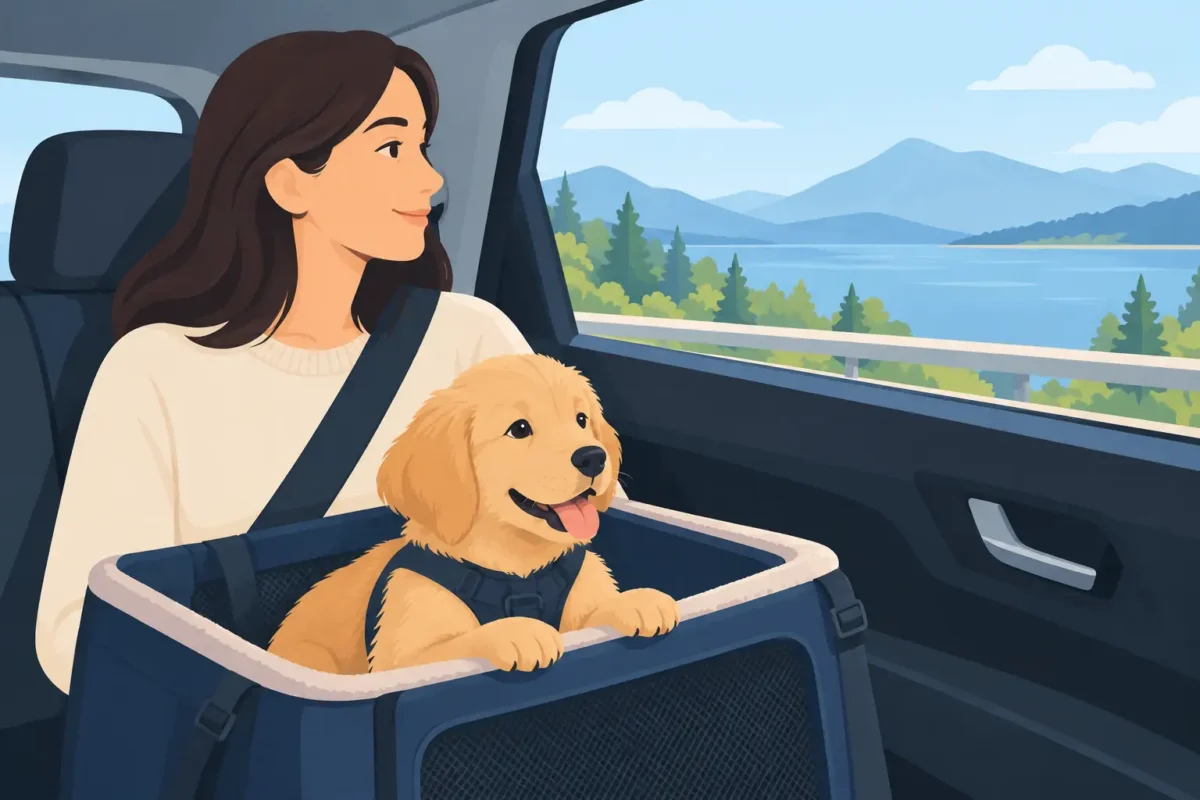
Traveling home with puppy safely starts before the drive or flight. Use this practical plan for secure transport, low stress, and a calm first night home.
A puppy does not understand that a car ride or flight ends with a new family. They only know they have left their littermates, familiar smells, and routine. That is why traveling home with puppy safely is not about making the trip look easy. It is about keeping the puppy contained, warm, hydrated, and protected from unnecessary stress until you are home.
For a Toy or Mini Australian Shepherd puppy, the first trip is usually manageable when adults plan ahead and resist the urge to overhandle the puppy. The goal is simple: get home safely, then let the puppy settle.
Prepare Before Pickup Day
Do not arrive with a loose puppy plan. Have the travel setup ready in the vehicle before pickup, including a properly sized crate or secure puppy carrier, clean bedding, paper towels, waste bags, water, and a small bowl. The carrier should allow the puppy to stand, turn around, and lie down, but it should not be so large that the puppy slides around during turns or sudden stops.
A hard-sided crate or well-structured travel carrier is generally the right choice for a vehicle. It gives the puppy a defined, protected space and prevents a dangerous mistake many new owners make: holding the puppy in someone’s lap. A puppy can be injured by an airbag, fall under pedals, or be thrown forward in a sudden stop. Affection is not a restraint system.
Secure the crate so it cannot shift. In an SUV or truck, place it on a flat surface and anchor it according to the crate and vehicle setup. In a sedan, the back seat is generally safer than the front seat because of airbags. Keep the cabin comfortably cool or mildly warm, never hot. Small puppies do not regulate body temperature as reliably as mature dogs.
Bring the food the puppy has already been eating, but do not make the ride home into a feeding event. A small meal too close to travel can increase the chance of nausea. Follow the breeder’s feeding guidance, particularly with
very small puppies. Toy-sized puppies need consistent calories, but that does not mean frequent large meals during a stressful trip.
The First Drive: Quiet Is Better Than Exciting
Your puppy may sleep for much of the drive, cry for a while, or become quiet and watchful. All are normal responses to a major change. Do not interpret every sound as an emergency, and do not keep opening the crate to check on the puppy every few minutes. That teaches the puppy that vocalizing brings a release from the carrier.
Speak calmly, drive smoothly, and keep the environment low-key. Loud music, children crowding the crate, passing the puppy from lap to lap, and repeated photo sessions are unnecessary. The puppy will have plenty of time to meet everyone after arriving home.
For a short ride, most puppies can travel without a stop. On longer drives, plan regular breaks based on the puppy’s age, size, weather, and comfort. Carry the puppy to a clean, low-traffic potty area rather than putting a young puppy down at a public rest stop or dog-heavy area. Until vaccinations are complete,
exposure control matters. Parvovirus and other infectious disease risks are real, and a quick stop in a heavily used dog area is not worth the gamble.
Offer a small amount of water at breaks, especially in warm weather, but do not force it. If the puppy is sleeping peacefully, leave them alone. A calm puppy does not need to be entertained.
Watch for Travel Sickness and Stress
Some puppies drool, yawn repeatedly, lick their lips, vomit, or have loose stool during travel. Mild motion sickness can happen, especially on a first ride. Clean the carrier promptly, replace wet bedding, and keep going if the puppy otherwise seems alert and stable.
Call a veterinarian promptly if the puppy is very weak, repeatedly vomiting, struggling to breathe, becomes unusually limp, or seems unable to stay warm. Very small puppies deserve extra caution because they can become dehydrated or chilled faster than a larger dog. If your breeder has provided specific instructions for your puppy, follow those instructions over generic internet advice.
Flying Home With a Puppy Safely
Air travel requires more planning than a drive. Airline policies vary by carrier, route, aircraft, weather, and the puppy’s combined weight with the travel carrier. Confirm the pet reservation directly with the airline before travel day. Do not assume that buying your own ticket automatically reserves an in-cabin pet space.
For young companion puppies, in-cabin travel is usually preferable when it is available and appropriate. The puppy remains with the traveler, in an airline-compliant soft carrier that fits beneath the seat. Cargo transport adds variables that many families should avoid when another safe option is available, particularly for a small puppy.
Choose a direct flight when possible. Fewer airport transfers mean fewer chances for delay, temperature exposure, and handling problems. Arrive with time to spare, but do not arrive so early that the puppy sits in a busy terminal for hours. Keep the carrier partly covered if that helps reduce visual stimulation, while maintaining proper airflow.
Do not let strangers reach into the carrier or insist on meeting the puppy in the airport. A young puppy is not public entertainment. Airport floors and pet relief areas also carry disease exposure concerns. Use a clean pad in a controlled spot when necessary, then carry the puppy afterward. Do not use the dog potty areas of the airport.
If a pet-nanny delivery is being used, ask direct questions about the itinerary, carrier arrangement, feeding schedule, temperature management, and handoff plan. Organized delivery is not just transportation. It is custody of a young puppy during a sensitive transition, and it should be handled with accountability.
Set Up Home Before the Puppy Walks In
The first hour at home sets the tone. Have one quiet, puppy-safe area ready before opening the carrier. This might be a kitchen, laundry room, or sectioned-off living area in a play-pen with a crate, water, bedding, and a limited number of safe chew toys. It does not need to be fancy. It needs to be clean, secure, and easy to supervise.
Take the puppy directly to the intended potty spot first. Give them a few calm minutes, then bring them inside. If there is an accident, clean it without scolding. The puppy has just traveled, changed homes, and likely has no understanding of your schedule yet.
Keep introductions controlled. Resident dogs should meet the puppy carefully, ideally after both have had a chance to decompress. Do not force face-to-face interaction, and do not leave them unsupervised because the first greeting went well. Even a friendly adult dog can overwhelm a small puppy through rough play or possessive behavior.
Children need clear rules: sit down, let the puppy approach, use gentle hands, and do not chase, carry, or wake a sleeping puppy. Small Australian Shepherds may be compact, but they are not toys. Their bodies, joints, and confidence are still developing.
Keep the First Night Simple
Expect the first night to be different from the puppy’s previous routine. The puppy may protest being separated from littermates, especially at bedtime. Place the crate near your bed at first so you can hear whether the puppy needs a potty break or is simply settling. A calm voice and a brief, boring potty trip are more useful than turning midnight into playtime.
Do not introduce new food, multiple treats, visitors, a bath, or a long training session on the first evening. Consistency matters more than stimulation. Feed the established diet on the breeder’s recommended schedule, provide fresh water, and begin a predictable cycle of potty trips, rest, meals, and short supervised interaction.
Hughes Toys has spent more than 30 years placing smaller Australian Shepherds with families, and the same practical principle applies to every transition: a well-bred puppy still needs a well-prepared home. Genetics,
veterinary checks, documentation, and thoughtful matching give a puppy a strong start. Your job on travel day is to protect that start with calm handling and good judgment.
The ride or flight home is not the beginning of a performance test. Let the puppy rest, keep the world small for a few days, and build trust through steady care rather than constant excitement.