
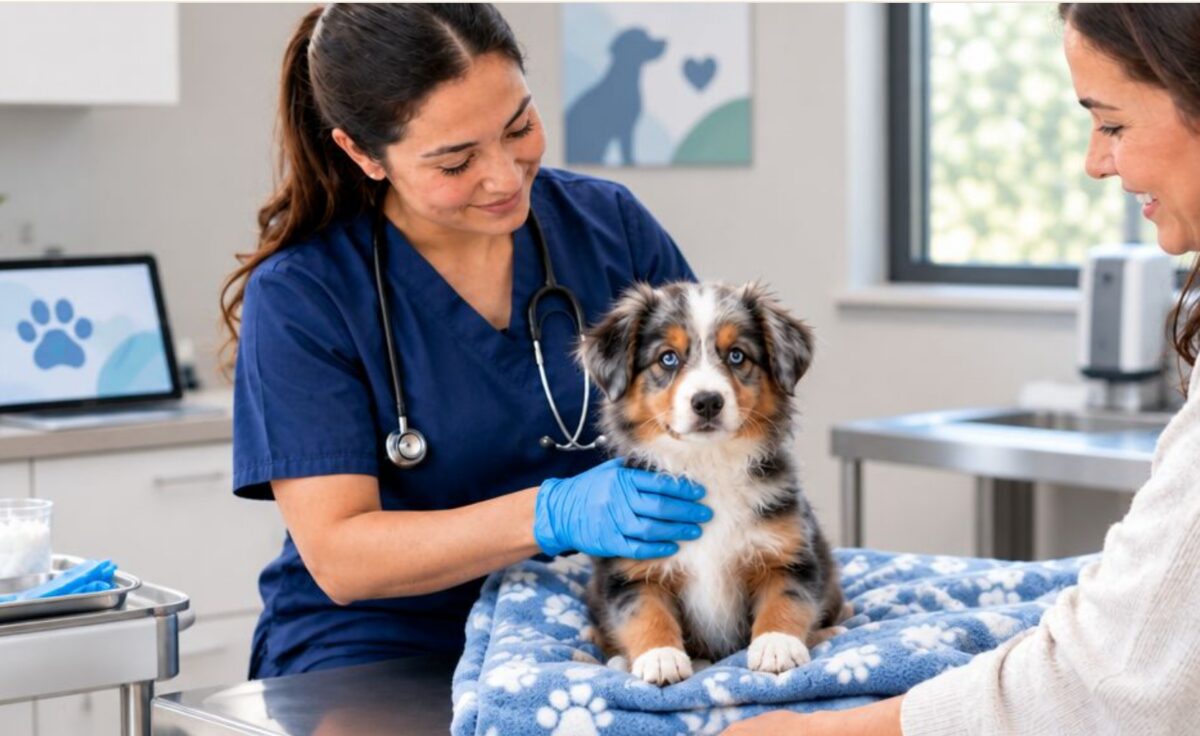
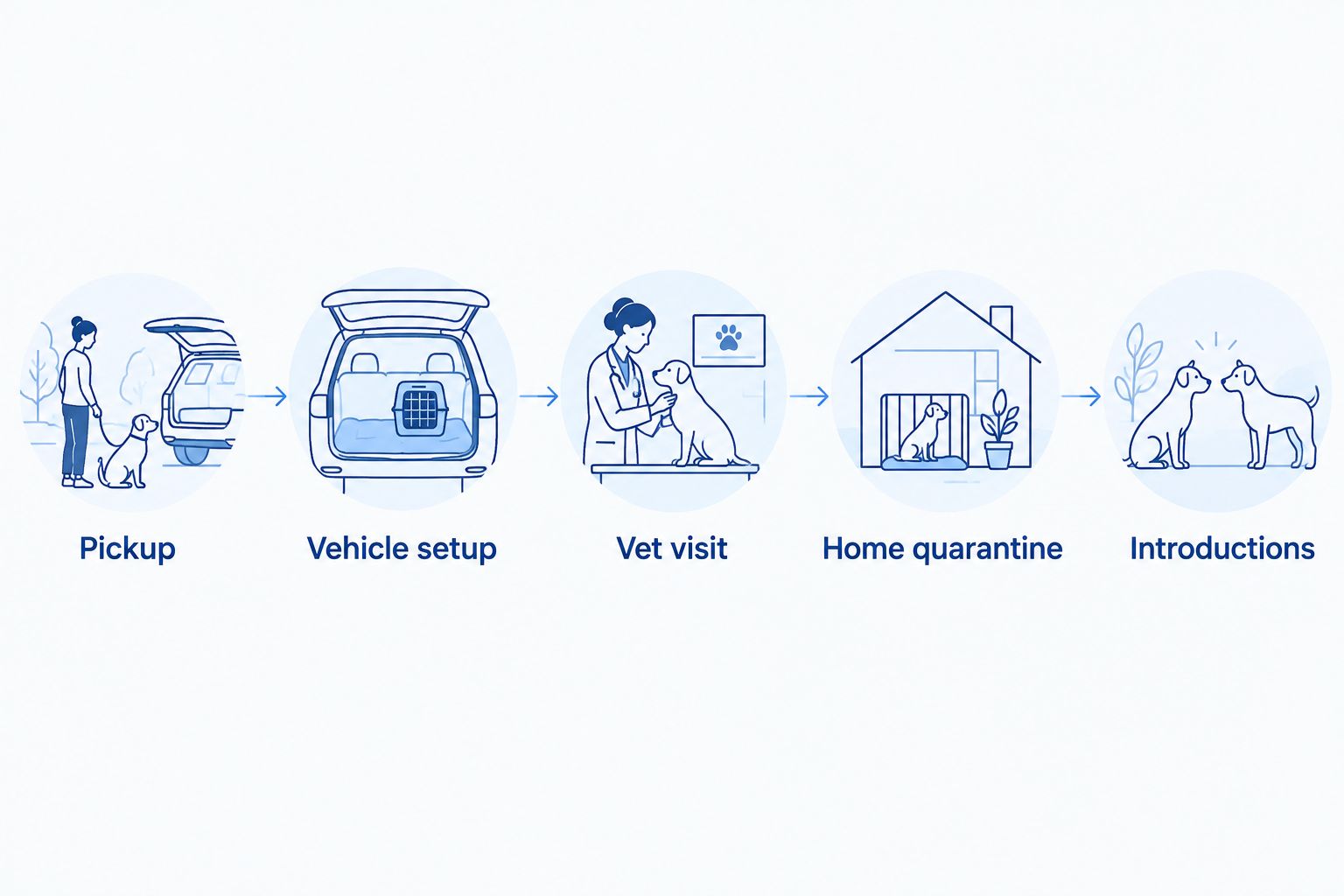
- A puppy biosecurity pickup protocol covers the vehicle setup, the first vet visit, and a 48-hour home quarantine before a new Toy or Mini Aussie meets other dogs.
- Parvovirus and distemper can survive on surfaces for months, so pet stores, rest-area lawns, and vet lobby floors are the highest-risk stops on pickup day.
- A vet-checked puppy from Hughes Toys still needs its own disinfected crate and already health checked first vet visit before go home in 2026.
- Skipping the home quarantine window is the single most common mistake families make with a new Toy or Miniature Australian Shepherd puppy.
Why this matters
A puppy’s maternal antibodies — the protection passed through the mother’s milk — start fading around 8 weeks and are mostly gone by 16 weeks, which is exactly the window most Toy and Mini Aussie puppies go home in. Vaccines are still finishing their series during that same stretch, so there’s a real gap where the puppy is neither fully protected by mom nor fully protected by its own shots. Parvovirus is the main threat in that gap. It survives in soil, carpet, and on shoes for months, sometimes longer than a year in the right conditions, and it doesn’t care that the puppy came from a vet-checked, health-guaranteed Toy Aussie litter. The protocol below isn’t about distrusting the breeder — it’s about controlling the puppy’s exposure in the 72 hours right after pickup, which is the part nobody but the new owner controls.Before you start
- Health and vaccination paperwork — get the puppy’s vet record and vaccination history from the breeder at pickup, not mailed later. You’ll need it for the puppy’s vet appointment.
- A disinfected crate or carrier — wipe it down with a pet-safe disinfectant before pickup day, especially if it’s been in a car that’s carried other dogs.
- The gotcha: the pet store parking lot, the gas station lawn, and the vet clinic waiting room floor are the three riskiest surfaces a new puppy touches in its first week — not the breeder’s property. Plan pickup day so the puppy never sets paws on public ground before its first vet visit.
Set up your pickup vehicle
- Line the crate or carrier with a clean towel or puppy pad — not one that’s been used with another dog since its last wash.
- Bring a second towel sealed in a plastic bag for accidents on the drive; swap it in without touching the outside of the bag to the puppy’s bedding.
- Keep a bottle of pet-safe hand sanitizer or wipes in the front seat. Use it after every stop and before you touch the puppy again.
- Skip drive-throughs and gas station walks with the puppy in arms. If the puppy needs to relieve itself, set it down only on a towel you’ve brought from home, never on public grass.
Schedule the first vet visit
- Book the vet appointment for the next needed vaccination .. with Hughes Toys, puppy has first vet health check, and vaccines current until goes home.
- Carry the puppy into the clinic rather than letting it walk across the parking lot or lobby floor.
- Ask the front desk if there’s a separate puppy or “well-pet” waiting area — many clinics keep sick and healthy animals apart, and you want the healthy side.
- Hand over the vaccination and health record from the breeder so the vet can confirm what’s done and schedule what’s left.
Configure the 48-hour home quarantine
- Pick one room as the puppy’s landing zone — a kitchen, laundry room, or bathroom with washable flooring works best.
- Keep resident dogs out of that room for the first 48 hours, even if they’re vaccinated and healthy. This isn’t about the resident dog’s risk — it’s about not overwhelming a puppy that’s already stressed from a car ride and a new environment.
- Wash your hands after handling the puppy and before handling other pets in the house during that window.
- Hold off on walks, dog parks, and puppy classes until the vet visit confirms the vaccine series is on track, not just because it’s the puppy’s first week.
Long-drive-home variant
Families driving several hours to reach Hughes Toys need one extra layer. Any stop longer than a bathroom break turns into an exposure risk, so:- Plan rest stops around fuel and food for you, not the puppy — feed and water the puppy in the car using its own bowl.
- If the puppy must relieve itself mid-drive, use a puppy pad on the car floor or a towel from home instead of a rest-area lawn where dozens of unknown dogs have been.
- Carry a second sealed set of bedding for a drive over three hours — swap it at the halfway point so the puppy isn’t sitting in a soiled crate for the second leg.
Have questions before pickup day?
Check available Toy and Mini Aussie litters and health guarantee details.
Troubleshooting
- Puppy has loose stool the first night. Stress colitis from the car ride and diet change is common and usually clears in a day. Call the vet if it’s watery, bloody, or paired with vomiting.
- Puppy won’t eat the first meal at home. Normal for the first 12-24 hours. Offer the same food the breeder sent home with the puppy — switching brands on day one adds a second stressor on top of the move.
- Resident dog’s vaccine records are outdated. Get the resident dog’s vaccines current before pickup day, not after. If there’s no time, the quarantine room needs to hold for the resident dog too, not just the puppy.
- Puppy was set down at a gas station before you read this. Don’t panic — watch for lethargy, vomiting, or loss of appetite over the next 5-7 days and call the vet immediately if any show up, rather than waiting for the scheduled visit.
- Vet clinic doesn’t have a separate puppy waiting area. Take puppy inside in a carry crate, Do not let anyone in waiting room touch your puppy. Cleana the bottom of the crate and your shoes when get home. Can also Ask to wait in the car and have the clinic call you in when a room’s open instead of sitting in a shared lobby.
Customize your protocol
Once the puppy finishes the vaccine series — typically the last round lands around 16 weeks — the quarantine rules loosen fast. That’s the point to start structured introductions to resident pets, short leash walks on your own property, and eventually a puppy class once the vet gives the green light. The protocol above is the floor, not the ceiling. Families who add a second layer — like requiring visitors to remove shoes before handling the puppy for the first two weeks — see fewer GI upsets in that first month, based on the pattern breeders see across litters year after year. The 48-hour home quarantine are the two steps that matter most; everything else is optimization.“The car ride home is the easy part. The first 48 hours in a new house are where a puppy’s biosecurity actually gets tested.”
FAQ
What is a puppy biosecurity pickup protocol?
It’s the set of steps a new owner follows on pickup day and for 48-72 hours after to keep a puppy from being exposed to parvovirus, distemper, or kennel cough before its immune system and vaccines are fully in place. It covers the vehicle setup, the first vet visit, and a short home quarantine.
How long should a new puppy be quarantined at home?
Most breeders recommend a 48-hour quarantine from other household pets and outside surfaces before introductions and walks begin. That window can extend longer if the vet visit turns up an incomplete vaccine schedule.
How soon should a new puppy see a vet after pickup?
Book the first vet visit when the next vaccine is due based on breeders vaccination record. confirm the puppy’s vaccine status from the breeder.
Can a vet-checked puppy still catch parvo on pickup day?
Yes. A health guarantee and vet check at the breeder covers the puppy’s condition at handoff, not what it’s exposed to afterward. Parvovirus survives on surfaces for months, so a single stop at a pet store or rest area can still expose an otherwise healthy puppy.
Is it safe to let a new puppy walk in a pet store parking lot?
No. Pet store parking lots and lawns see heavy unknown-dog traffic and are considered high-risk surfaces. Carry the puppy or use a pad or towel from home instead.
Should resident dogs meet a new puppy right away?
Wait until the 48-hour quarantine window closes and confirm the resident dog’s vaccines are current first. Early introductions add stress on top of exposure risk during the most vulnerable window.
When is a puppy fully protected by its vaccine series?
Most puppies finish their core vaccine series around 16 weeks. Maternal antibodies fade before that, which is why the pickup window needs its own biosecurity steps rather than relying on vaccines alone.
What should I bring in the car for pickup day?
Bring a disinfected crate lined with clean bedding, a sealed backup towel for accidents, and hand sanitizer for use after any stop. Feed and water the puppy from its own bowl rather than sharing surfaces.